



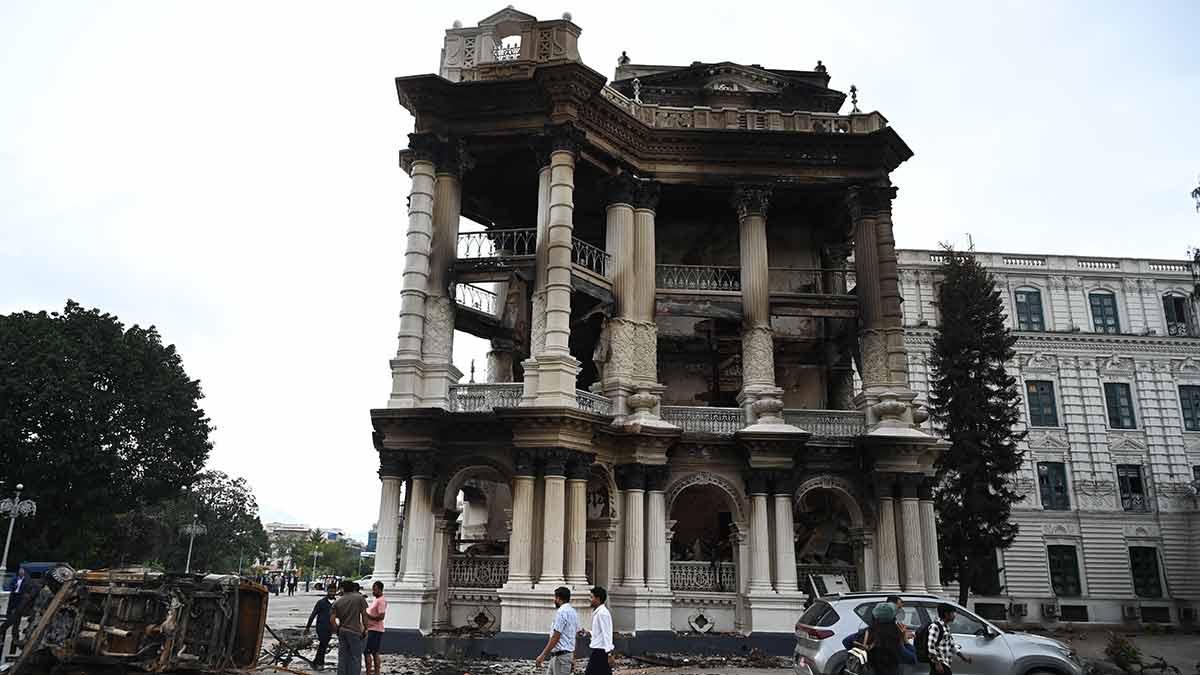
Over the past decade, Nepal has faced a series of disruptive events that have left deep marks on its social and economic fabric. Natural disasters like earthquakes and floods, political unrest and uncertainty, global economic shocks, and internal structural weaknesses have combined to create a cycle of disruption that has slowed growth and undermined confidence. While the country has demonstrated resilience time and again, the cumulative effect of these events has been damaging, testing the limits of both governance and the economy.
Nepal was recovering from these shocks, and the private sector was rebuilding confidence to move forward. However, the protests of September 8, 2025, and the destruction of public and private property, have shaken their confidence. Seventy-three people have lost their lives, and some are fighting for their lives in hospitals; 68 branches of banks and financial institutions have been damaged, mainly those located at government offices. The estimated loss is more than Rs 2,000 billion.
Yet, every crisis brings lessons and opportunities. For Nepal, this is a moment not only to assess the damage but also to chart a bold way forward politically to ensure a stable government mechanism—one that rebuilds confidence among investors, restores sustainable growth, and creates a more resilient economic foundation for the future.
The damage Nepal has faced is both visible and invisible, affecting government infrastructure, institutions, and investor psychology. Recent protests damaged not only the infrastructure but also have had the following impact:
Destruction of government infrastructure across the country and attacks on private sector businesses have created uncertainty in the business environment.
Employment generation has been inadequate, forcing large-scale labor migration. This event will put the country under pressure.
Small and medium enterprises, which are the backbone of Nepal’s economy, have suffered repeated shocks with little institutional safety net.
Weak governance and inconsistent regulations have discouraged long-term planning by both local and international investors. This event will have a more negative impact on investors’ confidence.
The Supreme Court and ministries were set on fire along with other government offices, thus hampering government services.
There will be an estimated insurance claim of more than Rs 22 billion from private sector losses.
Investor confidence was already fragile, built on trust in institutions, predictability of policies, and the ability to forecast returns. This event will further reduce investors’ confidence.
Despite Nepal’s potential in hydropower, tourism, and agriculture, FDI inflows remain modest compared to regional peers. Investors are interested but hesitant, citing bureaucratic delays, unpredictable dispute resolution, and destruction in the country.
Nepal’s economic growth trajectory has been uneven. In years of stability, growth has touched 6–7 percent, powered by remittances, agriculture, and services.
However, shocks have repeatedly pulled it down, averaging around 3–4 percent over the past decade. Such damage has eroded economic dynamism and slowed Nepal’s ambition to rise with development goals.
The Nepalese economy has enormous potential in tourism, agriculture, hydropower, and remittances but is trapped in cycles of underperformance, political instability, and protests. Economic growth has been insufficient to create enough jobs, reduce inequality, and build resilience. The turbulence has created further uncertainty in the country, but now the Nepalese are looking for a corruption-free country to move forward for economic prosperity.
If Nepal is to break free from this cycle, bold reforms and a clear long-term vision are essential. The following steps provide a roadmap:
1. Policy Stability and Governance Reform
Investors, both domestic and foreign, need assurance of consistent policies. Governments must commit to long-term frameworks that transcend political cycles.
Strengthening institutions—particularly in areas of contract enforcement, dispute resolution, and regulatory transparency—is crucial.
2. Infrastructure Development
Reconstruct government infrastructure damaged during this political unrest and protests.
Prioritize transport corridors, digital connectivity, and energy reliability. Well-planned infrastructure reduces costs, connects markets, and makes investment more attractive.
Public-private partnerships should be encouraged to mobilize capital.
3. Private Sector as a Partner
The private sector must be viewed as a collaborator in national development, not merely as a revenue source. Dialogue and partnership can unlock growth and innovation.
Increased incentives for SMEs, startups, and innovation-driven enterprises can diversify the economy beyond remittance dependence.
4. Human Capital and Skills Development
A future-ready workforce is key. Education reform, vocational training, and digital literacy programs can help absorb returning migrant workers and prepare youth for new industries. Brain drain is a serious issue; the government should come up with a strategy to encourage people to stay inside the country.
5. Harnessing Strategic Sectors
Hydropower: Nepal’s rivers can power not just its economy but also regional energy markets.
Tourism: Beyond traditional trekking, Nepal can promote wellness, cultural, and ecotourism.
Agriculture: Modernization, agro-processing, and export orientation can turn agriculture into a growth driver.
Rebuilding Nepal’s economy requires more than financial recovery—it requires restoring trust. Confidence is the invisible currency that fuels investment, consumption, and innovation. Investors must trust that policies will be stable and that this political change will direct Nepal toward political stability. Citizens must trust that opportunities exist at home, not only abroad. International partners must trust that Nepal is a reliable destination for collaboration.
The road ahead will not be easy, but it is navigable. Nepal’s unique geographic position, demographic dividend, and natural resources provide a solid foundation. With clarity of vision, policy consistency, and a commitment to resilience, the country can rebuild stronger than before.
Manoj Gyawali (Chartered Accountant) is Chief Executive Officer, Nabil Bank Ltd., Nepal.
