


What is the qualification needed to be an adviser to the principal of India’s best science college? As it turns out, not even a degree. Shreya Karmani, a second-year computer science student at St. Stephen's College, Delhi, recently became the intern adviser to the principal, Prof John Varghese. “The appointment came as a shock, but it was also exciting,” Karmani told THE WEEK.
Appointing an intern adviser, a first for the college, was Varghese’s idea. “I chose her based on her outstanding work in [the college’s] societies; she works for three days a week, for three hours, advising me on using technology effectively,” said the veteran educator. “Young people have a lot of information on technology.” In her three months as an adviser, Karmani, who aims to join one of the top 20 institutions in the world after passing out, has suggested offering more technology related courses. Varghese is now figuring out how to implement that.
The principal and his adviser are planning new initiatives and exploring opportunities to collaborate with industry. Karmani also looks at what other top institutions do and how St. Stephen's, which tops the list of science colleges in the 2025 THE WEEK-Hansa Research Survey and is ranked second in arts, can improve further.

While transforming its students, St. Stephen's is also using them to transform itself and society. Early this year, it launched a mentoring programme for school students in Tamil Nadu. “Our second- and third-year students mentor these students online,” said Varghese. The programme began with an initial meeting in Delhi between the mentors and the mentees. The St. Stephen's students manage the entire programme, thereby picking up organisational and time management skills. During the weekly online meetings, topics like school subjects, family, sports and society are discussed in English, giving school students speaking practice.
St. Stephen's also takes initiatives to foster the right mindset in students, exemplified by a recent two-day session on C.F. Andrews, former philosophy and English teacher. Andrews, who arrived in 1900, was deeply affected by India's poor social conditions. He spent time at Santiniketan with Rabindranath Tagore. (A painting of Andrews by Abanindranath Tagore now adorns the principal’s office at the college.) Andrews was also close to Mahatma Gandhi, who said his initials―CFA―stood for Christ's Faithful Apostle. When Andrews was due to become the fourth principal of St. Stephen's, he declined, saying it was time for an Indian to lead.
In April 2025, the college held the ‘Deenabandhu Andrews Samwad’ (Gandhi had given Andrews the title deenabandhu, meaning friend of the impoverished), an event driven by students, giving them further exposure. The event saw alumni and leaders from various walks of life share their views on service.

The focus on contributing to nation building is integral to the ethos of India’s premier colleges. Take the case of Lady Shri Ram College for Women, Delhi, India’s best arts college; it is also second in commerce and third in science (and, it has won the Green Cup for the Delhi University’s cleanest campus for 28 consecutive years). LSR acting principal Kanika Ahuja told THE WEEK that the institution aims to cultivate change-makers who take on responsibilities and contribute to the community. She highlighted the college's diverse student body, which includes youth from across the country and the largest number of differently abled students in the DU.
Ahuja stressed the importance of reinvention in contemporary education, particularly in the light of artificial intelligence. She noted that AI has transformed learning, adding that teachers must add significant value to prevent students from simply using tools for answers and disengaging from the classroom.
Ahuja welcomed the National Education Policy’s emphasis on multidisciplinarity and stated that LSR was adapting to effectively train students for this approach. “With the NEP, a fourth year will be added,” she said. “Although it is not compulsory, pursuing the fourth year will grant a research degree.” This necessitates accommodating extra strength in the fourth year, fostering a research environment and training the students in research, writing and publishing. To foster a strong research environment, the Shri Ram Foundation offers the Bharat Ram Research Grant. This year, six faculty-student teams received the grant.

A significant strength of LSR, according to Ahuja, is its placement cell. The college boasts one of the highest placement rates in the DU. It also has a vibrant entrepreneurship cell, which recently organised a founder's forum that featured eight founders of multi-million-dollar startups, like Ajitesh Gupta (Crowwd), Abhimanyu Sharma (tawgl) and Angad Sehgal (Evolve Snacks).
Notably, in 2024–25, LSR’s placement cell launched The Why Book, the DU's first marketing playbook. Featuring insights from leaders at Duolingo, Netflix, Lenskart, Google and students placed at HUL, Ogilvy and Dabur, it aims to democratise access to mentorship and help students discover their ‘why’ and break into marketing as a career. “It is more than a resource; this initiative is reshaping the future of marketing education, empowering undergraduates to think critically, innovate boldly and lead with purpose,” said Ahuja.
Shri Ram College of Commerce, Delhi, India’s top commerce college, is preparing its students to align with India's growth narrative. SRCC principal Prof Simrit Kaur said the college's vision was built on a framework centred on five pillars: excellence, engagement, empowerment, ethics and evolution. “These pillars inform our academic and institutional journey,” said Kaur. “Our engagement with the ministries, regulatory bodies and industry leaders reflects our role in shaping policy, discourse and practice beyond the classroom.” She added that ethical leadership remains the cornerstone of the college, guiding their decisions.
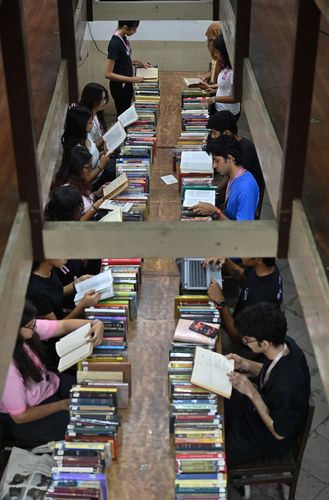 Poise and purpose: St. Xavier’s College, Mumbai | Amey Mansabdar
Kaur highlighted the importance of mindset development, noting that SRCC offers 24x7 free counselling. These 40-minute sessions are available in both physical and online formats. Student conversations during counselling are kept confidential, unless there is a risk of self-harm. Counselling services are also extended to faculty and non-teaching staff. Kaur recalled that the late Arun Jaitley, former Union finance minister and SRCC alumnus, was on the SRCC governing board when she sought the go-ahead to start the counselling services. He immediately approved the proposal, stressing that cost should not be a barrier to such essential support for students.
Kaur said students from small towns often face disruption when moving to a city like Delhi, transitioning from school to college and adjusting to new living arrangements. To help students settle in, the college, in which more than 70 per cent of the students are from outside Delhi, runs a teacher-student mentorship programme.
SRCC aims to minimise financial worries for its students. An “earn while you learn” scheme pays students Rs4,800 per month for working on college projects that involve assisting those from disadvantaged backgrounds. Alumni also contribute significantly, with many “adopting” students by covering their finances, living costs and education fees. They also provide mentorship and help with internships and placements. An alumni relations cell actively manages these initiatives and Kaur personally connects with each alumni batch via WhatsApp.
SRCC has an MoU with the corporate affairs ministry and an alliance with the Indian Corporate Law Service Academy. These collaborations provide specialised training programmes for senior corporate leaders and government officers. Additionally, as a part of a consulting and executive education outreach, SRCC senior faculty recently conducted a five-day training programme on microeconomics for RBI officers.
At the Indian Institute of Mass Communication, Delhi, the country’s best institute for mass communication and journalism, apart from preparing future media professionals to tackle challenges like fake news, there is an initiative to create an entrepreneurial mindset among students. As part of this, 31 student groups (five students each) from IIMC campuses across the country, and a few students from other colleges, presented ideas before industry experts. Fourteen ideas were shortlisted and the selected teams were provided with industry mentors. Three teams received a prize money and will get hand-holding to showcase their ideas to potential investors.
IIMC is introducing new programmes, like a PG diploma in corporate communications and brand management, with a curriculum developed by industry experts. Anupama Bhatnagar, vice chancellor, IIMC, emphasised the importance of regular curriculum revamps, pointing out that the institute had even revamped its course content mid-term.
Surbhi Dahiya, journalism professor and head of department, media business studies at IIMC, while talking about new MA programmes like media business studies and strategic communications, stressed the importance of practical experience. “We have an incubation centre and digital campaigns, and we make podcasts, short films and documentaries,” she said. “All these initiatives simulate the professional environment. We also have industry mentorships and industry experts who take regular classes.”
One of Dahiya's students recently returned from Egypt and Jordan, where he created documentaries and films for UK clients. Another student went to Leh and Manali for film and documentary shoots.
From this academic year, IIMC is starting an MA in new media studies. IIMC also teaches students strategic business communication, content creation, production, distribution, and how modern media organisations work, apart from management subjects like marketing, finance, organisational behaviour and brand building.
Loyola College, Chennai, which is among the top five in arts, science and commerce, has prioritised support for differently abled and first-generation learners, children of widows or deserted women and transgender individuals. Loyola's Resource Centre for Differently Abled, established in 2006, assists approximately 60 students annually with their academic and co-curricular pursuits. Other student support services include mentoring, financial aid totalling 01.2 crore annually, government scholarships and midday meals for around 400 students.
“Courses like MA international relations and MSc counselling psychology has been added recently to meet the needs of the market and the society,” said Rev A. Louis Arockiaraj, SJ, principal, Loyola College. “Digital journalism and 3D animation have been under vocational education stream, but they have been strengthened as a regular stream to skill up and cater to the needs of the media industry. AI and film-making as a diploma course has been added to meet the current needs of the market.”
Loyola, too, emphasises student involvement in organising national and international conferences, during the course of which they are sensitised on topics like economic development, environmental protection and scientific research. Through these events, featuring resource persons from across the country, the institution aims to empower students and staff with relevant competencies.
Also Read
- How Asia’s oldest engineering college, IIT Roorkee, is staying ahead of the curve
- THE WEEK-Hansa Research Survey 2025: India’s best colleges
- 'IIT Bombay is looking at transition from teaching to learning': Prof Shireesh Kedare
- 'Only those with in-depth and interdisciplinary knowledge have a future': V. Kamakoti
- 'Firms expect fresh graduates to have right combination of hard, soft skills': Manish Sabharwal
Rajendra Shinde, recently retired principal of St. Xavier's College, Mumbai, spoke on the college's role in shaping students' lives. He cited an alumnus, Hrudananda Behera, who, despite being shy and unable to speak English upon joining, gained confidence through the college's language lab headed by Jyoti More. Behera, who hailed from Simulia, Odisha, credited the college with developing his public speaking, writing, reading, group discussion and presentation skills.
Shinde told THE WEEK that the students have to undertake projects in all the subjects, including arts and science. For instance, economics students were asked to sell small products, like bangle pins. This allowed them to appreciate the difficulties in first arranging capital to procure items and then selling them. They learnt how sales can be improved. Some students bought fruits directly from farmers and sold it in their localities. The college also leverages its Mumbai location for industry tie-ups and internships.
These examples make one thing abundantly clear―young graduates will bring fresh ideas and wisdom beyond their years to India Inc.