



India today is a leading global power with a strong economy, diverse culture and technological advancements that have made it a hub for innovation and entrepreneurship. The country has been able to achieve significant progress in the last nine years with a focus on economic reforms, infrastructure development and social welfare programmes that have improved the standard of living for millions.
The government has focused on strengthening national security, implementing structural reforms, supporting women-led development, fostering entrepreneurship, serving the poor and the marginalised, ensuring farmer welfare, providing inclusive health care, facilitating the middle class, improving infrastructure, promoting civilisational heritage and developing every corner of the country.
India has shown significant progress in areas of renewable energy, ease of living, digitalisation, space exploration, electrification, sanitation, social justice, financial inclusion and digital connectivity. Prime Minister Narendra Modi's vision and determination to bring positive change to India are commendable and his efforts are yielding results.
Under the inspiring guidance of the prime minister, India has emerged as a shining example of a nation committed to progress, development and prosperity. The government has made significant strides in foreign policy, forging strong relationships with key countries and international organisations. India has emerged a key player in the global arena with the prime minister's assertive foreign policy approach and his emphasis on India’s strategic interests. With the world looking at India for solutions, the country has the potential to lead the way in shaping the future of the world. The G20 presidency is a testament to India's growing influence on the world stage. As a responsible global leader, India is committed to promoting peace and stability in the region and beyond. With its rich cultural heritage and diverse population, India has a lot to offer the world.
Our government has linked India's development goals with the aspirations of its people, and we are committed to creating an Atmanirbhar Bharat that is capable of fulfilling the needs of its citizens while also empowering them to become active participants in the country's growth story. Since taking office in 2014, Prime Minister Modi has launched several initiatives to build a robust economy that is resilient to external shocks and is self-reliant in critical sectors such as defence, technology and health care. His policies have led to significant improvements in areas such as infrastructure, education and access to basic amenities.
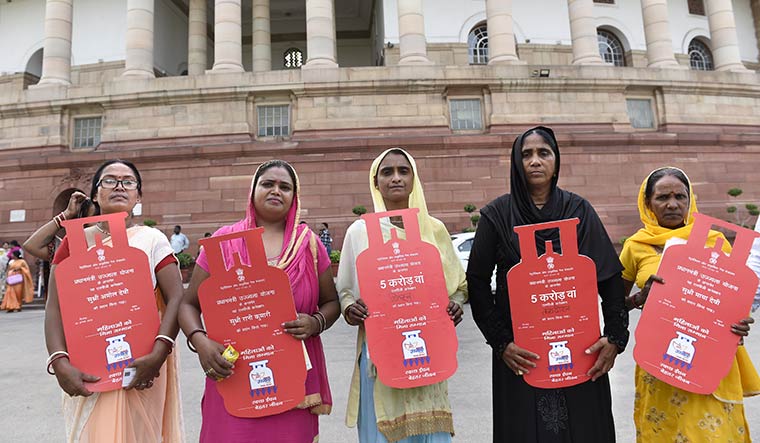
The construction of 11.5 crore toilets under the Swachh Bharat Abhiyan, the provision of electricity to 2.6 crore households under the Saubhagya Yojana, 17.9 crore people's health care coverage by Ayushman Bharat, the construction of over 2.3 crore houses with the Pradhan Mantri Awas Yojana, and 9.1 crore LPG connections provided through the Ujjwala Yojana are some of the key initiatives taken by the Modi government to improve the standard of living and to uplift the socio-economic status of its citizens. The government has also implemented a range of measures aimed at improving the lives of farmers and boosting agricultural productivity.
The government has launched several ambitious projects, such as the Bharatmala Pariyojana, which aims to build a network of highways connecting the length and breadth of the country. The Sagarmala project, which aims to develop India's ports and coastal areas, is another important initiative. The government has also made significant investments in the railways. Over 38km of highways and 5km of rail lines are being built every day.
In these nine years, India has moved from women's empowerment to women-led empowerment. In rural villages, where women once had limited opportunities, they are now leading changes in the economy and society. Women entrepreneurs are starting businesses with Mudra loans, contributing to family income and creating jobs. Of the crores of Mudra beneficiaries, about 70 per cent are women. The distribution of Ujjwala Yojana LPG connections has eased the burden on women who previously spent hours collecting firewood for cooking, freeing up time for education or work. In rural areas, women are running self-help groups that address issues such as sanitation, health and education. In the past few years, the enrolment of women in engineering, science and technology streams has increased to 43 per cent. Prime Minister Modi's initiatives have played a significant role in empowering women and bringing them to the forefront of the country's progress.
With its focus on innovation, entrepreneurship and sustainable development, the government is taking steps to promote domestic manufacturing, enhance digital infrastructure and encourage the growth of small and medium-sized enterprises, all of which are crucial for achieving our vision of a self-reliant India. The scheme for the enhancement of competitiveness in the capital goods sector has played a significant role in boosting the domestic production of capital goods in India by providing financial assistance to universities that conduct research and development, technological upgrades and skill development in this sector. The scheme sanctioned Rs583.312 crore for 33 projects between 2014 and 2020.
The government's efforts to promote domestic manufacturing will not only create job opportunities, but also reduce dependence on imports. To further enhance India's manufacturing capabilities for Advanced Automotive Technology (AAT) products and create a competitive ACC battery in the country, the government has launched two production-linked incentive schemes which aim to establish a world-class ecosystem of research and development, manufacturing and recycling of advanced batteries.
As India continues to progress towards becoming a developed nation, the integration of new digital technology and Industry 4.0 in the manufacturing sector will play a crucial role in shaping the future of India's economy. The adoption of advanced technologies such as automation, artificial intelligence, and the Internet of Things (IoT) will increase efficiency, productivity and competitiveness in both domestic and international markets. Furthermore, Industry 4.0 will create new job opportunities that require advanced skills in technology and data analysis. The government's initiatives, such as the Digital India campaign, Make in India and Skill India are paving the way for a tech-driven and sustainable economy.
India is also progressing to fulfil Prime Minister Modi's commitment to net zero carbon emissions by 2070, which will contribute to global efforts to combat climate change. The government is investing heavily in renewable energy sources such as solar and wind power with the aim of reducing India's dependence on fossil fuels. The country has set a target of achieving 20GW of nuclear power capacity by 2030. Once this is achieved, India will become the third-largest producer of nuclear energy in the world after the US and France. These initiatives not only promote sustainable development, but also create opportunities for businesses and investors in the renewable energy sector. Under the supervision of the ministry of heavy industries, BHEL has developed Advanced Ultra Supercritical (AUSC) technology for 800MW power plants, one of the most efficient technologies for coal-fired power plants.
The prime minister has focused on implementing sustainable transportation initiatives that will benefit future generations and ensure a cleaner and greener India. The FAME India Scheme is a prime example for this, as it promotes the adoption of electric vehicles and supports the development of charging infrastructure. The scheme provides incentives for both manufacturers and buyers of electric vehicles and promotes the development of charging infrastructure. The government has also set a target of achieving 30 per cent electric vehicle penetration by 2030.
India has registered its name in the global fight against Covid-19 by providing essential medical supplies to more than 150 countries. The country has also developed its own vaccine, Covaxin. India's successful handling of the pandemic earned it international recognition and also boosted its economy. India has adapted to the new normal, demonstrating its ability to overcome adversity and continue on a path of growth and development. In addition to these achievements, the Modi government has also taken significant steps towards ensuring the security and well-being of its citizens. The government has implemented various measures to combat terrorism and strengthen national security. India is working on a fifth-generation medium-weight fighter jet.
Prime Minister Modi has turned the administration into a proactive and innovative force working for the people of India. The government has abolished more than 2,000 rules and laws for ease of governance and business. Compared with previous governments, the prime minister showed courage and conviction to implement bold and necessary reforms for the betterment of the country, bringing new hope to the northeast and Kashmir.
The government's efforts to streamline governance and digitise government services reflect the prime minister's innovative and proactive approach. To help the elderly, the government has simplified the process of disbursing their pension by converting most of the work online and minimising the human interface to ensure transparency, accountability and citizen participation. The GST concession on purchasing cars for physically disabled people has also been digitised to make the process smoother and more accessible.
India has emerged as a strong and capable nation that is poised for even greater achievements in the years to come. From Kashmir to Kanniyakumari, every corner of India is now witnessing the transformative changes brought about by the Modi government. With economic growth, new job opportunities and initiatives to improve the lives of every citizen, it is clear that the future of India is bright. Today, the people of the country are active in building 'Ek Bharat Shreshtha Bharat', marching step by step with the prime minister. This is a testament to the power of collective effort, determination and visionary leadership.
The people of India have shown that with right leadership and policies, anything is possible. All this is a testament to the prime minister's vision for a modern and prosperous India and his dedication to bring about positive change for all citizens. While there may still be challenges and obstacles to overcome, the government's bold and innovative approach to governance has set the country on a path towards a brighter future. With continued focus and dedication, India can continue to make strides towards progress and prosperity under the leadership of Prime Minister Modi.
