



No. 1 in arts and science
How has St. Stephen’s managed to maintain an edge over other colleges in arts and science?
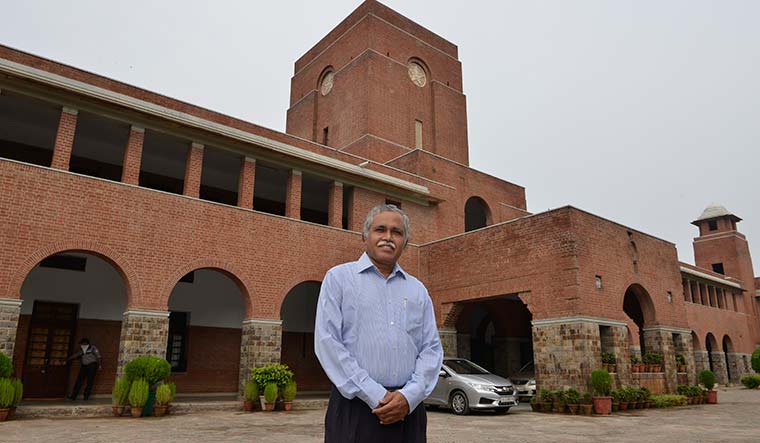
St. Stephen’s college is one of a kind. We started our vocation of service in education 140 years ago and we have been honing that skill all through these years…. We don’t boast of a fancy building or a tech-savvy campus—our pride is our young men and women. In arts and science, they learn the fundamentals and they learn it the hard way—without compromises. Be it the Rhodes scholarships that our students have been qualifying for regularly, or the high pay packages they command, or the fantastic NGO work they do, they excel everywhere because they have got their fundamentals right. Excellence and service—no compromises.
What innovations did you bring in during the pandemic?
Online classes are a requirement, but we try to do that “little more”—it could be through the availability of a teacher for her students, or the college counsellor giving a few tips to a desperate student. That spirit of innovation is reflected in a sensitive associate dean of residence, urging students to brighten up the lives of fellow resident students during the second wave by caring for each other. The lockdown [also] gave us an opportunity to get some maintenance and infrastructural work done. Innovations are there for the asking, you just need to think smart.
Any plans to introduce new hybrid courses or subjects?
In January 2020, we launched the public policy programme. In March, we made it online to beat Covid-19. We have been running this programme with a whole set of niche specialisations with the best in the field as resource persons—the very creators and implementers of public policy themselves. We have now got an international fellowship programme going with the support of the ministry of external affairs—a first-of-its-kind in India! We want to support the government in its neighbourhood-first policy by helping create dynamic leaders. We hope to launch this programme as soon as international flights start.
We are waiting eagerly for the New Education Policy to grant us autonomy. We have got close to 20 new courses lined up and one of them is a first-of-a-kind in India.
Anything new planned for this academic year?
Yes, the fellowship programme is one. If the NEP is implemented in spirit and word, then autonomy for college will give us the freedom to be creative and push the boundaries of our staid education system. We have got quite a few ideas that, with the government’s support, will prove that the NEP is not just an aspirational document but the harbinger of a much-awaited change in education. The wish is there, but the government needs to make that wish a reality.
To read the full interview
Visit www.theweek.in
