



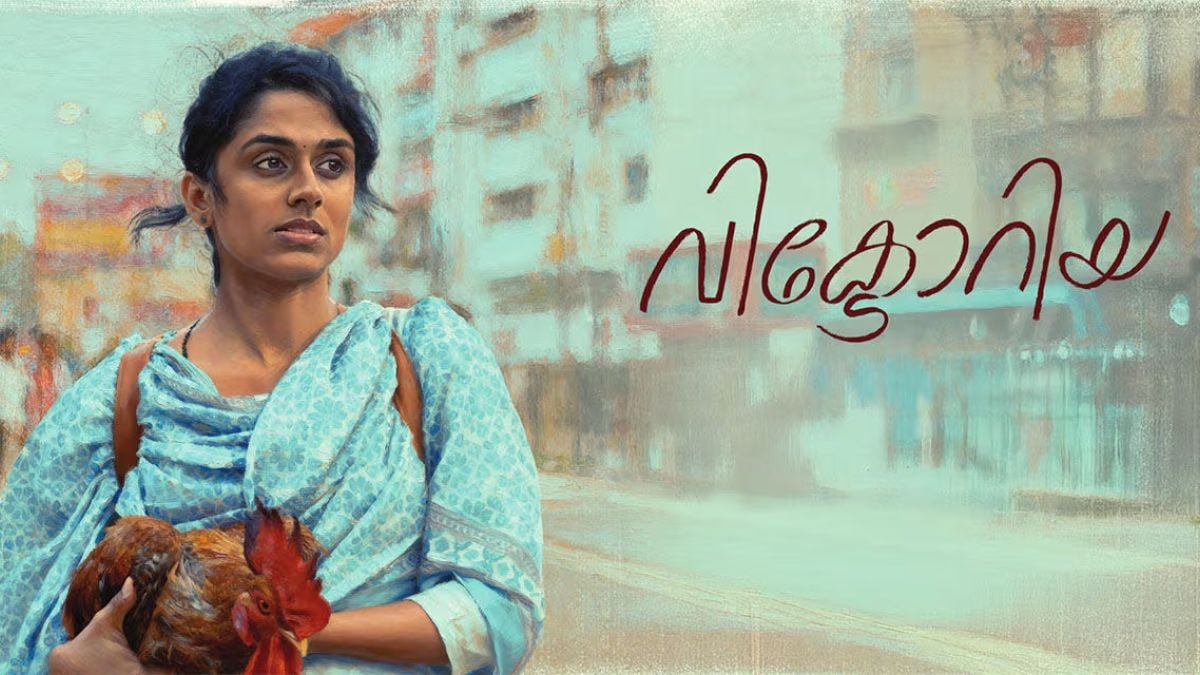
The imprint of the slap takes a while for us to notice. It takes much longer for the women who come into contact with the owner of the face, Victoria. Meenakshi Jayan plays this woman, a beautician, with convincing sincerity. This is a strong internalised performance, one that evokes the image of a pressure cooker ready to explode any minute. I found myself feeling anxious, wondering what I would do if I were in the same situation. I would've probably died of a heart attack, I thought.
Running a little under 90 minutes, Victoria is a ‘day in the life’ episode, mostly set inside the confines of a beauty parlour run by a woman who likes to make Instagram reels. The place, we later see, becomes a venue for a "group therapy" session for Victoria and the women, of varying age groups, who go there for different procedures. The film doesn't run in real-time, but the time jumps are rarely noticed, condensing several hours in a way that makes it seem like everything is happening in the aforementioned duration. Despite adopting a handheld approach, cinematographer Anand Ravi helps maintain a steady focus on Victoria's inner turmoil.
Edited by writer-director Sivaranjini J, this is a film with perfectly timed pauses and breathing spaces, staged in such a way that they mirror real-life behaviour. There is a seamless quality to the pacing. It's cut in such a way that you don't notice the cuts. I, for one, remember noticing just a couple. There are smart choices, like knowing that you don't need to show the entirety of two friends sharing a lunch.
Every woman has distinct behavioural traits. They only show up for a short while, but you're already imagining vivid backstories, because whatever little details the women tell about themselves are enough to draw a clear enough picture. It got me thinking that this is a quality that's missing from many films today — the ability to stay with the characters and their emotions. Casting the right people matters. This film scored in this department.
As Victoria, Meenakshi delivers an astonishing level of emotional continuity, starting with the agitated mental state in which we find her on a bus on the way to work, through her struggling to get through the day while being acutely aware that returning home after work is unimaginable. There was a deeply distressing situation at home, we learn. It concerns her relationship with her boyfriend. Her father had strong objections to her pursuing a love affair with a man from a "lower caste." The boyfriend, a cab driver, finds little time to hear her woes. He strikes us as someone who lacks the guts to handle this relationship with the seriousness it demands. She experiences a nervous breakdown, her body conveying all the jitters resulting from it. The strongly palpable performance is anxiety-inducing. As mentioned earlier, I couldn't imagine myself as a woman experiencing such turbulent scenarios.
And yet, Victoria manages to maintain impressive composure, whether it’s when engaged in the duty of taking care of these women while trying to figure out a solution to escape the terrifying prospect of dealing with her parents later. How is she able to multitask without messing up her tasks? How is she able to switch off that side of her that's being bothered by thoughts of her problematic parents? However, it's not all doom and gloom. The film finds space for humour (the anecdote about the plumber earned some laughs at the screening) and some genuine moments of warmth. Elsewhere in the shop, a group of high-school girls break into a brief chorus. Their lyrics fit in well with the subject matter at hand. It's possible that Nadine Labaki's Lebanese film Caramel, also set in a beauty salon, was a strong influence on Victoria, but aside from the female camaraderie aspect, the two films differ in their goals.
My favourite is an emotional moment when Victoria's best friend, to whom she hasn't spoken in a long time, notices the slap mark on her face. The tears start to flow, and the power goes off, with just one faint light enough to reveal the two figures. It's a visual choice that seems to suggest one or two things. Perhaps it doesn't want to show her in this pitiable condition. Perhaps it's trying to say that the friend who sees her in the dark can read her mind better than the so-called boyfriend who sees her worried, slap-reddened face on a bright screen. "Don't take on burdens that you cannot carry, be it work or people," this friend tells her. A simple, comforting statement, but one that can initiate life-changing decisions.
Interestingly, no men are to be found in this film. The only male character is a... rooster, which has been forcibly put under Victoria's care by a woman she knows. It's an idea that implies the obvious when you tie it into the context of Victoria's predicament. The background male characters are either heard outside a door as a voice or through a blurry mobile phone screen. Men are not relevant here. Why should they be? This is a film by women, for women, and of women. Empowering, therapeutic.
Film: Victoria
Director: Sivaranjini J
Cast: Meenakshi Jayan, Sreeshama Chandran, Jolly Chirayath, Steeja Mary, Jeena Rajeev, Remadevi, Darsana Vikas
Rating: 4.5/5
