



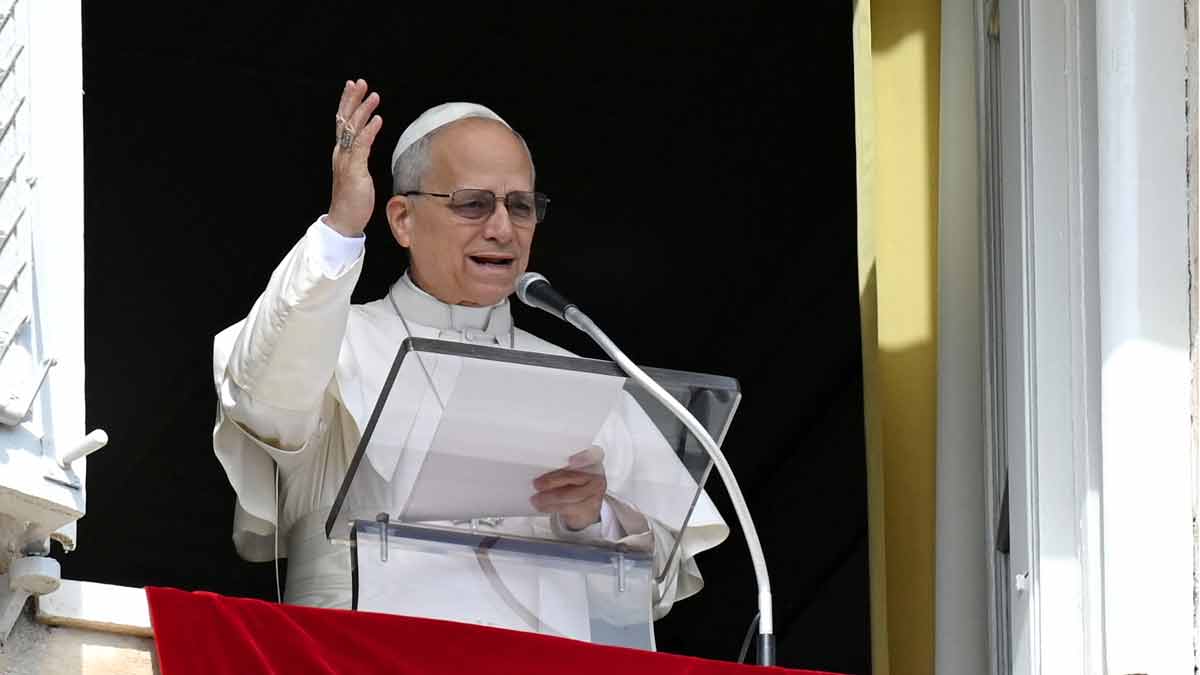
Pope Leo XIV’s visit to Algeria is planned for April 2026. This will be the first visit by a Roman Pontiff to the country, marking a shift in the Maghreb’s diplomatic stance. The government is promoting the event as a celebration of interfaith solidarity and ‘civilisational dialogue.’ However, critics see this event as highlighting a more complex institutional reality. The visit brings attention to the growing contradictions between Algeria’s international diplomatic ambitions and its restrictive domestic laws regarding non-Muslim minorities.
From a geopolitical perspective, the Algerian government is leveraging the upcoming Papal visit to enhance its moral authority and project an image of stability and tolerance. Algiers has faced ongoing scrutiny from various international observers, including the UNHRC, for shutting down Christian churches. An invitation from President Abdelmadjid Tebboune to Pope Leo XIV to visit is an effort to restore its reputation among the Global North. By hosting the Pope, Tebboune seeks to distance himself from the domestic policy of Islam homogenisation. The government is working hard to promote pluralism. However, the reality of upholding a 'security-first' approach toward indigenous religious movements continues to be seen as a national threat.
The September 2006 Ordinance (Ordinance 06-03) lies at the centre of multiple domestic conflicts. This ordinance governs all non-Muslim religious activities. It requires licensing for religious, educational, or social events. One of the most contentious issues is that it criminalises anyone attempting to proselytise Muslims. Conversely, Article 51 of the Algerian Constitution guarantees freedom of worship, making the 2006 Ordinance a significant administrative barrier. Additionally, non-Muslim worship is only allowed in buildings officially authorised by the state. Unfortunately, the issuing authority (National Commission for Non-Muslim Worship) has remained inactive. The Église protestante d'Algérie (Protestant Church of Algeria, EPA), as an indigenous body, still considers its member churches illegal due to a legal vacuum. The closure of nearly 47 Protestant church buildings has resulted in a landscape with no churches for Protestants. Moreover, in a recent legal case, Pastor Youssef Ourahmane and other EPA leaders were convicted of conducting unauthorised worship. This sharply contrasts with the state-supported grandeur of the Catholic Church’s public cathedrals, while minority religious leaders face criminal charges.
The reason for the crackdown on the Protestant community is that they are mostly native Algerian converts from the Kabylie region, while the Catholic population primarily consists of expatriates. The Catholic Church holds a special position within the Algerian state. The country's dual strategy allows for the toleration of Catholic churches, as they are considered foreign entities that do not threaten the Arab-Islamic nationalist identity. The demographic difference is clear regarding Protestant Christian identity as a native. The state perceives them as ‘neo-colonial interference.' The Pope’s visit could be very risky, as it might legitimise selective pluralism—criminalising indigenous Christianity while respecting foreign Christians.
The significance of this particular Papal visit lies in the Augustinian heritage, which can serve as a tool for soft power. Pope Leo XIV is an Augustinian, as he was a member of the Order of Saint Augustine, and the Pope’s journey to ancient Hippo (modern-day Annaba) aims to revive the spiritual and intellectual roots of Latin Christianity. Additionally, enabling spiritual tourism to the ruins where Saint Augustine preached could have economic benefits. However, making spiritual tourism a reality presents risks of duality. The state is taking a pragmatic approach to faith, adopting a museological strategy that suppresses the living practitioners of faith while simultaneously celebrating and commercialising the dead saint of 430 AD (the death of Augustine of Hippo).
The Papal visit to Algeria could be very significant. One potential outcome is whether Pope Leo XIV will focus his diplomacy on challenging the restrictions imposed by the discriminatory 2006 ordinance. Or will this visit be purely symbolic? The success of the visit can only be gauged by the reopening of closed churches or even the reopening of Caritas Algeria. Either this Papal visit will mark a breakthrough for religious freedom, or it will be just a superficial effort to conceal increasing religious intolerance in the country.
