



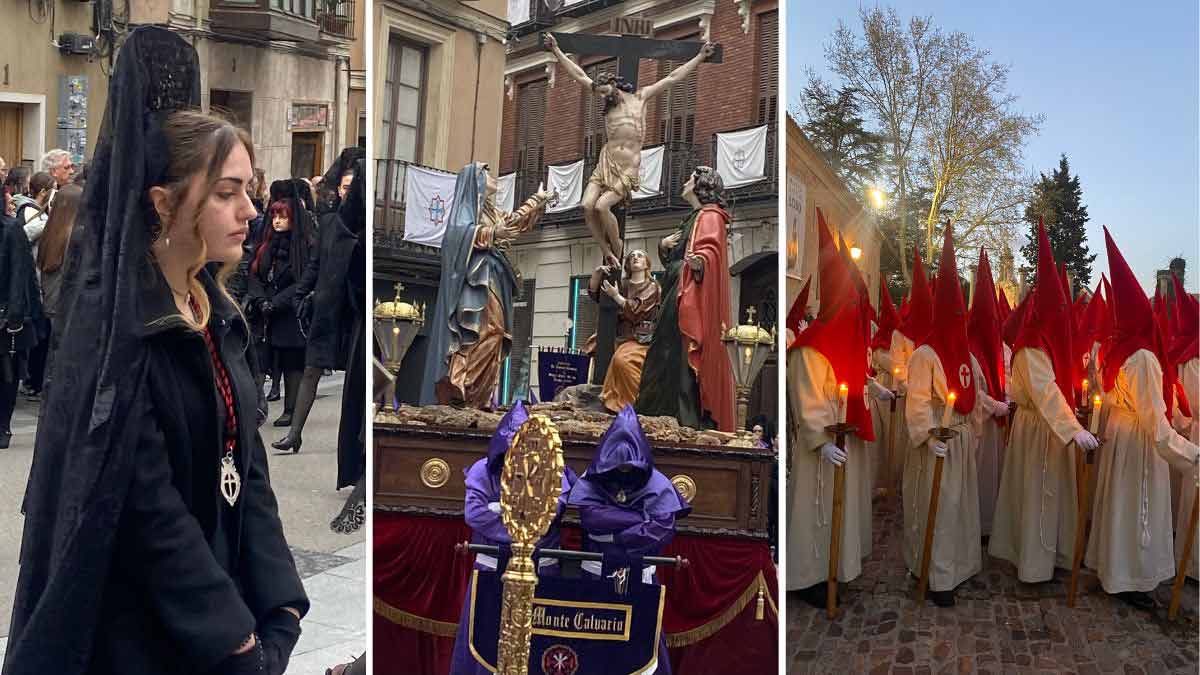
In the quiet medieval cities of northern Spain, Holy Week unfolds not as spectacle but as solemn devotion. Walking through the candlelit streets of León, Zamora and Valladolid, I discovered a deeply moving expression of faith that lingered long after the last procession passed.
The Soul of Holy Week in northern Spain
I arrived in the historic region of Castilla y León during the days leading up to Easter, when the annual celebration of Semana Santa—Spain’s Holy Week—transforms towns and cities into living theatres of faith. Dating back to the 16th century, these processions were originally organised by Catholic brotherhoods to retell the Passion of Christ to a largely illiterate population through sculpture, music and ritual. Over centuries, they evolved into one of the most powerful cultural traditions in Spain. For many travellers, Semana Santa immediately brings to mind the colourful pageantry of southern Spain—especially in cities like Seville or Málaga. But here, in the austere heartland of Castilla y León, the mood is entirely different. The celebrations are quieter, more contemplative—almost monastic in spirit. Instead of exuberant music and cheering crowds, there is silence, candlelight and the slow cadence of drums echoing through medieval streets.
I travelled through three cities—León, Zamora and Valladolid—each with its own interpretation of this centuries-old ritual. Watching the processions unfold, I realised that Semana Santa is not simply an event; it is an emotional journey that draws everyone present into its quiet intensity.
Brotherhoods, penitence and ritual
At the heart of Semana Santa are the religious brotherhoods—lay organisations that have preserved these traditions for generations. Members prepare for months, sometimes years, to take part. Their rituals are governed by strict rules and a deep sense of penitence.
When the processions begin, the streets fill with hooded penitents known as nazarenos. Clad in long robes and tall pointed hoods, they carry candles or crosses, walking slowly in disciplined rows. The heavy wooden platforms—pasos—bear life-size sculptures depicting scenes from the Passion of Christ or the sorrow of the Virgin Mary. These sculptures are masterpieces created by renowned Spanish artists, such as Ramón Álvarez and Mariano Benlliure, and are carried on the shoulders of brotherhood members through narrow streets for hours at a time.
The atmosphere is unlike anything I had experienced before. Drums beat slowly in the distance. Incense drifts through the air. Candles flicker against ancient stone facades. Entire families gather along the sidewalks, standing in respectful silence as the processions pass.
For many Asian visitors, the ritual choreography feels strangely familiar. Watching the barefoot penitents and the collective devotion of the crowds, I was reminded of temple festivals in India or sacred processions in southeast Asia. Across cultures and continents, faith often finds expression through similar gestures of devotion.
León: A city of midnight processions
My first experience of Semana Santa was in León, a city whose medieval streets seemed made for these solemn rituals.
As night fell, the distant sound of trumpets and drums echoed through the old town. Slowly, the procession appeared—rows of hooded penitents walking beneath the glow of candlelight. The pasos followed behind, their sculpted figures illuminated dramatically against the darkness.
The crowd stood quietly, watching with an intensity that was almost palpable. Some people wept as the image of Christ passed. Others folded their hands in silent prayer.
Women wearing black dresses and delicate lace mantillas accompanied the Virgin Mary. The mantilla—a traditional veil worn since the 16th century—symbolises mourning and reverence. It falls gracefully over the shoulders, held in place by a decorative comb known as a peineta. Once an everyday symbol of Spanish femininity, the mantilla now appears mostly during ceremonial occasions such as Holy Week.
As the procession moved slowly through the city, the moment felt suspended in time. Even as an observer, I felt drawn into the emotion of the ritual.
Zamora: Silence and sacred memory
If León was dramatic, Zamora was profoundly spiritual.
The gathering began at sunset near the Romanesque cathedral. Hundreds of people stood quietly as the last rays of light faded over the ancient skyline. The air carried the scent of incense.
Then the brotherhood members took their oath of silence.
Holding candles, they began their slow procession through the streets. The only sounds were the shuffle of footsteps and the distant tolling of bells. Watching them, I felt as though the centuries had folded in on themselves.
To better understand the tradition, I visited the Museo de Semana Santa de Zamora—the Holy Week Museum dedicated entirely to these rituals.
Inside, I found the remarkable sculptures that form the heart of the processions. Crafted in wood and painted with extraordinary realism, they depict moments from the Passion of Christ: grief, suffering, compassion and redemption captured in expressive detail. The museum also displays processional crosses, incense burners, bells and the elaborate robes worn by the different brotherhoods.
Seventeen brotherhoods participate in Zamora’s Holy Week, transforming the city into what feels like a living museum from the Friday before Palm Sunday until Easter. Among the most powerful moments are the Swear of Silence, the haunting Miserere chant sung during the Yacente procession and the solemn march of the Brotherhood of Jesús Nazareno.
Standing among these sculptures, I realised how deeply these traditions shape the identity of the city.
Valladolid: A living theatre of faith
In Valladolid, Semana Santa takes on an almost theatrical dimension.
The highlight here is the Good Friday General Procession of the Passion—a remarkable event that gathers sculptures from multiple brotherhoods into one monumental procession.
Locals arrive hours early, placing chairs along the streets to secure a good view. The spring air can be chilly, but no one seems to mind. The anticipation itself is part of the experience.
When the procession begins, it unfolds slowly, almost like a sacred play. One by one, the pasos depict scenes from the final hours of Christ’s life: the Last Supper, the agony in the garden, the crucifixion, the descent from the cross, and finally the grief of the Virgin Mary.
There are thirty-three pasos in total, carried by members of twenty different brotherhoods. Each sculpture is a masterpiece of Spanish religious art, and together they form what feels like a vast open-air museum moving through the streets.
But this is far more than a tourist attraction. It is the emotional heart of the city—an expression of faith that has endured for centuries.
An experience that stays with you
As the final processions ended and the streets slowly returned to their usual rhythms, I realised how deeply this experience had affected me.
Semana Santa in Castilla y León is not simply about watching a spectacle. It is about feeling the weight of history, the devotion of communities and the shared emotions of thousands of people gathered together.
Walking through the candlelit streets of León, Zamora and Valladolid, I found myself drawn into the quiet intensity of the rituals. Even as a visitor, I became part of the moment.
When I finally left the region, I carried with me memories of flickering candles, haunting chants and the slow movement of centuries-old processions.
Semana Santa had revealed a Spain that few travellers see—solemn, spiritual and deeply moving.
And long after Easter had passed, the echoes of those distant drums still seemed to linger.
