



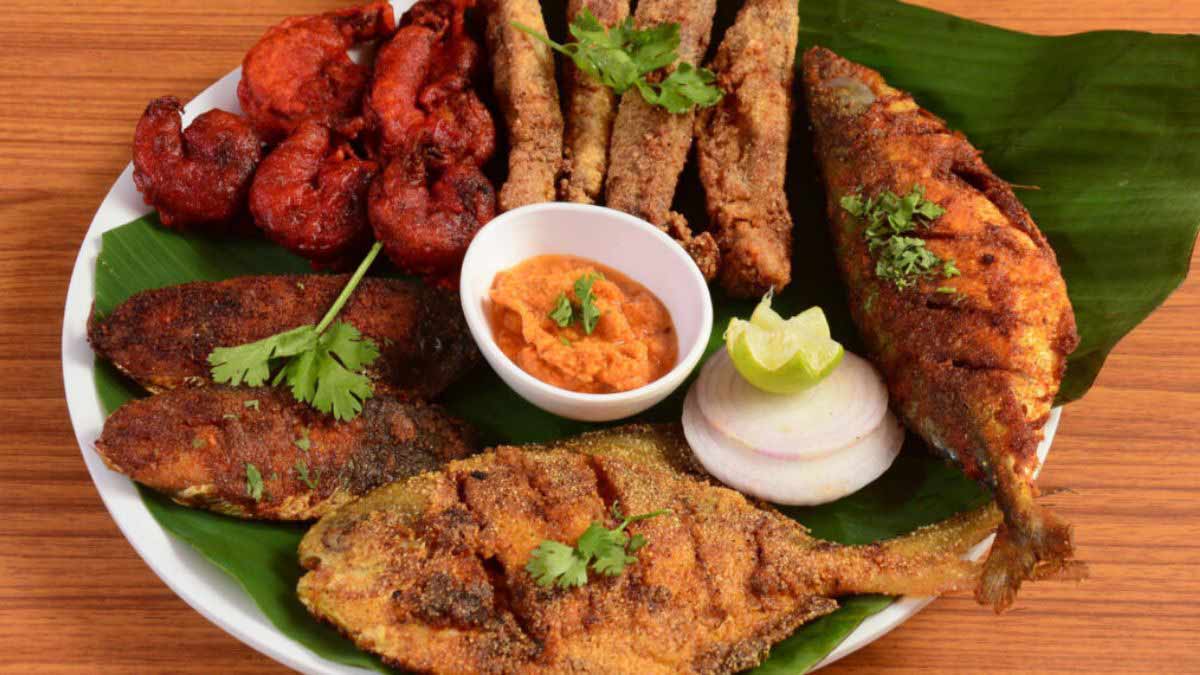
For decades, Alibaug was shorthand for a quick beach break, quiet sands, ferry rides from Mumbai, and sleepy villages where time slowed down after sunset. Food, if it figured at all, meant a simple fish thali eaten at a local home or a modest shack near the shore.
Today, that idea of Alibaug is changing. Slowly, deliberately, and driven as much by its people as by its produce, the coastal town is emerging as one of Maharashtra’s most compelling food destinations.
What sets Alibaug apart is not a single cuisine, but a convergence. Sitting along the Konkan coast, the region has long been shaped by Malvani traditions, fiery curries, coconut-laced gravies, sun-dried fish, and an intimate knowledge of the sea’s rhythms.
But over time, Alibaug’s kitchens have absorbed influences from Koli fishing communities, Konkani households, Gujarati traders, and even Bene Israeli Jewish families who settled here generations ago. The result is a culinary landscape that is layered, seasonal, and deeply local.
Seafood remains the spine of Alibaug’s food story. Early mornings, local markets reveal baskets of pomfret, bombil, prawns, mud crabs, clams, and shellfish still alive with saltwater. What’s striking is how differently the same fish is treated across homes. A pomfret may be lightly marinated and fried crisp in one kitchen, slow-cooked with kokum and coconut in another, or wrapped in banana leaf and grilled over charcoal elsewhere.
Recipes are rarely written down; they are inherited and adjusted to the day’s catch.
Yet Alibaug’s food culture is no longer confined to domestic spaces. In recent years, chefs, home cooks, and food entrepreneurs, many of them returning to their roots after years in Mumbai or Pune, have begun foregrounding the region’s culinary diversity.
Pop-up kitchens, curated food events, and immersive dining experiences now spotlight forgotten recipes, regional seafood varieties, and indigenous cooking techniques. These are less about spectacle and more about storytelling: where the fish came from, who caught it, and why a certain spice blend is used only in winter.
This revival is also tied to Alibaug’s changing demographics. As artists, writers, filmmakers, and professionals move here seeking a slower life, they bring with them curiosity and respect for local foodways.
The dialogue between old and new is visible on the plate in the form of traditional Malvani gravies served alongside contemporary dishes, vegetarian Konkani dishes sharing space with robust coastal meat preparations, and global techniques applied carefully to regional ingredients.
One recent indicator of this growing culinary confidence was a coastal seafood festival held in Alibaug recently, where chefs and local cooks curated menus centred on regional fish, shellfish and traditional preparations rather than crowd-pleasing staples.
Designed as an immersive experience rather than a commercial food fair, the event brought together Malvani, Koli, and Konkani flavours on a single platform, highlighting dishes that are rarely found on restaurant menus, from banana-leaf grilled seafood to slow-cooked coastal curries.
More than the food itself, what stood out was the emphasis on seasonality and storytelling, signalling a broader shift in how Alibaug is beginning to frame its culinary identity, rooted in tradition, yet open to reinterpretation.
Importantly, Alibaug’s rise as a food destination has not been driven by luxury alone. Many of its most compelling meals are still found in modest homes, community-run kitchens, and village eateries where the menu changes with the tide. Food here remains tied to sustainability, eating what the sea allows, preserving what can be dried or pickled, and avoiding excess.
As coastal tourism across India becomes increasingly homogenised, Alibaug's food culture is an extension of daily life.
Whether through intimate chef-led experiences, local seafood trails, or quiet meals cooked by home chefs, Alibaug’s culinary identity is finally being seen for what it has always been, diverse, rooted, and quietly confident.
