



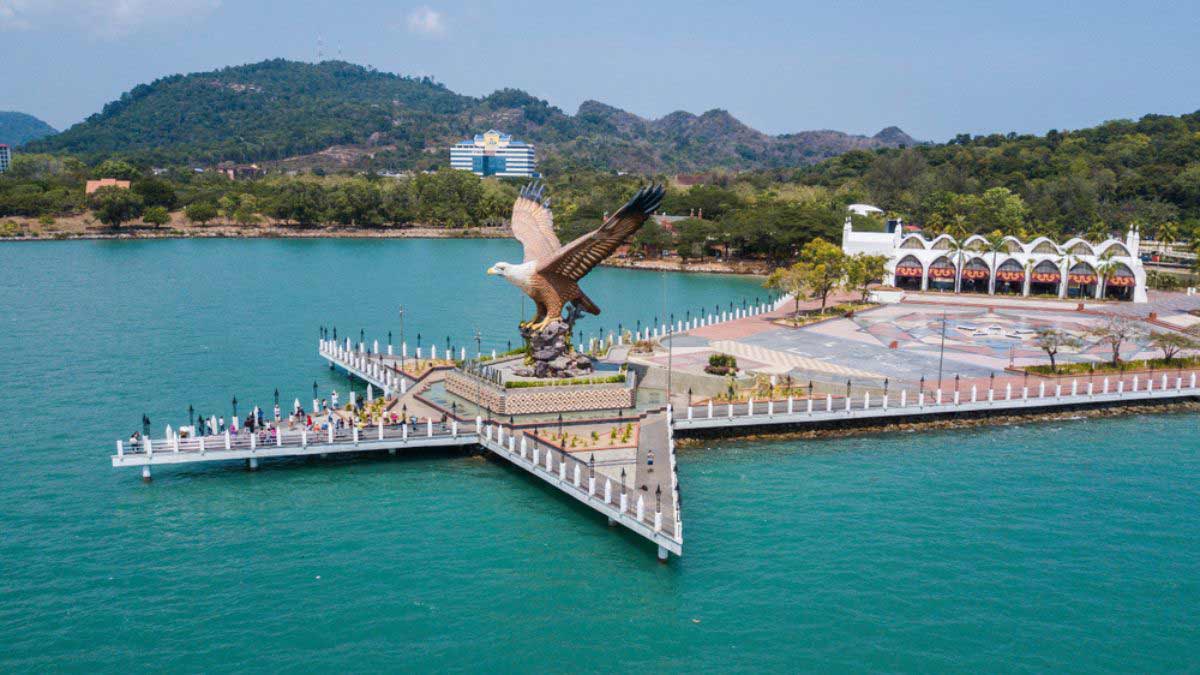
Langkawi, with its sugar-soft beaches and gently swaying palms, sells itself as a place of easy leisure. But at the beginning of November, when we arrived, the island was humming with a different kind of energy. The annual Ironman competition was underway, and athletes from across the world were cycling and running past the main streets. We found ourselves cheering for them from the unbelievably comfortable benches dotting every pavement, thoughtfully placed every few meters so that shoppers and wanderers alike could sit, rest, and simply take in the island’s contagious spirit.
Yet, Langkawi’s true charm reveals itself when you slow down. Its beaches are spotless, its people unfailingly warm, and its food scene a comforting blend of Indian and Thai flavours. The Malaysian dishes didn’t quite win me over, but the island more than compensates for it. And while Langkawi isn’t the cheapest destination, it isn’t unforgiving, either. For Rs 3,000-Rs 4,000 a night, you can find spacious, airy rooms just steps from the shoreline, rooms where the sea becomes your morning view and the stars your nightly companions.

One morning, we dedicated ourselves to being “tourists” in the purest sense. The underwater aquarium, an extravagant glass-tunnel world, turned out to be an unexpected delight. Sharks glided overhead, stingrays danced like slow-motion birds, and the sheer diversity of species reminded us how far the ocean stretched beyond our imaginations.
But the sea would return to us in a more intimate way the next day, this time through scuba diving. The night before, a fierce storm had churned the waters, leaving the visibility low. Still, as our boat drifted a kilometre or two away from Pantai Cenang, the excitement among the eight of us on board was palpable. Six were pros; two of us were beginners hoping our nerves wouldn’t show.

The descent was surreal. The water, though cloudy, slowly revealed a world of rugged reefs and darting reef fish, each creature emerging like a secret being shared. Despite reduced clarity, the dives felt meditative, almost personal, as though the sea had chosen what we were allowed to witness that morning.
Later in the trip came what I now consider my most unforgettable Langkawi experience: the mangrove tour. For four hours, our humble, soft-spoken boat driver guided us through a landscape so serene that time seemed to steady itself. The bat cave was the highlight—thousands of bats hanging upside down, their wings wrapped like cloaks, snoozing in the dim coolness of the afternoon. It was both fascinating and faintly intimidating, a reminder that nature operates on its own etiquette, and we are merely visitors.
The tour didn’t stop at calm waters. Soon, the engine roared to life, and we found ourselves bouncing across the fierce, choppy expanse of the Andaman Sea. Waves slapped the boat; spray kissed our faces; laughter and nervous shrieks mixed in the wind. To our left lay the ghostly outline of Thailand’s horizon; to our right, the Malaysian coastline curved patiently. In that moment, between two countries, between adventure and serenity, you realise that Langkawi is a place that lets you experience both extremes without ever overwhelming you.
At night, the island transforms. You can step out at 1am for quiet stargazing or stroll along dimly lit streets that feel like private pathways. Mornings here are gentle, meant for long walks and long breaths.
Langkawi is the sort of destination that gives you space to dive, to wander, to observe, to just be. Whether you’re exploring underwater worlds, cheering on Ironman athletes, drifting past mangroves, or jolting through storm-tossed seas, the island folds each experience into something intimate and unforgettable.
The beauty of Langkawi is in the fact that it is never just a holiday when you're here; it’s a story you carry home.
