



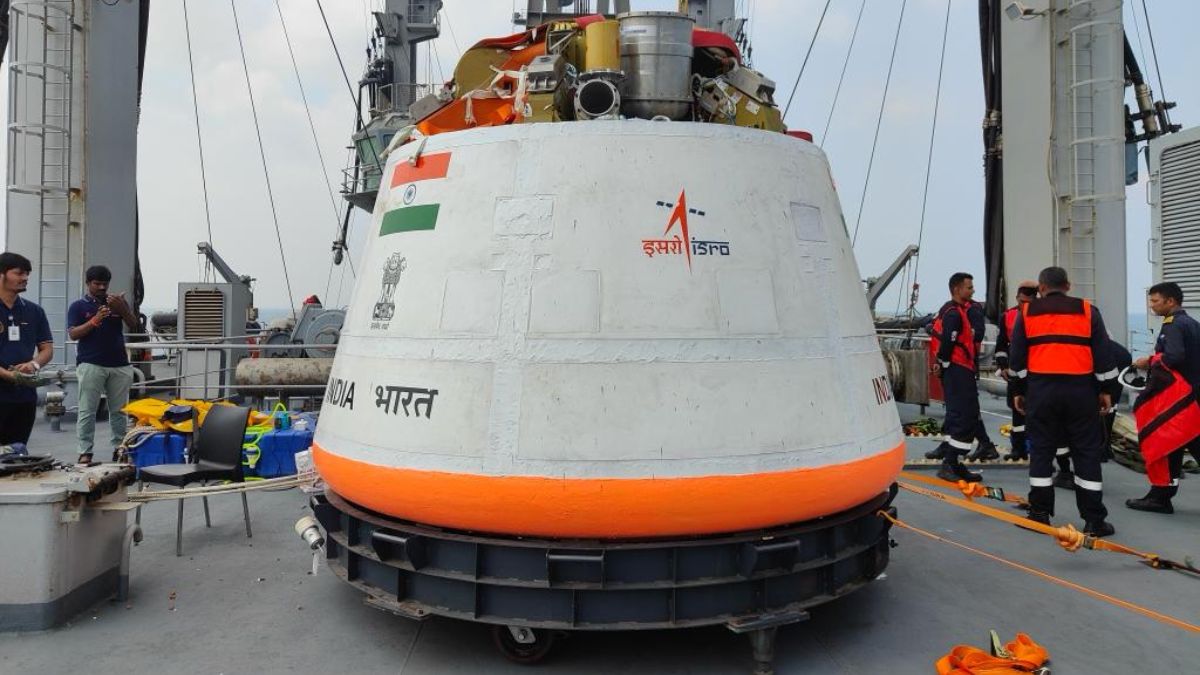
As India prepares for its historic first human spaceflight mission, the Indian Space Research Organisation (ISRO) is leaving no stone unturned in ensuring the safety and success of its astronauts.
At the heart of this preparation lies a fascinating and crucial component called the Gaganyaan Analog Experiments, or Gyanex—sophisticated ground-based simulations that mirror the conditions of space travel, except for one key element: gravity.
Analog Experiments are essentially practice missions conducted on Earth that replicate the conditions, challenges, and operational procedures of actual space travel. The term "Analog" refers to environments or situations that share similar characteristics with space missions, allowing astronauts to train and researchers to test procedures in controlled conditions. In ISRO's Gyanex missions, astronauts live in small, spacecraft-like modules for extended periods, following the same daily routines, conducting the same experiments, and facing the same resource limitations they would encounter in actual space," explained space analyst Girish Linganna.
The key difference between these Analog Experiments and real spaceflight is the presence of Earth's gravity. "Creating zero-gravity conditions on Earth for extended periods is extremely challenging and expensive, making it impractical for long-duration training missions. However, all other aspects of space life—from the confined living spaces to the specialised food and limited resources—are faithfully reproduced," added Linganna.
The Gyanex program represents ISRO's commitment to thorough preparation for human spaceflight. These experiments are conducted in Bangalore using mock-up simulators—precise replicas of spacecraft modules that provide astronauts with realistic training environments. The simulators are designed to match the exact dimensions, equipment layout, and environmental conditions of the actual Gaganyaan spacecraft.
During these missions, astronauts, mission specialists, and support personnel are sealed within the simulator modules for days at a time. They follow strict protocols that mirror space operations, including scheduled work periods, scientific experiments, communication procedures with ground control, and even specific meal times using food specially prepared by the Defence Research and Development Organisation (DRDO). This food replicates the nutritional requirements and preparation methods necessary for space consumption.
The first Gyanex-1 mission, conducted in July, marked a significant milestone in India's space program. Group Captain Angad Pratap, along with two other crew members, spent ten intensive days within the simulator, successfully completing eleven different scientific experiments. Throughout this period, researchers carefully monitored and documented every aspect of the crew's activities, health parameters, psychological responses, and adaptation to the confined environment.
The importance of Analog Experiments extends far beyond basic training. These missions serve multiple critical functions in preparing for actual human spaceflight. "These experiments provide invaluable data on human behaviour and physiological responses to long-term confinement in small spaces. Researchers collect detailed information about how crew members interact with each other, handle stress, maintain performance levels, and adapt to the unique challenges of space-like living conditions," pointed out Linganna.
As experts point out, these experiments help ISRO develop and refine communication protocols between spacecraft crews and ground control teams. The simulations test various scenarios, including equipment failures, emergency procedures, and routine operational communications, ensuring that both astronauts and ground personnel are well-prepared for any situation that might arise during actual missions.
Resource management is another crucial aspect addressed through these Analog Experiments. Astronauts learn to work within strict limitations on water, food, energy, and other essential supplies, developing the skills and mindset necessary for efficient resource utilisation in space where resupply is impossible.
ISRO's approach aligns with practices employed by other major space agencies worldwide, though each has developed unique methodologies suited to their specific mission requirements. NASA's NEEMO (NASA Extreme Environment Mission Operations) program sends astronauts to live in Aquarius, an underwater habitat located 62 feet below the surface off the coast of Florida, for up to three weeks at a time. The underwater environment provides a hostile, alien environment similar to space, where astronauts experience isolation, confinement, and the need for precise safety protocols.
NASA also operates the Human Exploration Research Analog (HERA) facility at Johnson Space Center in Houston, a 650-square-foot habitat where research volunteers live and work like astronauts during simulated deep space missions lasting up to 45 days. These missions focus on studying the five major hazards of human spaceflight: space radiation, isolation and confinement, distance from Earth, gravity fields, and hostile closed environments.
The European Space Agency (ESA) has developed the CAVES program, where astronauts from multiple space agencies explore underground cave systems for up to three weeks. The cave environment provides exceptional space Analog conditions, including permanent darkness, isolation, confinement, limited privacy, and constant risk—all elements that closely mirror the challenges of long-duration spaceflight.
ESA also runs the PANGAEA program, which provides astronauts with geological field training in terrestrial environments that are analogous to the Moon and Mars. This training prepares astronauts to be effective field scientists during future planetary exploration missions.
The data and insights gained from the Gyanex program are directly feeding into the development of operational procedures, safety protocols, and mission planning for India's first human spaceflight. Each Analog Experiment builds upon the lessons learned from previous experiments, gradually increasing the complexity and duration of the simulations.
ISRO plans to conduct multiple additional Gyanex experiments before the scheduled 2027 launch of the first crewed Gaganyaan mission. These upcoming simulations will likely include more complex scenarios, longer durations, and tests of specific equipment and procedures that will be used during the actual spaceflight.
The psychological and physiological data collected during these missions are particularly valuable for mission planners. Understanding how crews adapt to confined spaces, manage interpersonal relationships under stress, maintain performance levels over extended periods, and respond to various challenges helps mission designers create better living conditions, work schedules, and support systems for actual space missions.
The Gaganyaan Analog Experiments represent more than just training exercises—they are crucial stepping stones in India's journey to becoming a spacefaring nation capable of independent human space exploration. By conducting these thorough ground-based preparations, ISRO is ensuring that when Indian astronauts finally venture into space in 2027, they will be as prepared as possible for the challenges and wonders that await them.
The success of these Analog programs demonstrates India's commitment to safety and thoroughness in human spaceflight. As the country prepares to join the exclusive club of nations capable of independent human space missions, the lessons learned from living and working in these Earth-based space simulators will prove invaluable in making that historic first flight a resounding success.
The Gyanex program stands as a testament to the principle that successful space exploration requires not just advanced technology and engineering, but also a deep understanding of human factors and the ability to prepare crews for the unique challenges of life beyond Earth's atmosphere.
