



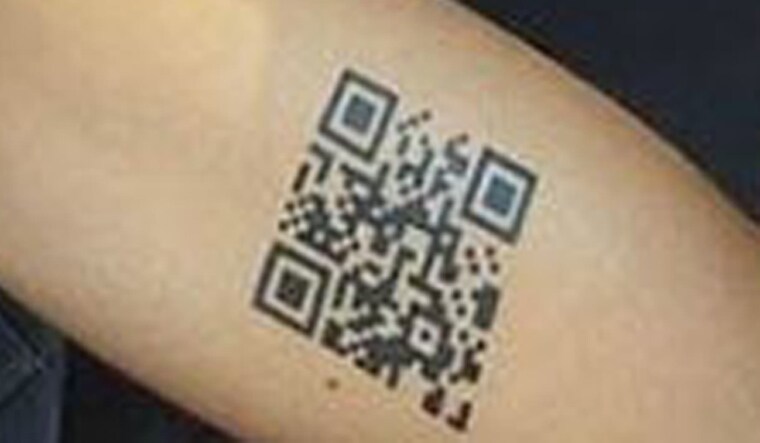
In a stunning blend of artistry and cutting-edge science, researchers have unveiled a groundbreaking advancement that combines the world of body art with the realm of cellular biology. Dubbed "Cellular Couture," this innovative technique involves the creation of nanoscale tattoos that adhere to individual cells, opening up new possibilities in the realm of health monitoring and disease detection.
In the marriage of art and science, the Cellular Couture movement is redefining what it means to express oneself through the medium of the human body. The fusion of nanotechnology and cellular biology is transforming the way we approach healthcare and disease prevention, one tiny tattoo at a time.
Traditionally, tattoos have been associated with personal expression and cultural significance, adorning the skin's surface with intricate designs and meaningful symbols. However, a team of engineers led by Professor David Gracias at Johns Hopkins University has taken this concept to an entirely new level by introducing nanoscale tattoos that decorate individual living cells.
The essence of this groundbreaking technology lies in its ability to merge aesthetics with functionality. Imagine a world where our cells could communicate their health status through tiny, intricate patterns etched onto their surfaces. These nanoscale tattoos are essentially microscopic arrays of dots and wires that conform to the fluid outer structure of cells. Just like traditional tattoos, these nanoscale designs carry a unique identity, but their purpose extends far beyond personal style.
The implications of Cellular Couture are nothing short of remarkable. By placing optical elements and electronics on live cells, researchers are edging closer to monitoring the health of individual cells in real-time. "If we had technologies to track the health of isolated cells, we could maybe diagnose and treat diseases much earlier and not wait until the entire organ is damaged," explains Professor David Gracias.
The process involves creating these nanoscale tattoos with gold, a material known for its ability to prevent signal loss or distortion in electronic wiring. The arrays are then affixed to cells that form and sustain human tissue, referred to as fibroblasts. Through a carefully orchestrated process, the arrays are treated with molecular glues and transferred onto the cells using an alginate hydrogel film. This gel-like laminate dissolves after the gold adheres to the cell, allowing the nanoscale tattoo to bond with the extracellular matrix secreted by the cells.
One of the most remarkable aspects of this innovation is its compatibility with living cells. Unlike previous attempts to attach electronics to biological matter, Cellular Couture ensures that the cells remain alive and functional. This breakthrough overcomes the longstanding challenge of harmonizing living cells with electronic components. Moreover, the team's ability to arrange the dots and wires in specific patterns is essential, mirroring the organization found in electronic chips.
This remarkable fusion of art and science holds immense promise for the future of healthcare. Researchers envision a world where these nanoscale tattoos serve as early warning systems, communicating cellular health and potential anomalies before they manifest as full-blown diseases. The technology could revolutionize medical diagnostics, enabling earlier interventions and targeted treatments.
As the research team continues to refine the technique, their focus is on attaching more intricate nanocircuits that can remain in place for extended periods. The possibilities are vast, from monitoring the health of vital organs to understanding cellular responses to various treatments. Cellular Couture isn't just about adorning cells with patterns; it's about paving the way for a healthier, more informed future.
