



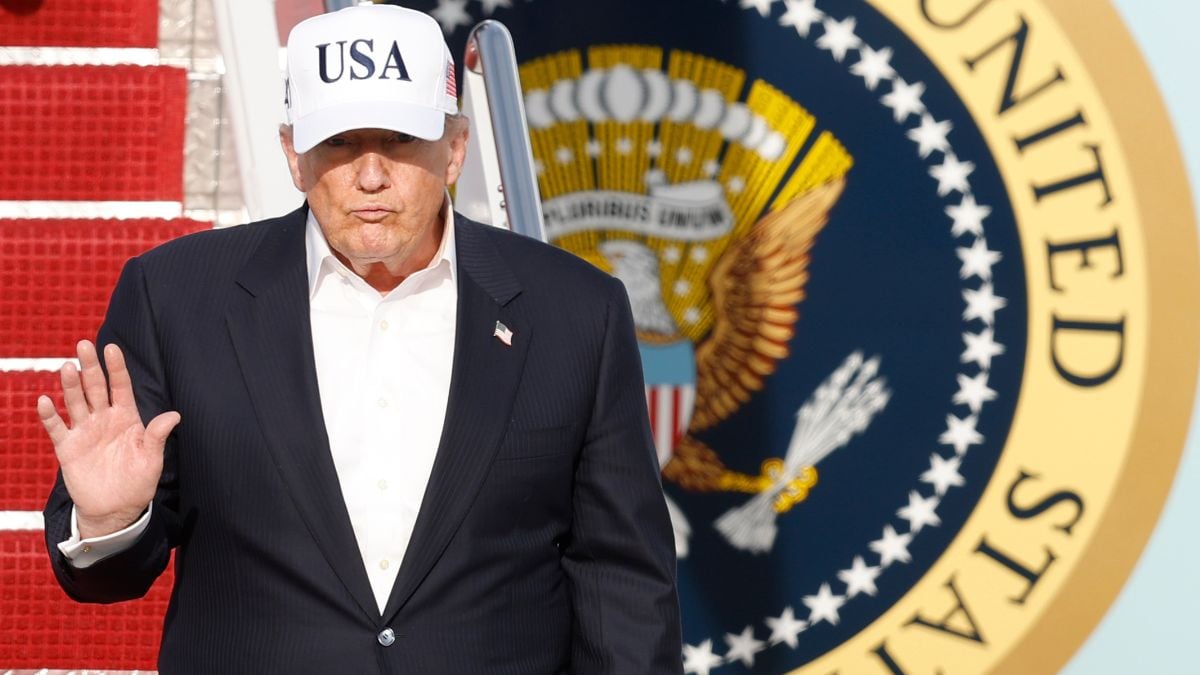
The Republican leadership of the US House of Representatives abruptly cancelled a scheduled vote on Thursday on a War Powers Resolution that would have compelled President Donald Trump to withdraw American military forces from the ongoing conflict with Iran. The resolution, sponsored by Representative Gregory Meeks, the top Democrat on the House Foreign Affairs Committee, sought to direct the president to remove US forces from the region, while allowing exceptions only for troops defending the United States or its allies from imminent attacks.
The decision to scrap the vote came after Republican leaders realised they did not have the numbers needed to defeat the measure. The setback exposed growing divisions within the Republican Party over Trump’s handling of the war. Rather than risk a highly public defeat that would embarrass the president, GOP leaders postponed the vote until lawmakers return from their Memorial Day recess in June.
The cancellation followed an unexpected breakdown in Republican control of the House floor earlier in the day. Republicans lost an unrelated vote concerning the authorisation of a location for a women’s history museum after several party members defected or failed to attend. With their grip on the chamber suddenly weakened, Republican leaders became increasingly wary of risking another defeat on the far more politically sensitive Iran war measure.
The margins were already dangerously tight. A similar War Powers Resolution had failed only a week earlier on a tied vote, leaving Republican leaders with almost no room for defections. House Majority Leader Steve Scalise defended the delay, arguing that absent lawmakers deserved an opportunity to have their votes recorded once Congress reconvened. Yet many lawmakers were unconvinced by that explanation.
Representative Brian Fitzpatrick, one of the Republicans who broke ranks to support the earlier resolution, offered a far more direct assessment. “They probably did it because they didn’t have the votes,” he said, confidently predicting that the measure would pass when it returned to the House floor.
Democrats responded with immediate outrage. House Minority Leader Hakeem Jeffries and other senior Democratic leaders issued a joint statement condemning the Republican leadership’s move as “cowardly”. They accused Republicans of acting like a “wholly-owned subsidiary” of the Trump administration and criticised them for refusing to hold the president accountable for a war that still lacks clearly defined objectives.
Tempers also flared during debate on the House floor. Representative Jim McGovern shouted at Republican colleagues that they did not have the “guts or the balls” to hold the vote because the public was increasingly exhausted by what he called an “illegal war”.
Momentum behind the resolution has continued to grow. Representative Jared Golden, the sole Democrat who voted against the earlier version of the measure, later announced that he would now support the revised resolution. Representative Thomas Massie, a Republican critic of the war who was absent during the cancelled vote, is also expected to support the measure when lawmakers return in June.
At the centre of the confrontation is the War Powers Resolution of 1973, legislation designed to prevent American presidents from sustaining prolonged military conflicts without congressional approval. Under the law, a president has a 60-day window to engage in military hostilities before Congress must either formally declare war or authorise the use of military force.
Since the conflict with Iran began in late February, lawmakers argue that the 60-day deadline has already expired. Fitzpatrick and other supporters of the resolution insist Congress is simply enforcing existing law by demanding a vote on continued military involvement.
The Trump administration strongly rejects that interpretation. The White House argues that the War Powers Resolution no longer applies because a ceasefire with Iran supposedly ended hostilities on May 1. Critics, however, say those claims are difficult to reconcile with continuing US military operations in the region. American forces have reportedly maintained blockades of Iranian ports and continued targeting Iranian shipping, suggesting that hostilities remain active despite the administration’s insistence that the conflict has formally ended.
The growing dispute in the House reflects a broader shift taking place across Capitol Hill. Just days before Republicans cancelled the House vote, the Senate advanced its own procedural measure on a War Powers Resolution by 50 votes to 47. The outcome marked a rare public rebuke of Trump from within his own party, with four Republican senators joining Democrats to move the legislation forward.
Senate Minority Leader Chuck Schumer seized on the moment, comparing the president to “a toddler playing with a loaded gun”. Opposition to the conflict has intensified amid mounting economic and political pressures at home.
Lawmakers have pointed to severe disruptions in commercial shipping through the Strait of Hormuz, one of the world’s most critical energy corridors. The instability has pushed average petrol prices in the United States to $4.53 a gallon, fuelling growing public frustration. Polls also suggest that many Americans oppose the war, viewing it as an expensive and open-ended conflict that some legal experts argue violates international law.
The delayed House vote has now become a symbol of deepening tension between Congress and the White House over who ultimately controls the power to wage war. When lawmakers return in June, Republican leaders are expected to face renewed pressure to finally bring the resolution to the floor, setting up what could become one of the most consequential congressional battles of Trump’s presidency.
