



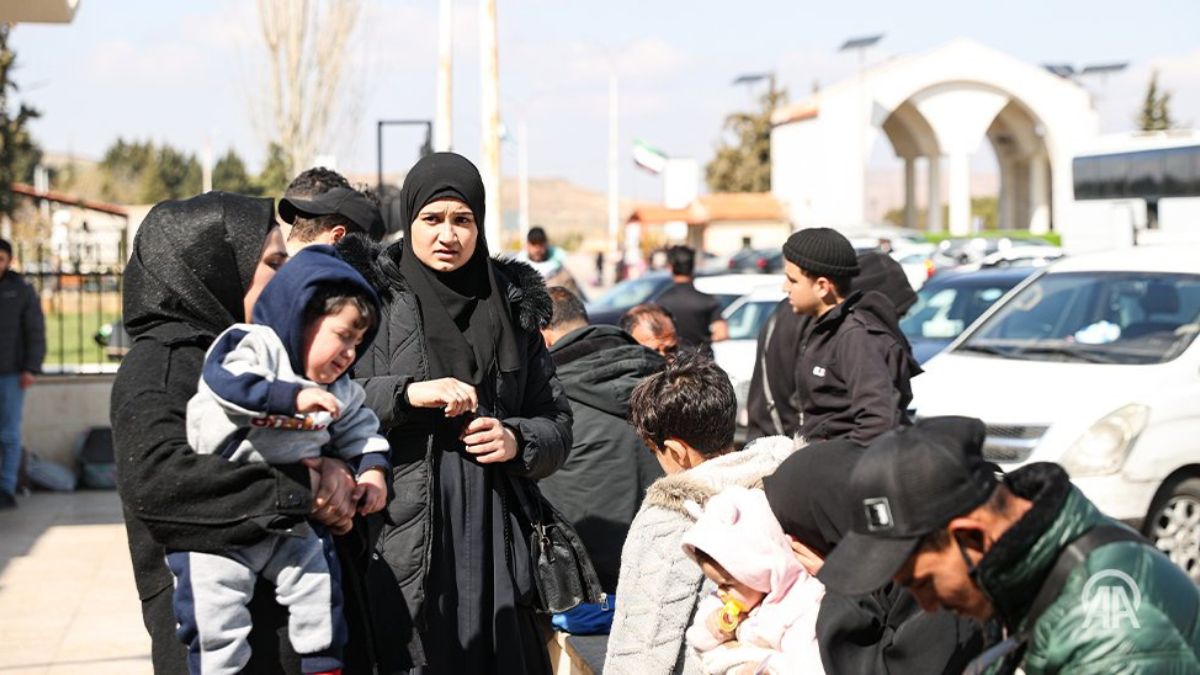
The historic political transition in Syria during December 2024 brought an end to decades of Ba’athist rule under the Assad regime, generating widespread international speculation regarding the country’s move towards stabilisation and recovery. The notion that a change in centralised leadership is a primary catalyst for reversing humanitarian catastrophe sounds good on paper; however, the contemporary reality in Syria challenges this assumption. Millions of Internally Displaced Persons (IDP) remain trapped in a state of severe vulnerability, showing that the political transformations do not translate into human security.
Understanding this dynamic posits two primary questions: one, what is the current situation of these IDPs in Syria? Two, why does the acute crisis of food insecurity continue to exist despite structural changes? Even though macro-level political leadership has shifted, micro-level conditions such as destroyed physical infrastructure, systemic economic collapse, groundwater contamination, and climate shocks remain unchanged.
The landscape of IDPs in Syria is undergoing a high state of transition, marked by a large number of returnees along the protection deficit. Following the political transition, international humanitarian agencies documented a significant demographic shift. According to the United Nations High Commission for Refugees (UNHCR), since the regime change until the end of January this year, an estimated 13,72,352 Syrians refugees returned from neighbouring countries. Similarly, between early 2025 and mid-2026, approximately 17,00,615 IDPs attempted to return to their places of origin, out of the estimated 55,42,227 IDPs in the country.
Although this mass movement may seem like a systemic normalisation, the situation of returnees and the existing population in the camps is deeply precarious. The former struggles to find places to reside amid the rubble, and the latter lacks essential amenities due to global donor fatigue, creating a humanitarian catastrophe. The physical infrastructures of Syria, including water treatment facilities, electrical grids, schools, and medical facilities, were heavily damaged during the fourteen years of civil war, coupled with the lack of legal documentation, which prevents these IDPs from permanent stability.
Within this context, the persistence of severe food insecurity poses a crucial threat to their survival. Recent reports of the World Food Program (WFP) and the United Nations Office for the Coordination of Humanitarian Affairs (OCHA) indicate that more than half of the total Syrian population remains food insecure, with IDPs exhibiting the lowest rates of food security nationwide. Among IDPs living in camp environments, the proportion of secure households is less than 10 per cent.
Firstly, the complete decimation of localised livelihoods has severed the purchasing power of the displaced population, when the country is already devastated by hyperinflation, lack of foreign currency reserves, and a non-functioning formal banking sector. Because IDPs have lost their original asset, land and business, they are almost entirely dependent on casual day labour, which is characterised by high demand and depressed wages. Also, the gap between average household income and the baseline cost of essential food commodities has widened exponentially, forcing households to spend almost all their earnings on day-to-day survival.
Secondly, the devastated agricultural sector once served as the cornerstone of Syria’s food self-sufficiency. This decline is heavily driven by widespread explosives that contaminated both land and water resources, and Syria ranks as one of the most heavily contaminated nations on earth regarding explosive duds, landmines, and improvised explosive devices. These war residues are concentrated across the country, especially in highly fertile rural areas, where displaced farmers cannot safely clear fields or plant crops without injury. Additionally, the deliberate destruction of irrigation infrastructure during the conflict, along with soil and water pollution from informal, unregulated oil refining in governorates like Deir ez-Zor, has rendered thousands of acres permanently uncultivable.
Thirdly, the structural failures of the conflict have been severely compounded by macro-level environmental problems. Currently, the region is enduring its most severe drought-like conditions in nearly four decades, characterised by meagre rainfall and extreme heatwaves. In 2025 alone, these climate anomalies devastated nearly 95 percent of crops, reducing national cereal production to over 60 percent below historical averages. The situation further deteriorated in early 2026 when heavy winter snowstorms and sudden localised flooding swept through the governorates of Aleppo, Idlib, Hama, and Homs. These floods inundated farmlands, drowned livestock, washed away seed stocks, and directly tore through fragile IDP settlements by instantly erasing the minimal agricultural recovery that had been achieved.
Ultimately, the persistence of food insecurity among IDPs illustrates that a change in the political landscape does not automatically and immediately restore institutional capacity. The new Syrian government operates within a deeply eroded institutional vacuum, heightened by a lack of fiscal architecture, technical expertise, and logistical resources necessary to implement large-scale reconstruction. Although the burden of preventing mass starvation continues to fall on international humanitarian organisations, operational constraints and localised security risks hinder progress.
The author is a doctoral candidate at the Centre for West Asian Studies, Jawaharlal Nehru University, New Delhi.
