



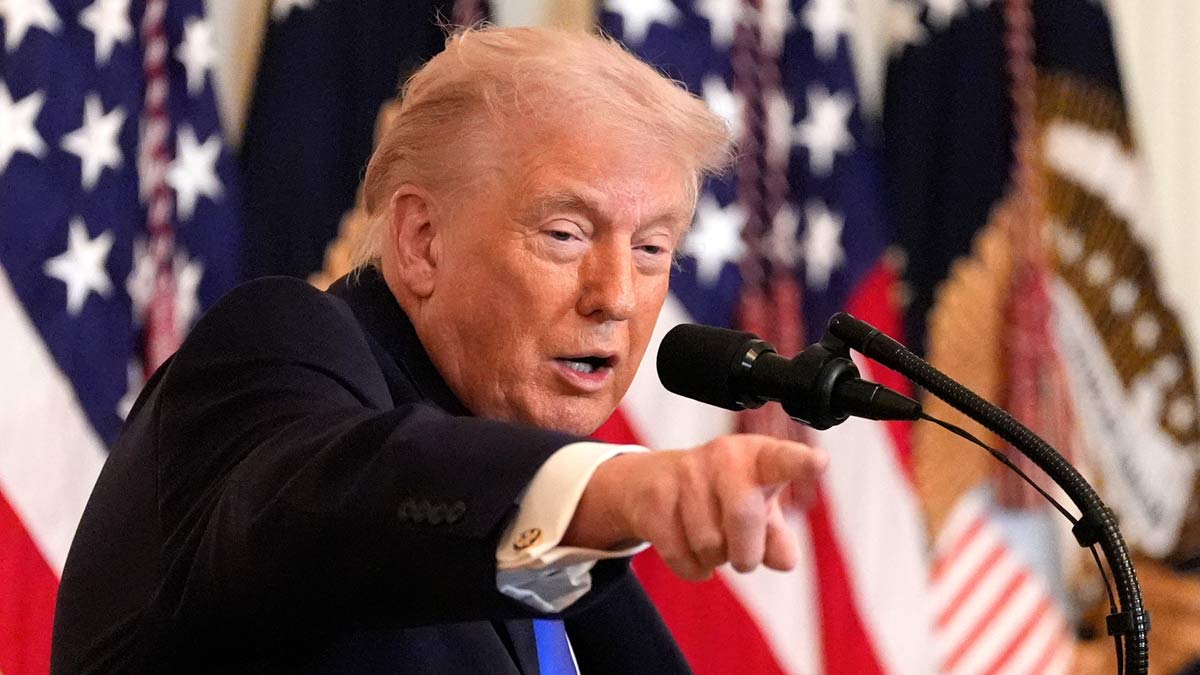
US President Donald Trump has reportedly rejected Iran’s proposal to reopen the Strait of Hormuz and lift the ongoing naval blockade and delay nuclear negotiations.
In an interview with Axios, Trump said the blockade would remain in place until Iran addresses US concerns over its nuclear program. He argued that economic pressure is more effective than military action, stating that Iran is under severe strain due to the restrictions.
"The blockade is somewhat more effective than the bombing,” he said. “They are choking like a stuffed pig. And it is going to be worse for them. They can't have a nuclear weapon”.
According to the report, the United States Central Command (CENTCOM) has prepared a plan for a “short and powerful” series of strikes targeting Iranian infrastructure. The strategy would aim to pressure Tehran into returning to negotiations under more flexible terms. However, Trump declined to confirm any specific military plans.
Trump also claimed the blockade has significantly disrupted Iran’s oil exports, leading to mounting pressure on its storage and pipeline systems. Analysts, however, doubt that Iran is in immediate danger on that front.
Meanwhile, Iranian military sources were quoted by state media PRESS TV as saying that the US naval blockade "will soon be met with practical and unprecedented action."
They said Iran's armed forces "believe that patience has limits and that a punishing response is necessary" if the blockade continues.
