



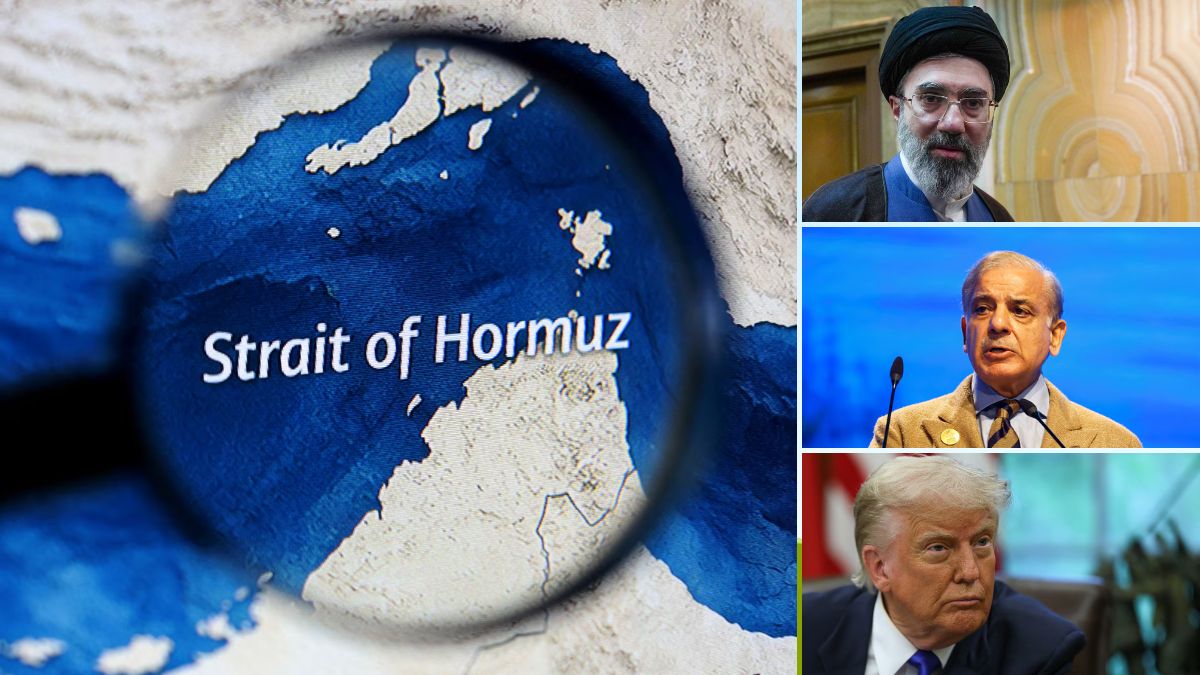
Tensions are starting to mount ahead of a possible second round of peace talks between the US and Iran since the first round failed amid a ceasefire in the 50-day war.
Trump confirmed that his Middle East envoys Steve Witkoff and Jared Kushner would be attending the second round of peace talks in Islamabad, while Vice President J.D. Vance would not be attending it this time, as per a New York Post report.
However, he has again turned stern on Iran, accusing it of violating the terms of the ceasefire by firing bullets at vessels, and also recently re-closing the Strait of Hormuz amid tensions with the US.
"That wasn’t nice, was it? ... We’re offering a very fair and reasonable DEAL, and I hope they take it because, if they don’t, the United States is going to knock out every single Power Plant, and every single Bridge, in Iran. NO MORE MR. NICE GUY! They’ll come down fast, they’ll come down easy ..." he wrote in a Truth Social post on Sunday.
The announcement of the talks comes a day after the naval forces of Iran's Islamic Revolutionary Guard Corps (IRGC) fired bullets at vessels trying to transit the Strait of Hormuz, despite the US Navy-imposed blockade in the region.
Two Indian-flagged vessels—the Jag Arnav and the Sanmar Herald—also took fire from IRGC boats, despite being one of the five friendly nations granted safe passage in the strait by Tehran, which prompted a strong reaction from India.
Iran also alleges ceasefire violations, restocks munitions
Iran, which has already criticised the US Navy-imposed Hormuz blockade before, on Sunday called it a violation of the ceasefire and a "war crime".
"The United States’ so-called 'blockade' of Iran’s ports or coastline is not only a violation of Pakistani-mediated ceasefire but also both unlawful and criminal," wrote Iran's foreign ministry spokesperson Esmaeil Baqaei, in an X post.
"It violates Article 2(4) of the UN Charter; it constitutes an act of aggression under Article 3(c) of the UN General Assembly Resolution 3314 (1974), which explicitly includes the blockade of a state’s ports or coasts among such acts," he added.
The IRGC's Aerospace Force has also claimed that it had replenished a great deal of its "missile and drone launch platforms", as per a report from semi-official news agency Tasnim.
“During the ceasefire period, our speed in updating and refilling missile and drone launch platforms is even greater than before the war. We have information that the enemy is incapable of creating such conditions for itself and is forced to bring in ammunition from the other side of the world in a drip-feed manner,” the report added, quoting Majid Mousavi, the commander of the IRGC's Aerospace Force.
