



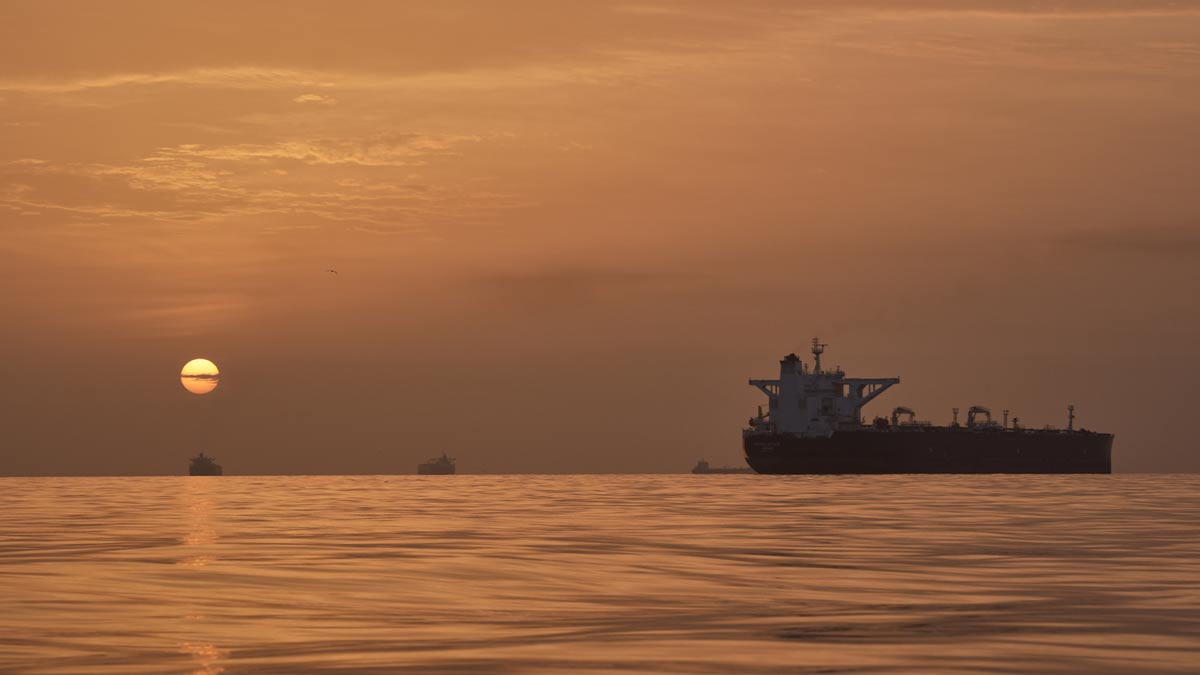
It seems we are back to the threat of war in the Middle East once again. The geopolitical standoff in the Strait of Hormuz experienced a stunning reversal over a frantic 24-hour period, from what appeared to be a genuine diplomatic breakthrough to what looks very much like a likely resumption of hostilities. The deterioration was fuelled by mismanaged public communications, fierce domestic political manoeuvring within Iran and a stubborn refusal by both sides to step back from their maximalist positions.
The sequence of events began with an unexpected announcement that briefly sent waves of relief through global markets. Iranian Foreign Minister Abbas Araghchi posted on X that the critical shipping lane was "completely open for all commercial vessels," a move made in alignment with a broader ten-day ceasefire agreement between Israel and Lebanon. The reaction was instantaneous: oil prices plunged by twelve dollars a barrel as markets dared to hope the disruption to this vital choke point might finally be over. During this short-lived window of de-escalation, tracking data confirmed that more than a dozen commercial ships successfully navigated the waterway without incident.
The diplomatic momentum was, however, almost immediately derailed as President Donald Trump, eager to claim a sweeping victory, made several premature and deeply inflammatory statements. While he publicly thanked Iran for opening the strait, he also asserted that Tehran had agreed to surrender its entire stockpile of highly enriched uranium to the United States. He then insisted that the US naval blockade targeting Iran would "remain in full force" until a final peace deal was signed.
Trump's pronouncements seem to have led to a fierce backlash within Iran, exposing deep rifts between the country's diplomats and the hardline Islamic Revolutionary Guard Corps. IRGC media outlets blamed Araghchi for his initial statement on Hormuz, saying the announcement lacked necessary explanations and created dangerous ambiguities. They asked for the withdrawal of the statement altogether. Hardline lawmaker Morteza Mahmoudi publicly threatened Araghchi with impeachment over his "ill-timed" remarks. Even moderate voices in Tehran felt that such a critical policy shift should have been communicated through official state channels rather than a social media post.
To quell the internal uproar and project strength, senior Iranian officials moved swiftly. Parliament speaker and lead negotiator Mohammad Bagher Ghalibaf dismissed Trump's assertions as lies, and declared the US blockade a "clumsy and ignorant decision." He stated emphatically that the Strait of Hormuz remains under the strict control of the military — not social media declarations. The Iranian foreign ministry formally clarified that there had been absolutely no discussions regarding the export of uranium. Deputy Foreign Minister Saeed Khatibzadeh reinforced this, stating that shipping enriched material to the United States was a "non-starter," and accusing Washington of maintaining demands so extreme they were preventing any prospect of face-to-face talks.
The rhetorical pushback then culminated in a dramatic physical reversal. Less than 24 hours after Araghchi's original post, the IRGC Navy released a statement announcing that the Strait of Hormuz was once again completely closed to commercial traffic. The IRGC declared that the ongoing US naval blockade constituted a direct violation of the ceasefire agreement. They issued a stark warning to international shipping: any vessel approaching the strait would be viewed as cooperating with the enemy, and targeted accordingly.
Those threats quickly materialised into violent action on the water. Iranian gunboats opened fire on at least two Indian commercial vessels attempting to transit the strait. The United Kingdom Maritime Trade Operations documented attacks on a tanker, while a container ship was struck by an unknown projectile off the northeastern coast of Oman. India's Ministry of External Affairs confirmed that two Indian-flagged vessels had been caught in a shooting incident in the waterway, and merchant ships throughout the region began receiving ominous radio messages from the IRGC Navy denying them access.
This rapid unravelling has thoroughly erased the brief glimmer of hope for an immediate diplomatic resolution. Observers note that the situation has reverted entirely to square one—two competing blockades, two sides dug into entrenched positions. Trump has warned he will not allow the US to be blackmailed, and has threatened to resume military strikes if a comprehensive deal is not reached before the current ceasefire expires on April 22. As both sides dig deeper into their respective positions, the waterway remains a highly volatile flashpoint, and the brief window that opened so unexpectedly has, for now, firmly shut.
