



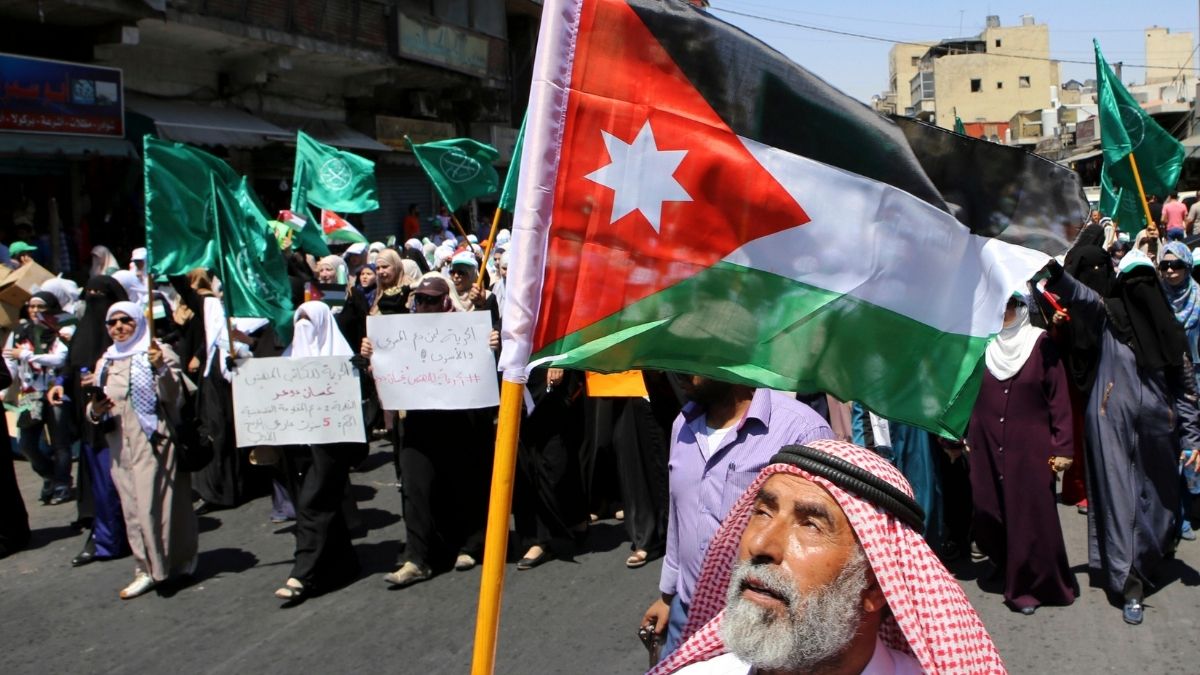
The United States has formally designated three branches of the Muslim Brotherhood as terrorist organisations, imposing tough financial and legal sanctions on the group’s chapters in Egypt, Jordan and Lebanon. The decision was announced on Tuesday by the Treasury and State departments, which said the groups posed a threat to the United States and its interests.
The most severe action was taken against the Lebanese branch of the Muslim Brotherhood, known as al-Jamaa al-Islamiya. The State Department designated it a Foreign Terrorist Organisation, a label that makes it a criminal offence to provide any form of material support to the group. The designation also requires US authorities to deny visas to its members. In addition, the Treasury Department listed the Lebanese group as a Specially Designated Global Terrorist, allowing the US to freeze its assets and cut it off from the international financial system. Muhammad Fawzi Taqqosh, the group’s secretary general, was also personally designated under the same sanctions regime.
The Egyptian and Jordanian branches were designated by the Treasury Department as Specially Designated Global Terrorists under an executive order used to target groups accused of supporting terrorism. Under this measure, all property and interests belonging to the two organisations that fall within US jurisdiction, or under the control of US persons, are now blocked. Americans are also prohibited from carrying out any transactions with them.
US officials said the main reason for the designations was the groups’ alleged support for Hamas. They argued that while the branches often present themselves publicly as peaceful political or social organisations, they are involved behind the scenes in helping violent militant groups. According to US claims, a wing of the Lebanese branch launched rockets into Israel after the Hamas-led attacks of October 7, 2023. The Egyptian branch was accused of working with Hamas’s military wing in 2025 to undermine the Egyptian state and of helping fighters move into Gaza the previous year. In Jordan, US authorities alleged that members of the Brotherhood were involved in making explosives, rockets and drones, and in raising money illegally.
Egypt welcomed the US decision. The Egyptian government described it as a crucial step that supports Cairo’s long-standing position that the Muslim Brotherhood is a threat to national and regional stability. Egypt has treated the group as a terrorist organisation since the June 30, 2013, uprising that led to the removal of President Mohamed Morsi, who came from the Brotherhood. Egypt’s foreign ministry said the US move confirmed its efforts to protect state institutions from what it called the group’s extremist ideology.
“These designations reflect the opening actions of an ongoing, sustained effort to thwart Muslim Brotherhood chapters’ violence and destabilisation wherever it occurs,” Secretary of State Marco Rubio said in a statement. “The United States will use all available tools to deprive these Muslim Brotherhood chapters of the resources to engage in or support terrorism.”
At the same time, the decision is expected to create tensions with some US allies. The designations could complicate relations with Turkey and Qatar, where the group has historically been tolerated and, in some cases, linked to ruling political forces. In Lebanon, the Brotherhood’s political wing holds seats in parliament. In Jordan, its political arm won 31 seats in elections held in 2024, even though the organisation itself was dissolved by a court ruling in 2020.
The Muslim Brotherhood strongly rejected the US decision. The Egyptian branch said the designations had no legal basis and would harm millions of Muslims. It said it would challenge the move through all available legal channels. Acting leader Salah Abdel Haq suggested the decision was driven by pressure from foreign powers such as Israel and the UAE rather than by facts. The Lebanese branch also rejected the US action, saying it is a political and social organisation operating under Lebanese law and that the US decision has no legal force inside Lebanon.
Founded in Egypt in 1928 by Hassan al-Banna, the Muslim Brotherhood is one of the oldest and most influential Islamist movements in the Arab world. Its leaders say the organisation abandoned violence decades ago, but critics argue that some of its branches and offshoots have continued to support or engage in militant activity.
In the United States, the move follows years of pressure from conservative activists and hardline lawmakers who have called for the Brotherhood to be treated as a terrorist organisation. Earlier this year, the states of Florida and Texas had already taken similar steps at the state level. Analysts say the federal designations could have wide effects, particularly on visa and asylum cases, by giving US immigration officials greater grounds to scrutinise people with links to the group.
The Trump administration has presented the designations as part of a broader effort to weaken what it sees as a global network that fuels instability. Washington says it aims to limit the group’s ability to operate, even as the move remains controversial in countries where the Muslim Brotherhood still plays a political role.
