



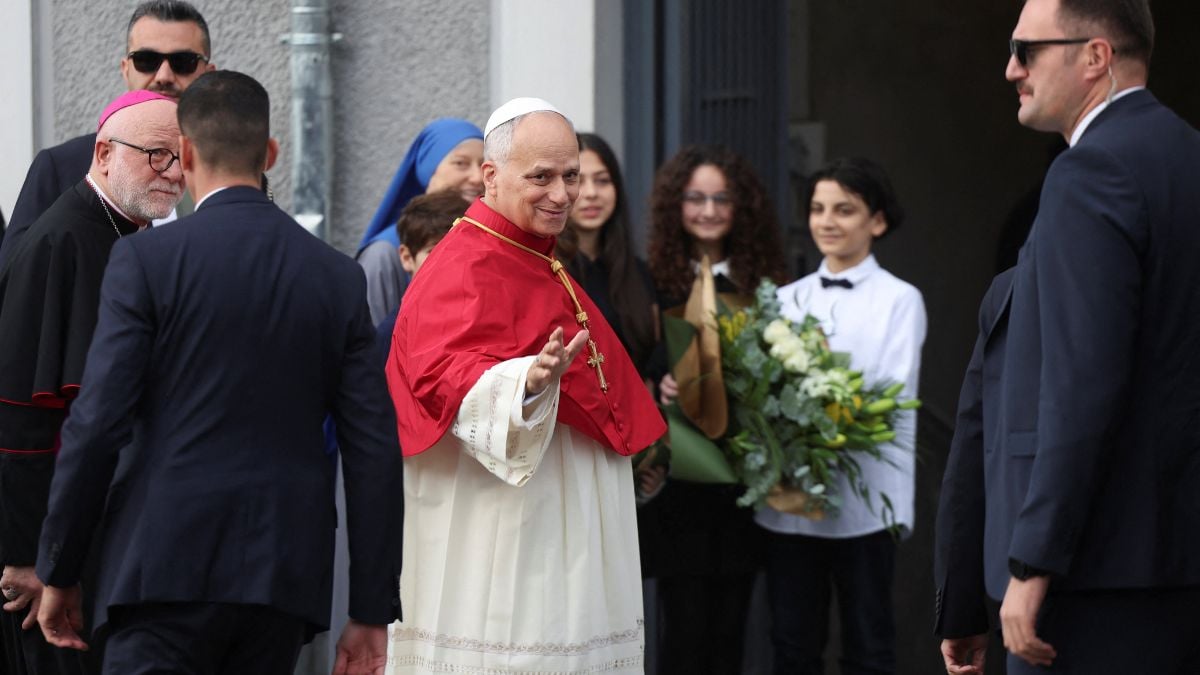
Pope Leo XIV began his first overseas journey as pontiff with a six-day visit to Turkey and Lebanon, starting Thursday. The trip, planned originally by his predecessor Pope Francis, quickly came to be seen as Leo’s own diplomatic debut, giving an introduction to the character and priorities of the new papacy.
Speaking in Ankara, he said the world was witnessing a surge in conflicts that are driven by economic pressure and military ambition. Echoing Francis’s earlier assessment of a third world war emerging in fragments across different regions, he insisted that humanity faced a decisive moment. Peace, he argued, depended on renewed willingness to build trust and resist the logic of domination.
A notable thread running through Leo’s remarks was the image of the bridge. The official logo for the journey, featuring a bridge over the Dardanelles Strait, became a recurring symbol in his speeches. Turkey enjoys a unique geographical position connecting East and West and is a country where cultures, religions and sensibilities intersect. Leo has stressed that diversity was Turkey’s strength and that any attempt at imposing uniformity would diminish its identity. He also spoke of a spiritual bridge linking heaven and earth through the divine gift of revelation. In meetings with political authorities, he assured them that Christians were committed to contributing to the country’s cohesion and well-being.
Another one of Leo’s key focus areas is social justice. While in Turkey, he reminded the audience that in societies where religion was visible and influential, it was important to recognise the dignity and freedom of every person. He reiterated his concern for migrants, the poor and the environment, a hallmark of his pastoral work before becoming Pope. He repeated his view that a consistent commitment to human life includes the humane treatment of immigrants as well as unborn children. This broader vision of the pro-life ethic had previously shaped his guidance to bishops in the United States.
The choice of Turkey for his first foreign visit held particular significance. The year marks the 1,700th anniversary of the Council of Nicaea, one of the most important gatherings in Christian history. In Turkey, apart from President Recep Tayyip Erdoğan, Leo is meeting senior Muslim leaders and the country’s chief rabbi, as well as representatives of various Christian traditions. Analysts see these meetings as a sign of the pope’s readiness to advance interreligious dialogue with both Islam and Judaism. His approach shows a desire to strengthen relations beyond the Catholic Church and to reduce mutual suspicion among faith communities.
A focal point of the journey will be the Pope’s meeting with Ecumenical Patriarch Bartholomew in İznik, the historic site of the First Council of Nicaea. The two leaders will pray together and commemorate the formation of the Nicene Creed, still central to Christian belief. It could go a long way in addressing the longstanding division between the Catholic and Orthodox Churches, which dates back nearly a thousand years.
After completing his engagements in Turkey, Pope Leo will fly to Lebanon, home to the Middle East’s largest Catholic community. The visit comes during a period of heightened tension, marked by fears of renewed conflict between Israel and Hezbollah and by Lebanon’s severe economic crisis. Many Lebanese hope that the Pope’s presence would draw global attention to their country’s suffering and encourage the international community to respond. Leo will meet President Joseph Aoun and visit the site of the 2020 Beirut port explosion for a moment of silent prayer. Given the fragile security situation, Vatican officials confirmed that precautionary measures have been carefully arranged.
The trip to the Middle East also offers a peek into Leo’s leadership style. Compared to the more spontaneous Francis, Leo appears deliberate and understated. It could enhance his effectiveness in sensitive diplomatic contexts. Although he seems to continue many of Francis’s commitments, particularly on social issues, he tends to express them in a way that avoids unnecessary confrontation. Interestingly, most of his public statements are in English rather than Italian, allowing him to communicate directly with international audiences. Within the Vatican, he has acted with similar care, reinstating bonuses for staff, proceeding slowly with appointments and inviting all cardinals to convene in order to encourage a more collaborative governance.
The visit to Turkey and Lebanon stands as a defining moment in the early months of Leo XIV’s papacy. It has so far shown him as a thoughtful and conciliatory figure, determined to promote unity among nations and faiths.
