



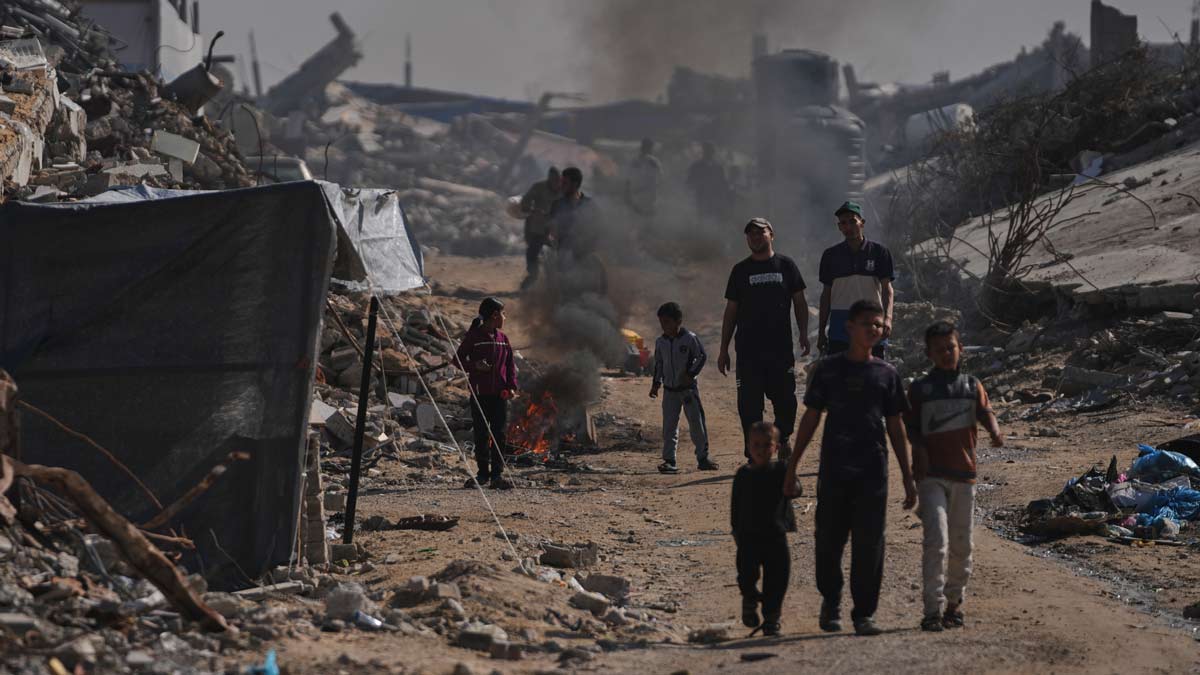
The Palestinian economy is currently facing its deepest economic crisis ever recorded, marked by an "unprecedented and catastrophic" collapse in Gaza, according to a report presented by the UN Conference on Trade and Development. UNCTAD Deputy Secretary-General Pedro Manuel Moreno said years of restrictions on movement, combined with recent military operations, have wiped out decades of progress. The crisis is now ranked among the ten worst economic shocks worldwide since 1960.
Gaza’s economic decline has been building for almost twenty years. It's estimated that 2.3 million people have long lived under limits on trade, travel, and access to basic resources. These limits weakened local businesses and increased dependence on outside aid. The latest conflict has pushed an already fragile economy into free fall. UNCTAD experts describe Gaza’s economic collapse as the fastest and most damaging ever recorded.
The scale of the destruction becomes clear in the figures. Gaza’s Gross Domestic Product fell by 83 per cent in 2024 compared with the previous year. Across 2023 and 2024, the economy shrank by 87 per cent in total. Gaza now has only 13 per cent of the economic output it had in 2022. Incomes have plunged as well. GDP per person has dropped to around $161 a year, which is less than 50 cents a day. This places Gaza among the lowest income levels seen anywhere in the world. It also means the average person in Gaza now earns only 4.6 per cent of the income of someone in the West Bank. In 1994, the two areas had nearly equal levels of income.
According to UNCTAD’s senior economist Mutasim Elagraa, this collapse has erased seven decades of human development in Gaza. Poverty now touches every household. Most families cannot meet basic needs such as food, water or shelter. Unemployment has passed 80 per cent, which has pushed the national unemployment rate close to 50 per cent.
The West Bank is also facing its worst economic contraction on record. While the decline is not as extreme as in Gaza, it remains severe. The West Bank’s GDP fell by 17 per cent in 2024, and income per person dropped by nearly 19 per cent. This has driven the Palestinian economy back to the size it had in 2010. Income levels have slipped to where they were in 2003. In less than two years, more than twenty years of progress have been lost.
This downturn stems from growing insecurity and tighter controls on movement within the West Bank. UNCTAD notes that expanding settlements and restrictions on access now prevent Palestinians from reaching around 60 per cent of West Bank land. These limits have weakened local trade and reduced economic activity.
The Palestinian government is at the same time facing its most serious financial crisis to date. Revenues have collapsed. Large amounts of fiscal transfers, which normally provide more than two thirds of all tax income, have been withheld. Between the start of 2019 and April 2025, the value of withheld and deducted funds reached around $1.76 billion. This is equal to about twelve per cent of the 2024 GDP. These shortfalls make it difficult for the government to pay wages, support schools and hospitals or plan for recovery.
The destruction of Gaza’s social and physical foundations is vast. All schools and universities have been damaged or destroyed. Children have had no access to formal education for more than two years. UNCTAD warns that this loss will harm Gaza for generations. A quarter century of progress in education and skills has been undone. Experts estimate that Gaza has lost around seventy years of human development overall.
Agriculture, once a key source of food and work, has been shattered. Damage assessments show that 86 per cent of cropland has been harmed, 83 per cent of water wells destroyed and 71 per cent of greenhouses damaged. Only 1.5 per cent of farmland remains usable. Nearly nine in ten water and sanitation facilities have also been destroyed. Soil contamination caused by explosives has created long term risks and will require major cleanup work.
Rebuilding Gaza will need an enormous international effort. Joint assessments by the UN, European Union and World Bank state that more than $70 billion will be required. Even if generous aid arrives and building materials enter freely, recovery will take decades. Clearing rubble alone could take more than twenty years. Removing unexploded ordnance may take up to ten years.
UNCTAD stresses that no recovery is possible without a lasting ceasefire. Although the recent ceasefire offers a brief opening, humanitarian aid is urgently needed.
