



In addition to several geopolitical considerations, religion is a necessity for the major powers in the Middle East to achieve popular legitimacy. While one may dispute the extent of its impact but it cannot be ignored. Religious legitimacy is secured for Saudi Arabia as it is the ‘custodian’ of Islam’s two holiest sites in Mecca and Medina and this enables the Kingdom with a special symbolic authority over all of the Muslim world. Iran, for its part, gains religious capital not simply from having the world’s largest Shi‘a population but from a model of Velayati-e faqih (guardianship of the jurist), the institutionalised power structure that provides Tehran a unique political model of Islamic governance.
Türkiye’s situation is different. It does not boast holy sites like Saudi Arabia, which brings Muslims from all over the world, nor does it have a single religious authority like Iran that is recognised. Within these bounds, Türkiye has become increasingly adept at enhancing its profile, both at home and internationally, to match Saudi Arabia and Iran through Islamic populism. For a while, that meant the television series Diriliş: Ertuğrul (Resurrection: Ertuğrul), financed by the state and based on a civilizational story that draws on the Ottoman history and Islamic values. During the height of the Covid-19 pandemic, the show became a global hit, especially in Asia and America; less because of its fictional drama and more because of the strong Islamic ethos it espoused.
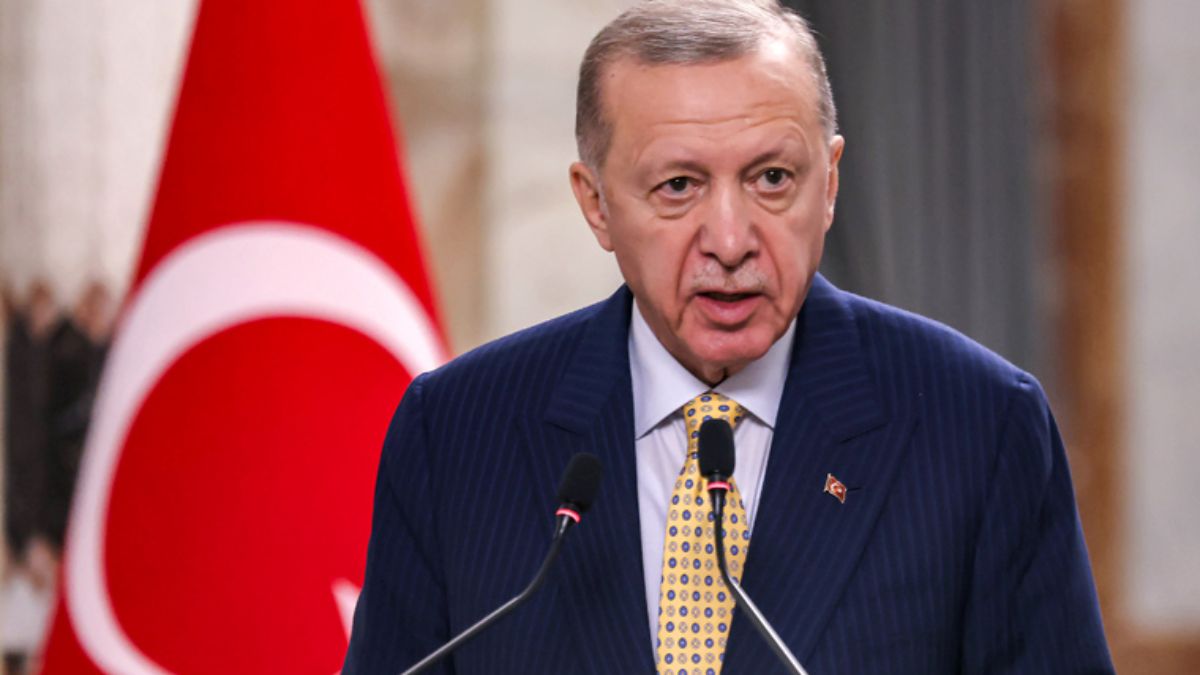
Today, Türkiye’s effort to present itself as a leader of the Islamic world is most visible in its response to the Gaza crisis. At the opening of Mawlid al-Nabi Week (marking Prophet’s birthday), which was inaugurated last week, President Recep Tayyip Erdogan declared: “If half our hearts are here right now, the other half is in Gaza and Palestine (as well as Yemen, Sudan, and Afghanistan), which are the bleeding wounds of the Islamic world.” Further, he said, “We can never remain spectators to what is happening in Palestine to this uprising against that tyrant, that infidel called Netanyahu.” Erdogan also reminded his audience of a well-known saying of the Prophet Muhammad that Muslims are like one body: if one part suffers, the whole body feels the pain.
This rhetoric highlights how religious populism is tied to the Gaza issue. It works in two ways. First, it shows the politicisation of religion where beliefs, practices, and symbols are brought in to serve political goals. While Erdogan’s strong stance on the Gaza crisis may not translate into any tangible political gains, it boosts his image among Muslims worldwide who view the conflict through a religious lens and see this as Turks championing the Palestinian cause, especially at a time when his Arab counterparts prefer a less critical stance on Israel’s approach to Gaza.
Erdogan’s proactive approach is clearly reflected in the number of state-sponsored national and international conferences that Türkiye has hosted on Palestine freedom since the outbreak of the Gaza–Israel war. Such actions may seem routine on first sighting, but they have a larger purpose: projecting Türkiye’s diplomatic muscle on the world stage and reinforcing Erdogan’s status as a tireless champion of the Palestinian cause.
The latest one was an eight-day conference convened last month under the title An Islamic and Humanitarian Responsibility: Gaza. It was co-hosted by Türkiye’s Foundation of Islamic Scholars and the Qatar-based International Union of Muslim Scholars (IUMS), a prominent Islamic organisation commonly characterised as having ideological ties to the Muslim Brotherhood.
This is also telling of Ankara’s political manoeuvring. On one side, Türkiye has been improving its relations with Riyadh and Abu Dhabi; on the other, it continues to give space to groups like the IUMS, which Saudi Arabia and the UAE have long proscribed because of their perceived Brotherhood ties. This act highlights Türkiye’s ability to sidestep competing regional dynamics, maintaining pragmatic ties with Arab Gulf states while simultaneously appealing to movements and networks that connect with broader Muslim publics.
At the heart of this policy is Türkiye’s understanding that the ulama (Islamic scholars) are dynamic players and are responsive to changing political and social realities and are central agents in shaping Islamic societies. As Princeton University professor Muhammad Qasim Zaman explains, the ulama are “custodians of change,” but also mediators between tradition and modernity, shaping both political discourse and religious life.
Not to mention, the sacralisation of politics adds another major dimension to Türkiye’s approach to the crisis in Gaza. The sacralisation of politics often starts with the politicisation of religion and is usually expressed through rituals and symbols with the aim of strengthening community ties, fostering collective unity, and providing people with a deeper sense of purpose and direction for the future. This has been evident time and again in the statements of President Erdogan and his aides. For instance, President Erdogan has referred to the Al-Aqsa compound as the “Red line” for Türkiye. During his speech at the 3rd International Yeditepe Biennial, Erdogan declared that the Haram al-Sharif, home to the Al-Aqsa Mosque and the Dome of the Rock, forms an indivisible whole and, spanning 144 acres, belongs exclusively to Muslims.
Under Erdogan, Türkiye has deftly positioned itself within the wider Muslim world, which is also evident on social media platforms such as X, Meta, and Instagram, where posts and comments frequently commend Türkiye’s outspoken stance on the Gaza crisis, often hailing it as a “true Muslim nation.” A similar scenario was observed during the airing of TV shows like Diriliş: Ertuğrul or Kuruluş: Osman, when many Bangladeshis and Pakistanis started calling themselves Turks. While international relations scholars would categorise this as a soft power exercise, what’s happening is bigger: a potent blend of politics and religion that has allowed Türkiye to capture the imagination of Muslim audiences far beyond its borders.
The author is a doctoral candidate at the Centre for West Asian Studies, Jawaharlal Nehru University, New Delhi.
