



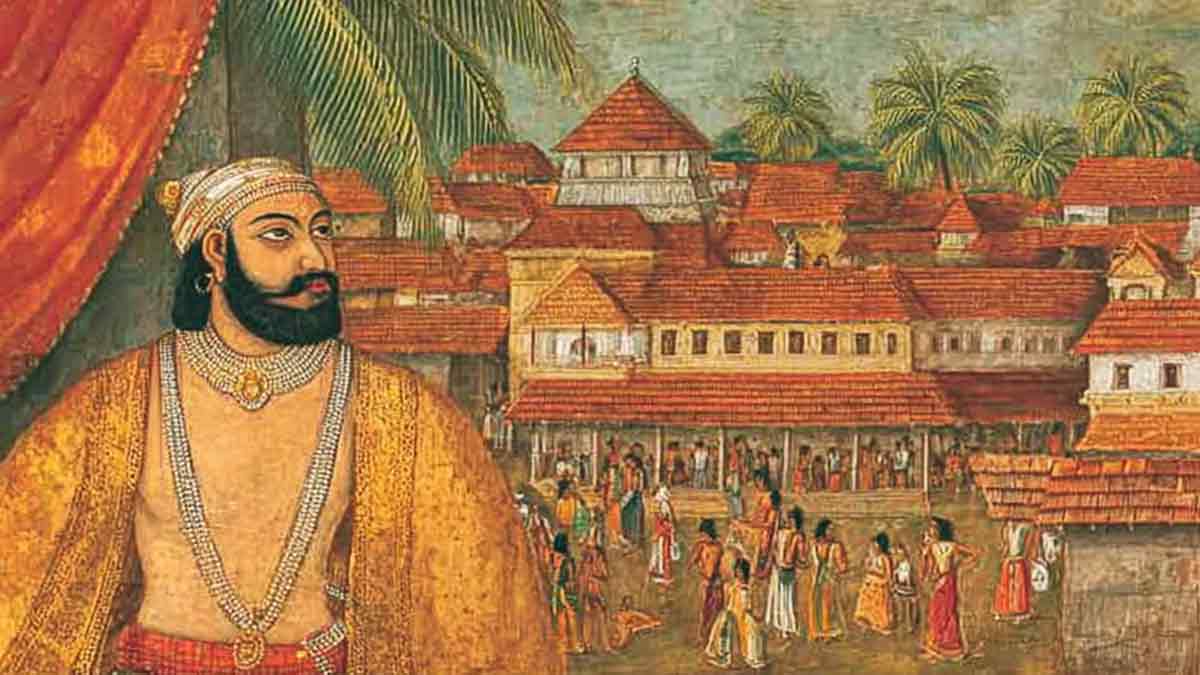
In the humid August of 1741, the white sands of Colachel witnessed a sight that would shatter the prevailing geopolitical order of the Indian Ocean. The Dutch East India Company, then the world’s most formidable corporate-military machine, faced a humiliating defeat at the hands of Marthanda Varma, the young raja of the tiny principality of Travancore. It was the first time an Asian power had decisively routed a European navy in a pitched battle.
But the true significance of Colachel lay not in the smoke of the musketry or the surrender of the Dutch commander, Admiral Eustachius De Lannoy. It lay in what the victory enabled. Marthanda Varma did not merely win a war; he used the victory to execute a ruthless, structural rupture of Kerala’s stagnant socioeconomic fabric, providing a historical blueprint for the kind of radical reconfiguration the state desperately requires today.
Before Colachel, the southernmost Indian state was a patchwork of fragmented interests. Real power was held by the Ettuveetil Pillamar (the Eight Lords) and temple committees who operated as feudal veto players, stymieing any attempt to build a central coordinating authority. Trade was equally compromised, with European companies dictating terms to local producers, keeping prices low through lopsided treaties while domestic elites siphoned off the remaining surplus. It was a “low-equilibrium trap” where stability was maintained at the cost of progress. Marthanda Varma recognised that for Travancore to survive the predatory colonial era, he could not simply tweak the existing system; he had to dismantle it.
His response was a blood-and-iron policy of action. He didn’t just defeat the Dutch; he co-opted their expertise, employing the captured De Lannoy to modernise his military. More crucially, he broke the back of the feudal aristocracy, eliminating the lords who had paralysed the state for generations. This political rupture—the Ettuveetil Pillamar were executed and their homes destroyed—was immediately followed by an economic one: the creation of a royal monopoly on pepper and other spices. By declaring that the state (and only his state) would control the trade of ‘Black Gold’, Marthanda Varma bypassed middlemen and foreign agents alike. He turned Travancore into a mercantile state, using the profits to build roads, canals and a professional bureaucracy. This was the original ‘Travancore Model’, and it transformed a minor chiefdom into the most prosperous and socially advanced kingdom in the region. Thus, Marthanda Varma created an effective, centralised, mercantile state that could hold its own on the global stage.
The parallels to contemporary Kerala are as striking as they are sobering. Today, Kerala finds itself in a new kind of stagnation trap. We pride ourselves on the ‘Kerala Model’ of development: our world-class human development indicators, our literacy and our health care. Yet, this model has hit a fiscal and structural ceiling. We have created a highly educated populace but have failed to build an economy that can employ them. Like the 18th-century Pillamar, modern Kerala is bogged down by entrenched interest groups—militant trade unionism, a bloated and often obstructive bureaucracy weighed down by over-regulation and a political culture that views private capital with a suspicion bordering on hostility. We are a state that survives on “remittance economy”, exporting our greatest resource—human talent—because we cannot offer them a productive future at home.

Just as Marthanda Varma realised that feudal control was the enemy of effective sovereignty, we must realise that our current welfare-only model, devoid of industrial and technological growth, and unsupported by adequate investment, is a path to irrelevance. The state’s debt is mounting, and our youth are voting with their feet, leading to a brain-drain that threatens the very social fabric we seek to protect. The lesson of Colachel is that social gains cannot be sustained without a muscular, modern economic engine.
We are currently at a historical inflection point similar to the one Marthanda Varma faced three centuries ago. The world is changing; the global economy is shifting towards high-tech manufacturing, green energy, AI and the blue economy. Yet, our internal structures remain geared toward a 20th-century redistributive logic that treats wealth creation as a secondary, or even suspicious, endeavour.
As in the 1740s, the signs of distress are unmistakable—and so is the possibility of decisive change. For too long, we have watched the slow unravelling of a state once hailed as a model of human development. Mounting debt, ecological collapse, fiscal disarray and a governance culture that (when it is not choking in revelations of corruption) all too often drifts between bankrupt inertia and partisan improvisation, have become our new reality. Amid the gloom, I refuse to succumb to cynicism. I believe Kerala can rise again, if we summon up the courage to confront hard truths and embrace bold reforms.

What Kerala needs today is a ‘Colachel Moment’—a decisive break from the politics of obstructionism. We need a rupture that replaces the veto-culture in which we are mired with a “can-do” government. This doesn’t mean abandoning our social commitments; Marthanda Varma, after all, dedicated his kingdom to Sree Padmanabha, creating a moral contract between the state and its people. Rather, it means understanding that true social justice in the 21st century is the provision of high-quality opportunities for our youth within our own borders.
We see the stirrings of this change in projects like the Vizhinjam Port or the burgeoning startup ecosystem in Thiruvananthapuram and Kochi. But these remain islands of progress in a sea of red tape. To truly honour the legacy of Marthanda Varma, we must be as bold as he was. We must be willing to dismantle the “feudal lords” of our time—the restrictive regulations and the mindset that privileges the status quo over the future. We must integrate Kerala into the global supply chain on our own terms, attracting investment and retaining our educated workforce as Varma leveraged his pepper monopoly.
The victory at Colachel was not just a military feat; it was a psychological one. It proved that a small state, through vision and discipline, could defy the threat of the giants of its age. Today’s threats are the global competition for investment, the challenges of an ageing population and the need for sustainable growth. If we continue to cling to the old way of doing things, we risk becoming a museum of past successes. If, however, we embrace the spirit of the rupture, daring to modernise our economy as radically as we once modernised our society, we can ensure that Kerala remains not just a model of how to spend wealth, but a beacon of how to create it. The white sands of our coast are waiting for a new generation of leaders to realise that the greatest tribute to our history is the courage to change it.
This is not merely a policy prescription; it is a call to action for a ‘Kerala 2.0’ that honours the legacy of Marthanda Varma by daring to break the structures that no longer serve us.
The numbers tell a sobering story. Kerala’s debt has ballooned to unsustainable levels, driven not by strategic investment but by a pattern of borrowing to plug routine deficits, even towards the end of the year to pay salaries and pensions. Today, the state spends more on debt servicing than on development projects. The state’s reliance on remittances, liquor taxes and lotteries has become a substitute for sound fiscal planning. Furthermore, inefficiencies in tax collection and GST leakages continue to erode our revenue base, while the lack of jobs and record levels of youth unemployment drive our brightest minds to other states or abroad.
But the crisis is also moral. We have allowed a culture of entitlement to take root, where subsidies are expected, accountability is evaded and the dignity of labour is too often distorted into coercion. The Malayali work ethic—a source of pride outside Kerala—has been dulled within the state by years of political patronage and bureaucratic complacency. We have failed to abolish extortion-based labour practices such as nokkukooli, ban the invidious coercion of hartals and rediscover the nobility of enterprise and the joy of creating rather than merely consuming.
The state’s renewal must begin with governance. Kerala needs a government that listens, learns and leads, not one that merely protects and promotes its own cadres. We must restore institutional integrity, empower local bodies and ensure that public servants serve the public, not party interests. Transparency must be more than a slogan; it must be a daily practice in everything from procurement to appointments.
Equally urgent is the need to dismantle the thicket of over-regulation that chokes enterprise. We have all learned painfully how well-meaning rules often become barriers—discouraging investment, delaying approvals and disincentivising initiative. Kerala must move from a culture of control to one of facilitation. We should slash 75 per cent of our stifling regulations and streamline bureaucratic procedures so that files do not take months to be cleared. By simplifying all government approvals under a single-window ‘One Kerala Permit’ system and digitising governance, we can empower citizens to act rather than wait endlessly for decisions.
We must also rethink our economic model. Kerala cannot thrive on the three Rs of remittances, (home) renovations and retail alone. We need to nurture industries that reflect our strengths—knowledge, creativity and sustainability—while doubling down on our record in hospitality and health care. This requires a productive rupture with our current complacency, where we invest in green technologies, promote high-tech agro-processing and support startups that seize new opportunities in AI, biotechnology, quantum computing and space tech. High-tech value-added products, precision manufacturing, port-led coastal development and the establishment of supply chains and logistics hubs must be explored to solve 21st century problems. Above all, we must take pride in what we produce, from coir to code, and ensure that ‘Made in Kerala’ becomes a mark of excellence. What India’s most educated workforce produces must set a benchmark for the rest of the country, attracting more investors to come.
We must also support women entrepreneurs with micro-finance and digital training to ensure our growth is inclusive. To fuel this, we should launch a Kerala Savings Mission, encouraging non-resident Indians and the diaspora to invest in state development bonds. To overcome investor reluctance because of our notoriety as a land where ideological politicians, rent-seeking officials and militant trade unions thwart progress and profit, we must provide skittish investors the security of an Investor Protection Act, to assure them that they will not lose their money to non-market problems of a political or a bureaucratic nature.
Education and health have long been Kerala’s crown jewels, but even these are tarnishing. Our schools and colleges must prepare students not just for examinations but for life in the 21st century: for critical thinking, technological innovation, civic engagement and global citizenship. A Higher Education Commission should tap the views of educators, business leaders and students to prepare them with the knowledge and skills to make them employment-ready. Internships should be available even during the academic year to connect students to the real world.
Similarly, our hospitals must be equipped not just with infrastructure but with compassion. The Covid-19 pandemic revealed both our strengths and our vulnerabilities; we must learn from its lessons and build resilient systems that serve all, especially the most vulnerable. We have the capacity to become the health and wellness capital of the country. Tourism, too, must be reimagined as an immersive experience rooted in ecology, culture and community, making Kerala a major centre for medical tourism spanning allopathic, ayurvedic and other forms of holistic healing.
Kerala’s pluralism is its soul. In a time of rising intolerance, we must reaffirm our commitment to coexistence and mutual respect. The legacy of Sree Narayana Guru, St Kuriakose Elias Chavara, Chattambi Swami, Mahatma Ayyankali and Vakkom Moulavi reminds us that true progress lies not in division but in uplift, in daring to challenge established practices and entrenched modes of thinking even as we honour history and heritage. We must teach our children not only empathy and tradition, but also to question and hope.
We cannot neglect immediate problems affecting the quality of life. Kerala must urgently confront three escalating crises: environment, drugs and stray dogs. Our ecology groans under the weight of unchecked quarrying and sand mining; a ‘Clean & Green Kerala Mission 2030’ is overdue. The drug crisis among our youth requires a multipronged approach, from awareness campaigns to effective de-addiction centres. Meanwhile, the stray dog menace, which has taken a deadly turn with troubling fatalities even after vaccination, must be addressed through a vigorous yet humane animal birth control programme.
For too long, Kerala’s political discourse has been trapped in binaries—left versus right, secular versus communal. Yet, the real divide is between cynicism and possibility. I choose possibility. I believe politics can be a noble vocation, rooted in service and guided by principle.
This vision is strictly personal, since the official manifesto of the United Democratic Front is yet to be released. It is shaped by conversations with young people, farmers, teachers, nurses and politicians who want opportunity without leaving home, and elders who want dignity without dependence. To them—and to all Malayalis—I say: the time for passive lament is over. The time for active renewal has come. Let us build a Kerala that is fiscally prudent, ecologically resilient and socially just. Let us move “beyond cynicism” and reclaim the promise of our land with vision, resolve and unity.
Kerala deserves nothing less.
The writer is Lok Sabha member from Thiruvananthapuram.
