



The past few days have seen controversy erupting once again over a sweeping post-war blueprint for Gaza, dubbed the “Gaza Riviera”. The plan envisions transforming the war-torn territory into a revenue-generating hub under United States trusteeship, a scheme critics say disguises population displacement and economic exploitation as reconstruction. A leaked 38-page presentation, known as the “Great Trust” proposal, lays out a long-term strategy that has alarmed observers across the political spectrum and drawn widespread condemnation.
At the centre of the document is the Gaza Reconstitution, Economic Acceleration and Transformation Trust (Great Trust). This body would see Gaza placed under US administration for at least a decade. First reported by the Financial Times and later published by The Washington Post, the proposal is said to have been driven by Israeli-American venture capitalist Michael Eisenberg and Israeli technology entrepreneur Liran Tancman. Employees from the Boston Consulting Group (BCG) provided financial modelling, though BCG later stressed the work was unauthorised and dismissed two senior partners involved.
The Great Trust builds on the Gaza Humanitarian Foundation (GHF), an aid scheme that experts already consider flawed. The GHF is designed to function for six to twelve months, offering what the presentation calls “Hamas-free secure aid” and temporary housing in so-called “Hamas-free humanitarian transition areas”. Once Hamas is dismantled, Israel would pass administrative authority to the US-run trust. The stated objective is to create a Gaza that is “demilitarised and deradicalised” before eventually transferring power to a reformed Palestinian authority aligned with the Abraham Accords.
The document’s most eye-catching vision is the creation of a Dubai-style coastal enclave. The “Gaza Riviera” is imagined as a landscape of luxury resorts, artificial islands, and up to eight “AI-powered smart cities”. These cities, inspired by nineteenth-century Parisian planning, would run on digital identity systems and AI-driven services, in effect creating an enclave of mass surveillance. The scheme also proposes an “Elon Musk Smart Manufacturing Zone” straddling northern Gaza and southern Israel, where US electric vehicle companies could build solar-powered factories drawing on gas from the Gaza Marine field and a “low-cost” workforce.
The financial promises are equally bold. The presentation claims a $100 billion investment from private sources could generate nearly four times its value within a decade, without any call on US government funds. Among the supposed strategic gains for Washington is access to $1.3 trillion worth of rare-earth minerals located in western Saudi Arabia.
Yet the most contentious element is not the futuristic cityscapes but the mass displacement of Gaza’s population. The plan openly discusses the “temporary relocation” of more than two million Palestinians. It proposes paying residents $5,000 per person, alongside four years of rent subsidies in another country and one year of food support, to encourage them to “volunteer to leave” during reconstruction. The document calculates that each departure would save $23,000, or around $500 million for every one per cent of the population resettled. Landowners would be offered digital tokens redeemable for redevelopment rights, relocation abroad or future flats in the planned cities. For those who remained, housing would be minimal, with some units as small as 323 square feet.
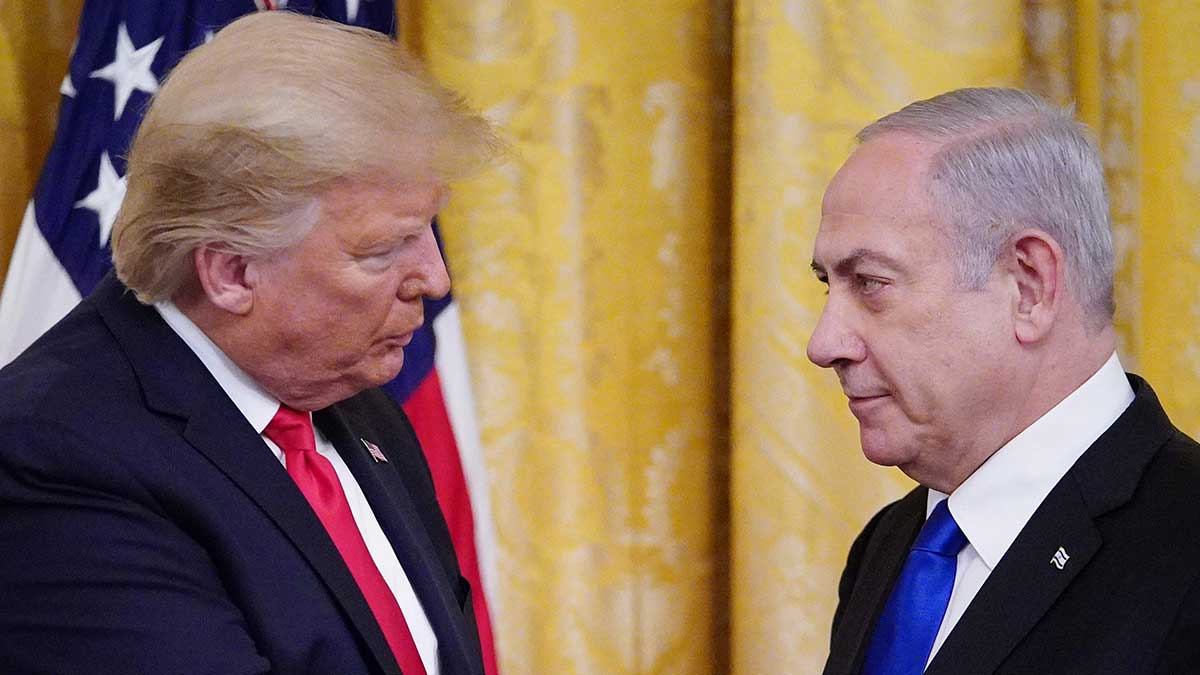
The proposal gained traction after a recent White House meeting attended by Donald Trump, his son-in-law Jared Kushner, and former British prime minister Tony Blair, all of whom discussed Gaza’s post-war future. Trump and Kushner have long backed such schemes, with Kushner publicly urging that Israel should “move the people out” and redevelop the territory. Blair’s involvement has provoked scrutiny, given his past role as Middle East envoy and the reported participation of staff from his institute in related discussions. Blair’s institute insists it neither authored nor endorsed the plan, while Blair himself has expressed support for a two-state solution. Notably, no Palestinian representatives or Arab states were invited to the White House session, despite the sweeping regional implications.
Human rights groups describe the scheme as a “blueprint for mass deportation” and “collective punishment”, warning it could amount to forcible population transfer and demographic engineering, both considered international crimes. Geneva-based NGO Trial International called the proposal “development marketed as ethnic cleansing” and cautioned that those involved might face legal exposure for decades.
