



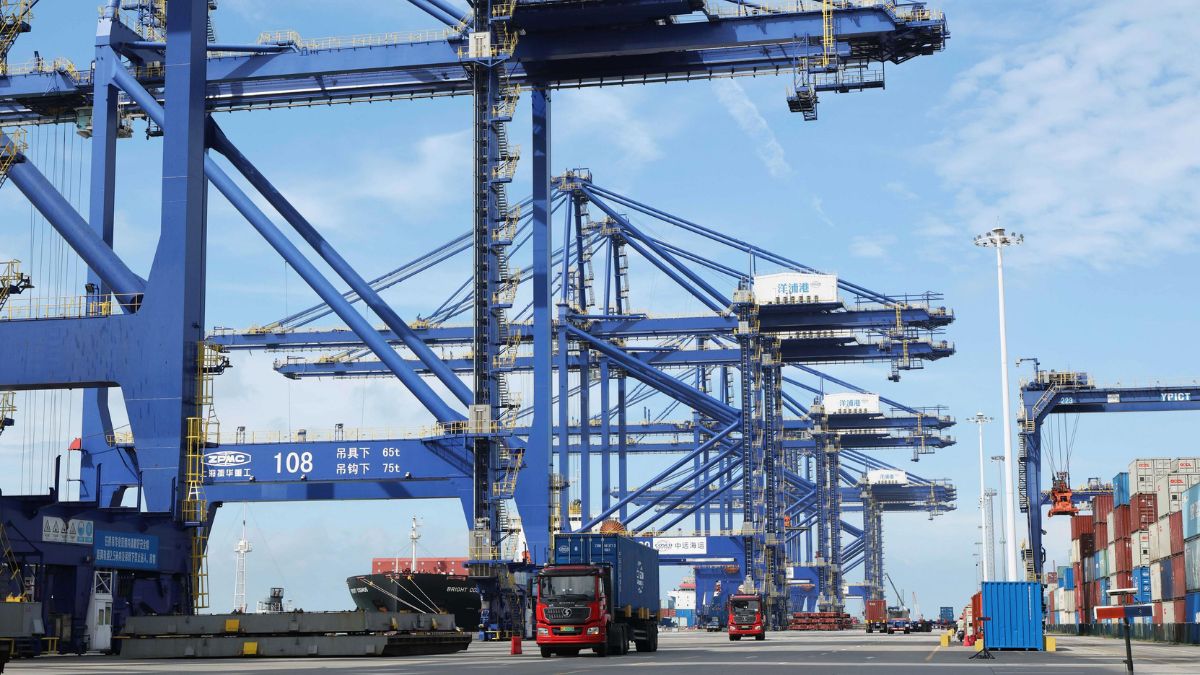
China is officially weeks away from launching an independent customs regime for the upcoming Free Trade Port (FTP) in the southern province of Hainan.
Touted as the country's largest experimental free trade area, and the only one designated as a “free trade port”, Chinese President Xi Jinping recently described the December 18 launch of the Hainan FTP as China's bid at "opening up in the new era", as per a Xinhua report.
By operating an FTP the size of Hainan, the idea is to rival Hong Kong's free trade zones, in line with China's "dual circulation" strategy to counter the impact of frequent trade tensions with the US.
The "dual circulation" strategy, part of the country's 14th five-year plan (2021-25), involves a renewed focus on domestic markets (internal circulation), but also balancing this against the foreign market strategy (external circulation).
The unique customs regime for the entire island province is expected to transform it into a viable offshore financing and attractive duty-free trade spot, offering "freer access at the first line, regulated access at the second line, and free flow within the island".
This implies that while the Hainan FTP's customs regime would be independent from that of mainland China, it would still be governed by Beijing as one part of a larger trade ecosystem in the country.
According to an SOAS blog post, geography also plays an important role in the FTP's functioning, as it is located at the northern edge of the South China Sea—a zone surrounded by ASEAN members that is sensitive to regional maritime politics.
The blog post also points out that China's controlled liberalisation project would involve navigating questions of the legal system it operates under (civil law system), as well as likely issues with capital flow under the renminbi and market access later on.
In terms of trade, Hainan's zero-tariff policy will apply to 74 per cent of imported goods, with a further expansion planned in the future, whereas in terms of investment, it will continue opening up sectors such as tourism, modern services, and emerging technologies.
Over the past five years, Hainan has reportedly utilised actual foreign investment of 102.5 billion yuan ($14.47 billion), and has shown an average annual growth rate of 14.6 per cent, the report noted.
In 2024, the total volume of Hainan's goods imports and exports is said to have reached 277.65 billion yuan—a 20 per cent year-on-year increase from 2023, and a nearly 200 per cent increase from 2020.
“The more China opens its doors, the greater the need to balance development and security and firmly safeguard the bottom line of security,” Xi added.
