



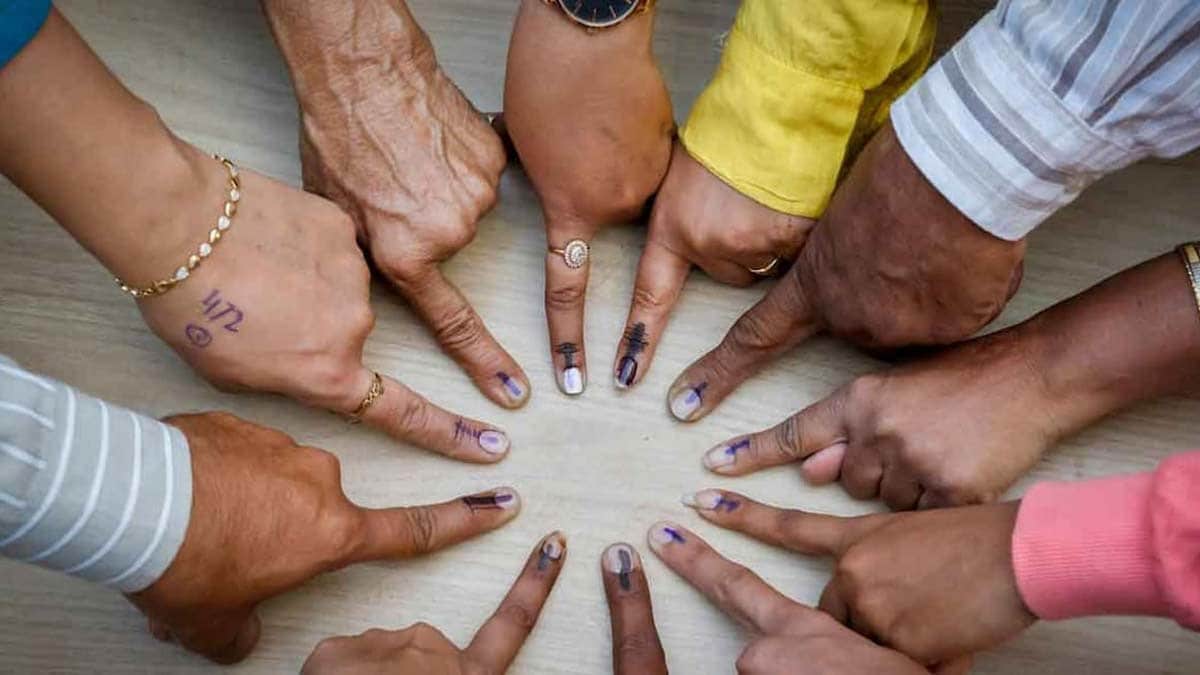
Exit polls collectively predicting a change in government in Kerala have given the Congress a strong boost in confidence. Around 10 exit polls predict that the UDF will win the state, though the magnitudes they predict vary.
The general indication from exit polls is that the UDF could win between 71 and 94 seats, while the LDF may secure between 44 and 68 seats. Some projections suggest the BJP may fail to open its account, while others estimate it could win up to 7 seats.
Exit poll results have created more unease within LDF circles. Although the internal analyses within the CPI(M) and the CPI did not indicate a clear path to victory, the Left Front has not entirely abandoned the hopes.
In 2021, most exit polls had predicted a second term for Pinarayi Vijayan-led LDF. However, many agencies did not foresee the LDF winning as many as 99 seats. While exit polls in Kerala often indicate which front is likely to form the government, they tend to be less accurate in predicting exact seat numbers. Experts point out that in a closely contested state like Kerala, small shifts in a few constituencies can significantly influence the outcome.
Notably, three key inferences can be drawn from the exit polls.
Gender factor
Back in 2016, when the LDF came to power, a strong yearning for change was visible. Notably, 2016 saw a significant spike in voting percentage in many decades. A crucial element, along with that, was a dramatic surge in women voters. Women voters outnumbered men in 88 of the state’s 140 constituencies. Notably, the average gender gap between men and women voters was 2.15 per cent. In 2021, when the state gave a mandate for the continuation of power, the gender gap had narrowed to near zero.
But in 2026, Kerala recorded the highest polling percentage among women voters, with 81.19 per cent of them turning out to exercise their franchise. This marks an increase of 7.25 percentage points compared to the previous election. The difference between male and female voter turnout is six percentage points.
Incidentally, the exit polls also indicate that this surge has driven a pro-change trend, which appears to have benefited the UDF this time. The Axis My India exit poll predicts that 43 per cent of women voters favour the UDF—a swing of +6 points from 2021—while the LDF faces a -6 point swing. The same poll suggests that 45 per cent of men would also favour the UDF, but the swing compared to 2021 is only +4 points. It further indicates that a portion of male voters is shifting away from the LDF, and it may benefit the BJP-led NDA.
CM face
Even though most exit polls predict a UDF victory, responses to the question “Who would you like to be the next Chief Minister?” have produced an interesting result. Incumbent Chief Minister Pinarayi Vijayan received the highest share in multiple surveys.
In the Axis My India exit poll, 33 per cent favoured Pinarayi Vijayan, while 21 per cent backed Opposition leader V.D. Satheesan, eight per cent supported Ramesh Chennithala, and three per cent chose K.C. Venugopal—the three main Congress contenders for the CM post.
In the Malayala Manorama–C Voter survey as well, Pinarayi Vijayan led with 31.6 per cent, followed by V.D. Satheesan at 28 per cent. Experts say this was because the LDF had a clear chief ministerial face in Vijayan. In contrast, the UDF has multiple leaders in contention, as the Congress and the alliance have chosen not to project a single CM candidate.
IUML’s crucial role
The Congress-led UDF has not secured a convincing victory in Kerala in the last two decades. Its most recent win was in 2011, when it formed the government with a wafer-thin majority of just 72 seats against the LDF’s 68 in the 140-member Assembly.
In that election, the Congress won only 38 seats, while the CPI(M) secured 45—more than any single party—yet the UDF still edged out a coalition victory thanks to its allies.
This time too, most exit polls show the Congress-led UDF with projections in or overlapping the 70–85 seat range, and the contest is described as competitive in several surveys rather than a guaranteed landslide. This means that a UDF victory would likely depend significantly on strong performance in north Kerala (Malabar region), where the Indian Union Muslim League (IUML)—a key UDF ally—has traditional strongholds in districts like Malappuram. The IUML’s ability to consolidate votes there remains crucial for the front to cross the majority mark.
