



“We have not used the construction of homes for Wayanad landslide disaster victims for electoral gain,” senior Indian Union Muslim League (IUML) leader P. K. Kunhalikutty told THE WEEK.
The veteran leader added that, since the initiative was aimed at helping people affected by hardship, the League never used it during the election—not even as a means to showcase or promote its work.
The housewarming ceremony for homes built by the IUML for the Mundakkai–Chooralmala landslide survivors was held on Monday. Residents are set to move into the first phase of 51 houses within this month. Attendance at the ceremony was restricted to invited guests, including senior League leaders and relatives.
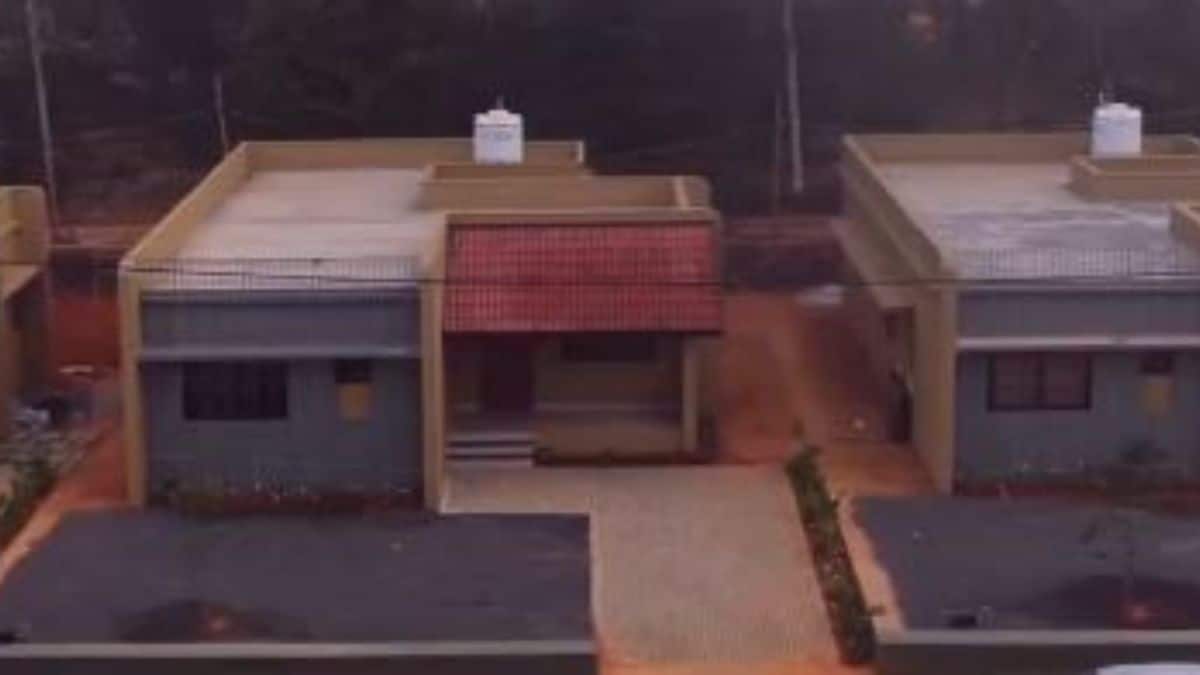
Located in Meppadi Panchayat, the rehabilitation project spans 11.5 acres at Vellithodu, purchased for ₹14.13 crore to accommodate beneficiaries who preferred to remain within the panchayat. Each beneficiary family has been provided with a 1,060 sq ft house built on eight cents of land. The houses have been constructed at Thrikkappetta Vellithodu, along the Muttil–Meppadi state highway.
Each unit includes three bedrooms, two bathrooms, a kitchen, a dining hall, a work area, a sit-out, a brick-paved courtyard, and a seven-meter-wide tiled road in front. The entrance opens from the sit-out into the living room. One bedroom has an attached bathroom, while the other two share a common bathroom. The property is enclosed on three sides by a stone compound wall, and all houses are fitted with gates. Space has also been left for a garden.
The project features five-meter-wide internal roads. According to League leaders, high-quality materials have been used for tiles, bathroom fittings, doors, window frames, and roofing. Wells have been dug and large storage tanks installed to ensure clean water. The structures have been designed with sufficient foundation strength to allow for future vertical expansion.
The beneficiaries are families who, despite being included in the government’s list, opted out of housing in the model township at Kalpetta and formally applied for inclusion in this project. On March 1, the state government held a grand key-handover ceremony for 178 houses built at Elston Estate for survivors of the Mundakkai–Chooralmala landslide. However, despite the scale of the event—held ahead of the elections—and the announcement that the project had been completed, beneficiaries were unable to move in as the work remained unfinished. As the model code of conduct came into force ahead of the polls, construction work slowed, raising concerns among beneficiaries. Later, a row was triggered after structural issues surfaced when a landslide survivor reported cracks in his allotted house.
So far, only 102 of the 178 houses in Phase 1 have been fully completed. Screed concreting—a critical technique for preventing water leakage—has so far been carried out in more than 130 houses.
The government now maintains that beneficiaries will be able to move into the rehabilitation township houses by early May. Kunhalikutty, meanwhile, alleged that, unlike the League and the UDF, the state government and the LDF had attempted to use the construction of rehabilitation houses for electoral gain despite not completing the work.
“We didn’t do that. What we said was that the government was wrong,” he said.
“The government projected it as completed even though it wasn’t fully finished. They released videos and gave it big publicity, spending a lot of money.”
