



A heart blooming across the night sky—urging a war-weary world to choose love—was among the visual spectacles planned by Thiruvambady Devaswom for the upcoming Thrissur Pooram. It had already been tested and finalised.
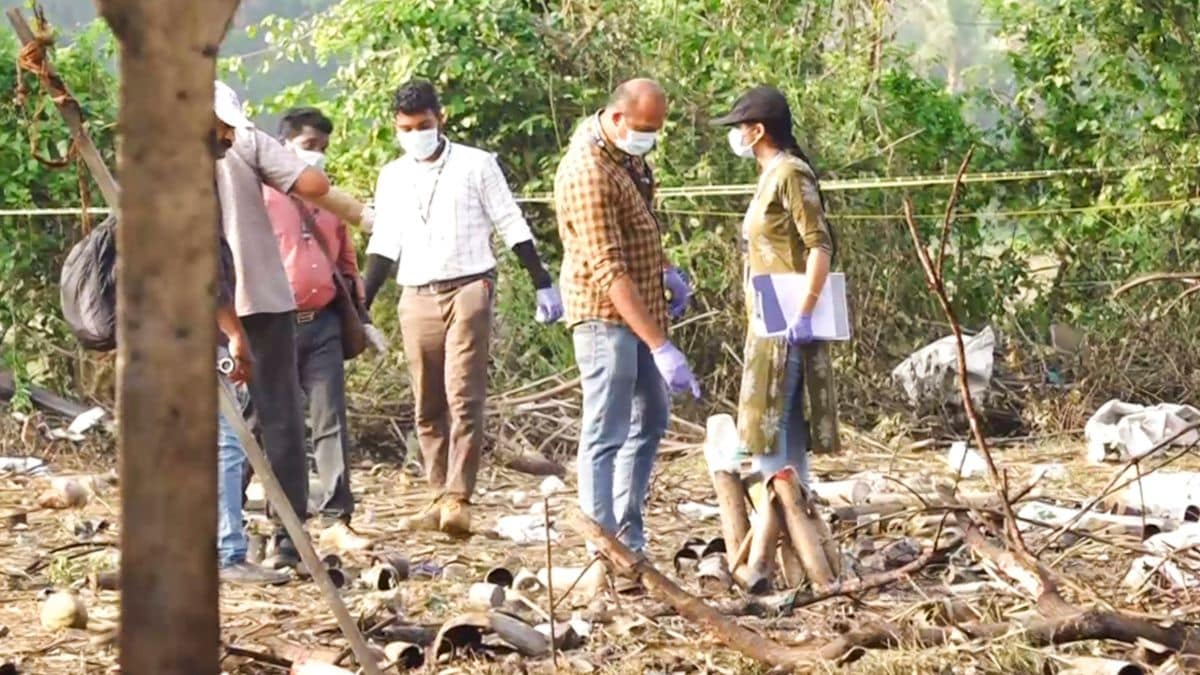
By the afternoon of April 21, those who crafted it were no longer alive. A devastating explosion tore through the fireworks shed, killing them. I was among the last to see them alive—just two hours before the blast burned through the place.
As a journalist, this was my first visit to a fireworks manufacturing site. We reached Mundathikkode around 11 am on April 21. The heat was relentless. We were told the work had entered its final stage; everything was nearly ready to be transported for Pooram.
We had gone there with permission from the Thiruvambady Devaswom to report on the preparations. The site lay in an open field, marked off with “No Entry” boards to keep people away. The three of us—myself, a cameraman, and a driver—walked in. I remember feeling a quiet unease, standing amid so much explosive material. I even joked that I might stay outside while the cameraman went in. But, we all went.
Other media teams were there at first, along with a Devaswom coordinator who briefed us. Inside, the work unfolded across multiple sheds—each handling a different stage. In one, fuses were being twisted; in another, colours were being packed into shells; Elsewhere, timers were being set with precision so that the sky would erupt in perfect synchrony.
Outside one shed, three women sat twisting fuses. They were cheerful and unhurried.
Around them were men from different walks of life, drawn here seasonally—some from Thrissur, others from places like Palakkad. One among them worked as a bus conductor, drawn here simply out of interest. His co-workers called him “Kannettan.” Another, I discovered almost by accident, was a film makeup artist—the clue emerging in a casual joke about mascara, unexpected in that setting, before he spoke of his past.
There was also a young man who was a Pulikali artist. The excitement for Pooram ran through them all. One of them said, almost as a matter of faith, “For Pooram, these must burst. Only when they rise, explode, and shatter the sky does it become Thrissur Pooram.”
We spent nearly two hours there.
It was unbearably hot. I asked if the heat could pose a danger. They dismissed it. Nothing would happen, they said—not like that. Some also described the work as being connected to belief and ritual, suggesting it carried a sense of reassurance for them.
There must have been around 30 people inside at the time we visited the site.
We left around 1 pm. As we stepped out, they urged us to stay back, to eat before we went.
I left with that ordinary insistence trailing behind me. And now, it is that moment that returns—the warmth of their voices, the ease of it—against the knowledge that, within hours, the place would be reduced to ash and the hands that shaped “love symbols” for the sky would never rise again.
(As told to Nirmal Jovial)
The author is a programme producer, Manorama Online.
