



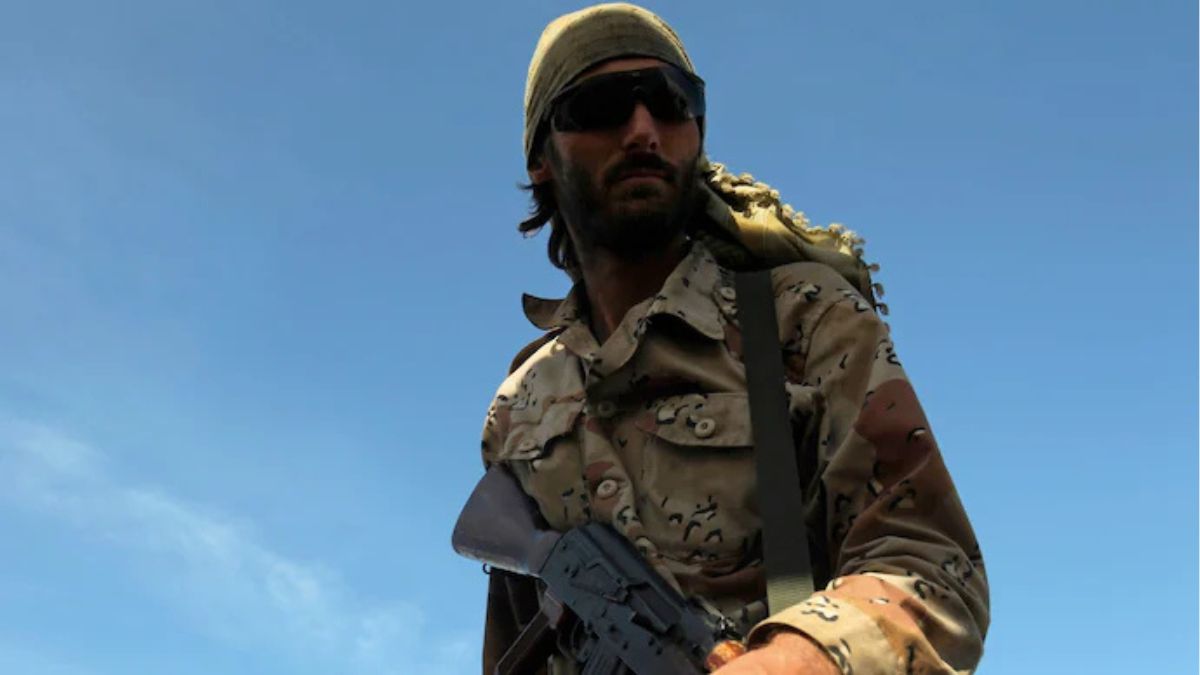
The recent arrest of American national Matthew Aaron VanDyke, a Georgetown University educated “security contractor” with a resume that describes him as a “CIA black-ops recruit” has uncovered what is being seen as the first layer of the deep mix of multitude of threats that have emerged from vast swathes of land across the porous Indo-Myanmar border. It is here from where Indian insurgent groups, mercenaries of global intelligence agencies and transnational drugs and weapons syndicates have been operating unchecked breeding cross networks.
What is ringing alarm bells for security agencies after the arrest of VanDyke and his Ukranian associates is the continued vulnerability of this porous border stretch to cross border movement of arms, drugs, and insurgent groups like People’s Liberation Army, NSCN(IM), ULFA who take shelter on Myanmarese territory and cross over to northeastern states like Manipur, Mizoram, Nagaland and Arunachal Pradesh.
In the last few years, a significant number of cadres of Indian insurgent groups crossed over to the strife torn country, either to set up shelters, consolidate strength, carry out training, and gain access to smuggling networks. As civil strife continued, many of them were used as mercenaries during the conflict between the military junta and various resistance groups. The longer the instability and strife, threats from within and outside multiplied to the extent of the area being used as a testing ground for intelligence agencies and their proxies and agents to further their interests, said senior security officials.
Similar to technology strides being made by militaries around the world—from the Ukranian battlefield to the Pakistan army’s attempt at drone warfare during Operation Sindoor—drones in conflict zones have simultaneously turned into cost effective, easy and expendable tools to mount surveillance, hit targets with grenades and mortar shells and run transnational smuggling networks of arms and narcotics. “It is not unnatural for drones finding their way into the hands of armed insurgent groups,” the official said, “just like they were found to have been used by the rebel groups in Myanmar.”
What did not serve as a wake up call for security agencies, however, were the series of drone strikes that were taking place on Myanmarese soil as late as January this year when Myanmar’s junta had to officially close the Myitkyina Airport after a drone strike damaged a Myanmar National Airlines ATR-72. The regime had blamed the Kachin Independence Army and PDFs, who denied targeting civilians.
Last year, resistance fighters in Myanmar downed MI1-17 helicopter that was on a resupply run to its military operational command. The drone attack mirrored drone attacks in Ukraine signalling the use of FPV and interceptor drones beyond the Ukraine conflict.
On March 22, as suspected ULFA(I) militants launched a brazen attack on an Assam Police commando camp in Jagun, Tinsukia district, firing multiple rocket-propelled grenades, all eyes were once again on how sophisticated weaponry was providing firepower to the insurgent group operating on these border stretches.
“The narcotics pipeline running from Chin State straight into Manipur and Assam funds both the Myanmar insurgents and ULFA(I) operatives,” said a senior security official .
Already , security agencies have been studying the patterns of IEDs, RPGs and drones used during the strife in Manipur, where once again both the Hill and Valley based insurgent groups were playing mercenaries to either side during the conflict in Myanmar.
The NIA probe into the latest case of VanDyke and his Ukrainian associates is connecting the dots – from their illegal entry in Myanmar through the northeast corridor to training Myanmar rebels in drone warfare. At the same time, security agencies are also carefully examining how deeply the cross movement of men and weapons may have taken place with insurgent groups active in northeastern states that might have gone unnoticed. .
The extensive use of drones by ISI-backed criminal groups and terror operatives in Pakistan to send narcotics, arms and counterfeit currency across the heavily guarded border in recent years has been the focus of security agencies so far. “A similar approach is needed on the eastern borders,” said a security official.
Meanwhile, evidence with the NIA has opened doors for a wider probe that will not only help unearth the nexuses but also pin point the gaps that need to be plugged to strengthen security on the porous border stretches.
Whether one or more American mercenaries operating with the US Intelligence agencies, were training armed wing of transnational narcotics insurgency networks and resupplying them remains a matter of investigation. Interestingly, the plot was uncovered by yet another nation’s intelligence - the Russian, which is learnt to have tipped off their counterparts in India - about the network that led to VanDyke's arrest.
For now, the entry of a Western Intelligence asset operating in the grey zone in Myanmar into the Northeast remains a high risk concern - but in conflict lands of Indo-Myanmar border, it is only a peep into the long pipeline of threats waiting to be busted.
