



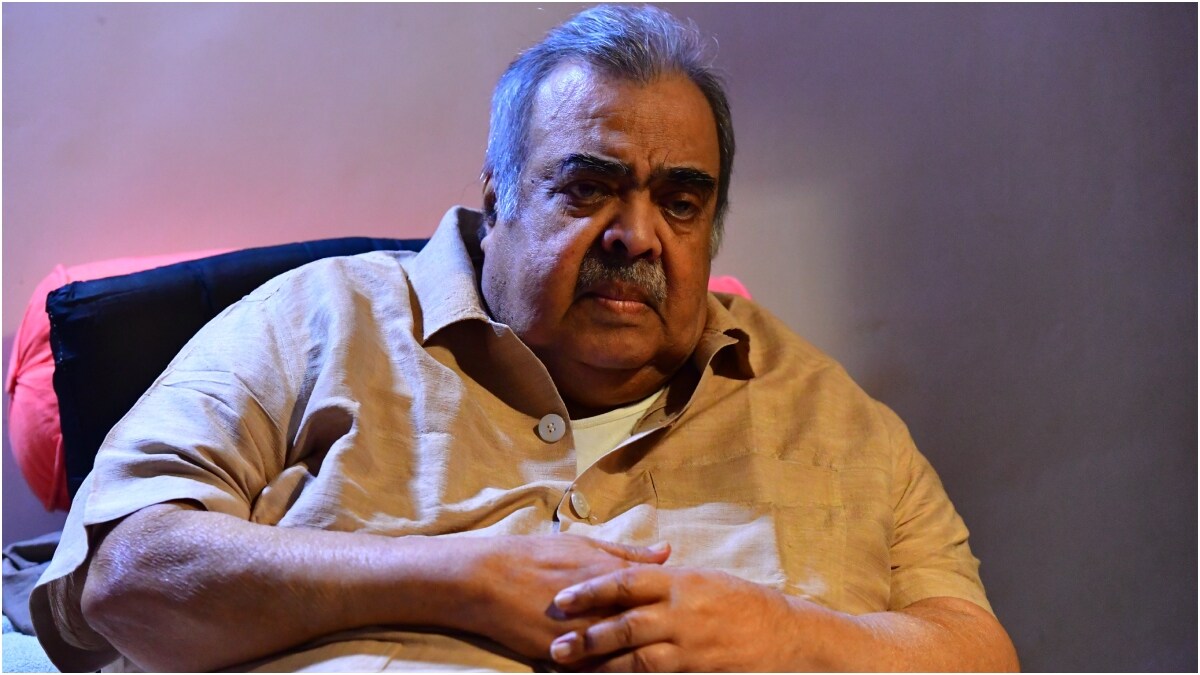
The Seventh Lok Sabha was debating a diesel import deal entered into by the Indian Oil Corporation with a firm, Kuo Oil, which, according to the findings of a House panel, had resulted in a substantial loss for India. The arrow of suspicion was pointing towards the powers that be. K. P. Unnikrishnan, the Congress (Socialist) MP from Badagara (now Vadakara) in Kerala, stood up in the Opposition benches and addressed Prime Minister Indira Gandhi: “Madam, if Gangotri be polluted, can we ensure the purity of the Ganga?”
Unnikrishnan, who passed away at the age of 89 in his hometown, Kozhikode, after a prolonged illness on 3 March, was known for his rare blend of ideological conviction and intellectual rigour. He had been a confidant of Indira Gandhi when she became Congress President in 1959 (then a 23-year-old journalist with Blitz, he had been elected as an AICC member from Bombay). She brought him to Parliament in 1971. When demolitions took place at Delhi’s Turkman Gate, resulting in riots and police firing on 31 May 1976, he, Chandni Chowk MP Subhadra Joshi, and Khurshid Alam Khan (father of Salman Khurshid) rushed to the Prime Minister's House to appraise Indira Gandhi and protest. Mrs Gandhi was not pleased.
All three were known Indira loyalists (on 24 January 1966, when Congress MPs elected Mrs Gandhi as PM, defeating Morarji Desai—while Desai had entered the meeting flanked by Sardar Vallabhbhai Patel’s daughter, Maniben Patel—Subhadra Joshi had flanked Mrs Gandhi). Apparently, with Sanjay Gandhi’s advent, Mrs Gandhi’s proximity to her own loyalists had distanced.
Years later, Unnikrishnan recalled that they were shocked when Mrs Gandhi reacted very sharply to their entreaties: “I know why you have come—you have all ganged up against Sanjay.” Thus began Unnikrishnan’s disillusionment with Mrs Gandhi. He sided with the ‘other Congress’ during the 1978 split and continued carrying that flag for many years. He rejoined Congress in the P. V. Narasimha Rao era in 1995 and was given a party ticket in 1996, but lost. Apparently, voters of Vatakara, who had elected him without a break for six terms since 1971, did not agree with his return to the party which was by then veering towards Sonia Gandhi. After his 1996 defeat, the last thirty years of his life were spent on the sidelines.
Sonia Gandhi perhaps had reason not to like Unnikrishnan. Since the Monsoon Session of 1980, one name reverberated in parliamentary debates: Ottavio Quattrocchi. He was the Indian representative of an Italian conglomerate, Snamprogetti. He had been in India since the 1970s. His name came up in Parliament repeatedly after Rajiv Gandhi emerged as the power centre following Sanjay Gandhi’s death in a plane crash on 23 June 1980.
It was Unnikrishnan who first brought Quattrocchi into the discourse. The choice of consultant (and thereby technology provider) for setting up Bombay High gas-based fertiliser plants had been under discussion since 1974. Committees of Secretaries were formed during the Emergency regime, superseded by another in Morarji Desai’s days, and yet again superseded by Charan Singh’s short-lived regime. When Congress returned in 1980, a fresh panel was tasked. The list of companies shortlisted varied, but all these panels listed as choice number one an American firm, CF Braun.
Suddenly, in September 1980, a committee of ministers was set up, and it overruled the secretaries and chose a firm which had been acquired by Snamprogetti, though it had not figured in the shortlist of previous panels. Thus, Rashtriya Chemicals and Fertilisers Limited’s Thal Vaishet unit was awarded to the Italian firm. A dozen more orders were ensured by this choice of technology.
Unnikrishnan produced a copy of the deal file in the Lok Sabha. A debate on its authenticity ensued. He cited rulings of the previous Speaker, M. Ananthasayanam Ayyangar, who had permitted Feroze Gandhi in the Second Lok Sabha to lay copies of government files after authentication. (Ayyangar had ruled that even if the MP had acquired government files by stealth, they were admissible if authenticated by the MP.) Snamprogetti hit the headlines. Ottavio Quattrocchi’s unfettered access to high places reverberated in Lutyens' Delhi.
The then Speaker, Balram Jakhar, was not impressed. The discussion soon shifted to ‘spying’. The CBI filed a case and arrested the former Bombay Sheriff, Narendra N. Kapadia (Mama Kapadia), and his nephew Nanak Sheth, who represented CF Braun in India. Unnikrishnan was summoned, citing Parliamentary privilege; he refused. The case is still among the pending cases. Kapadia and Sheth passed away meanwhile; with Unnikrishnan’s death, perhaps the file will have to be archived.
The exposure of the file was probed, not the deal which Unnikrishnan exposed—though the Estimates Committee of the 7th Lok Sabha looked into it and entered interesting observations. The panel recorded that the secretary of the dealing department had been queried about the change in decision, and whether it had been ‘necessitated by superior technical advice’. Secretary K. V. Ramanathan had replied: “No, Sir; the change was necessitated by what I may be allowed to term as superior extra-technical considerations.”
Ramanathan, who was in line for appointment as Cabinet Secretary as per his seniority, was shunted to the Planning Commission, and his supersession in 1983 was the first ever such event in the annals of the appointment of India’s Cabinet Secretary until then.
Commenting on the frequency of corruption cases springing up in Indian politics, Unnikrishnan told a Kerala journalist recently: “It was I who brought the Snamprogetti scandal to Parliament. And then I took up Bofors. I did play a key role in exposing these issues, but then I realised there is very little one can do to stop corruption in our public life. This is the Indian social reality. If the middle class is willing to tolerate corruption, then so little can be done to effectively stop it—unless there is a basic change at the social level. So, we can get some attention, make some noise, perhaps some heads might roll, but in the end the entire corrupt edifice would continue to survive.”
Ottavio Quattrocchi was a frequent invitee at Sunday brunches hosted at the Prime Minister's House, 7 Race Course Road, in the Rajiv-Sonia era. His name figured prominently in Bofors. Attempts by the CBI to bring him to trial before Indian courts failed after he made a midnight flight out of India soon after P. V. Narasimha Rao became Prime Minister in 1991.
Narasimha Rao admitted Unnikrishnan, then a sixth-term MP, into the ruling party during his tenure as Congress President. He was given the party ticket in 1996. He lost Vatakara for the first time since 1971. Thereafter, Sonia Gandhi became Congress chief, and Unnikrishnan was sidelined. He was outside the mainstream for the past three decades, mostly due to health issues.
Unnikrishnan was a one-man army of the ‘other Congress’ in Parliament. One by one, leaders who had remained in the ‘other Congress’ reverted back under Indira Gandhi’s umbrella. Election Commissioner S. L. Shakdher, adjudicating the symbol case post-1978 split, recognised the party led by Mrs Gandhi as the real Indian National Congress with the ‘Hand’ as its symbol and assigned the name “Indian Congress (Socialist)” with a woman spinning a charkha symbol to the ‘other Congress’, often referred to as Congress (S), with Sharad Pawar as President and Unnikrishnan and Ambika Soni as general secretaries.
When Sharad Pawar merged Congress (S) into Congress under Rajiv Gandhi in December 1986, Unnikrishnan continued holding the Indian Congress (Socialist) flag. His party was part of the Left Democratic Front in Kerala.
After V. P. Singh revolted and the Janata Dal emerged in 1988, Unnikrishnan acted as a fulcrum for setting up the National Front, which became the ruling dispensation in 1989—a watershed moment in India’s history. Congress was never to return to power with a majority of its own thereafter. N. T. Rama Rao was the National Front convener. The V. P. Singh-led National Front government had 146 MPs: 143 from the Janata Dal, two from the Telugu Desam Party (TDP), and one from the Indian Congress (Socialist). The BJP and the Left parties extended outside support.
After the V. P. Singh government was sworn in on 2 December 1989, in which Unnikrishnan was a prominent Cabinet Minister, all ministers drove to Unnikrishnan’s home, 2 Teen Murti Lane, for a celebratory lunch where journalists, including this writer, were present. By this symbolic gesture, V. P. Singh perhaps recognised Unnikrishnan’s one-man-army role in the formation of the National Front regime, which lasted 11 months thereafter.
