



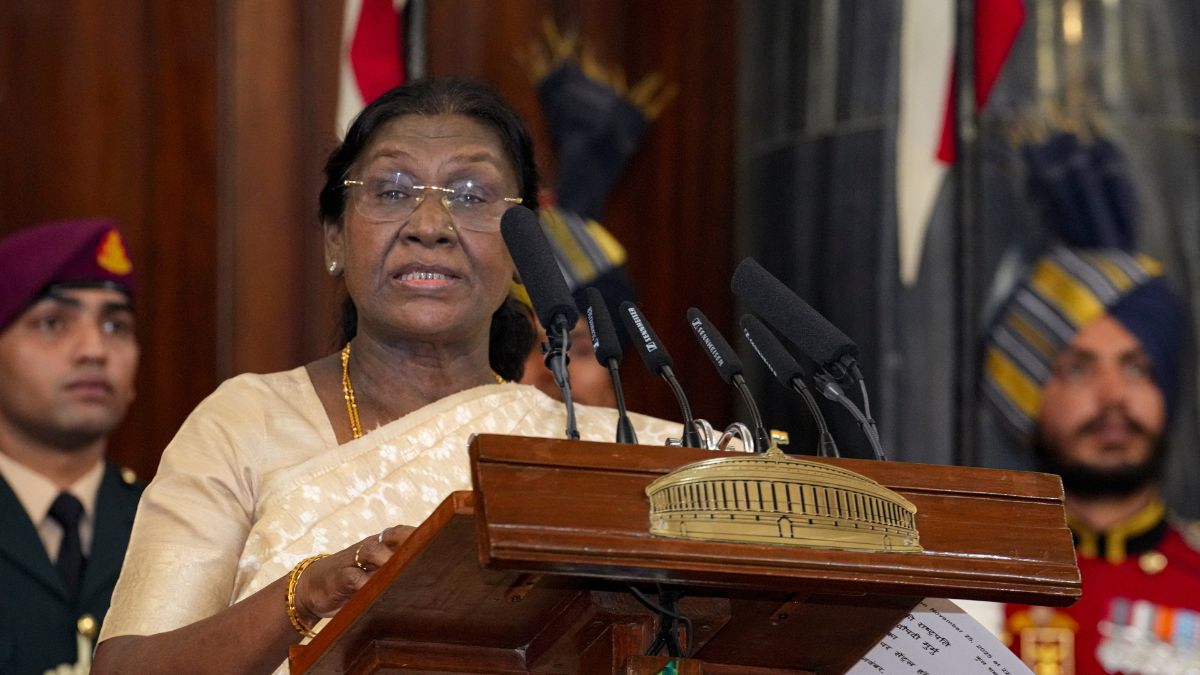
President Droupadi Murmu marked Constitution Day with a message underling the central place of the Constitution in India’s public life and the responsibilities of the institutions that operate under it. Addressing two separate functions at the two pillars of the republic, the Parliament and the Supreme Court, the President traced a line from the work of the Constituent Assembly to the demands of a changing society, where the Constitution was a tool for national progress.
At the Central Hall of Samvidhan Sadan, Murmu began by recalling the 2015 decision to observe November 26 as Constitution Day, taken during the 125th birth anniversary year of B.R. Ambedkar. She said the annual observance had become a meaningful national exercise, giving citizens, especially younger generations, a chance to reconnect with constitutional values. The practice, she noted, reinforces the idea that the Constitution belongs not only to the state but to “We, the people of India.”
In attendance were Vice President, Prime Minister Narendra Modi, leader of Opposition, Rahul Gandhi, central ministers and members of both the houses of parliament.
Murmu returned to the debate in the Constituent Assembly that led to the adoption of the parliamentary system, arguing that the reasoning remains relevant. She said Parliament continues to express public aspirations in a way that has gained international attention. Linking democratic practice with economic progress, she pointed to India’s growth trajectory and the movement of millions out of poverty as markers of the system’s effectiveness.
The debate around Constitution has become a national issue that it drives leaders from both the side of aisle.
Murmu described the Constitution as a source of national identity and national pride and said recent changes in criminal law reflect a shift toward a justice-centred approach. She also highlighted broader political participation, noting higher turnout among women and steady involvement of disadvantaged groups across electoral levels. These patterns, she said, strengthen the democratic foundation the framers envisioned.
She credited Parliament with acting in the national interest and said the combined work of the legislature, executive and judiciary has supported development and stability.
Later at the Supreme Court, Murmu shifted focus from legislative performance to the judiciary’s role. She paid tribute to the framers and called the Constitution the source of India’s identity as the world’s largest republic. She listed its functions: creating unity in diversity, establishing equality in a society marked by disparities, enabling peaceful social and economic change, and providing a multi-layered system of governance capable of continuity and reform.
Murmu said it is now common for public debate to hinge on what the Constitution says, which she described as a sign of growing confidence in the document. She argued that the Constitution became a reference point for citizens because of the broad participation that shaped it. To maintain that connection, she said children should be introduced to the Constitution in accessible ways. A child-friendly version, produced with help from constitutional scholars and children’s authors, would help younger readers understand its principles early in life.
Talking about the institutional architecture, she said the framers gave detailed guidance on the roles of the executive, legislature and judiciary. She expressed confidence that these three organs would strengthen the system through coordination and that citizens would benefit from such cooperation. She added that access to justice must improve, with legal aid available at the grassroots and delivery of justice made as accessible as other essential services.
