



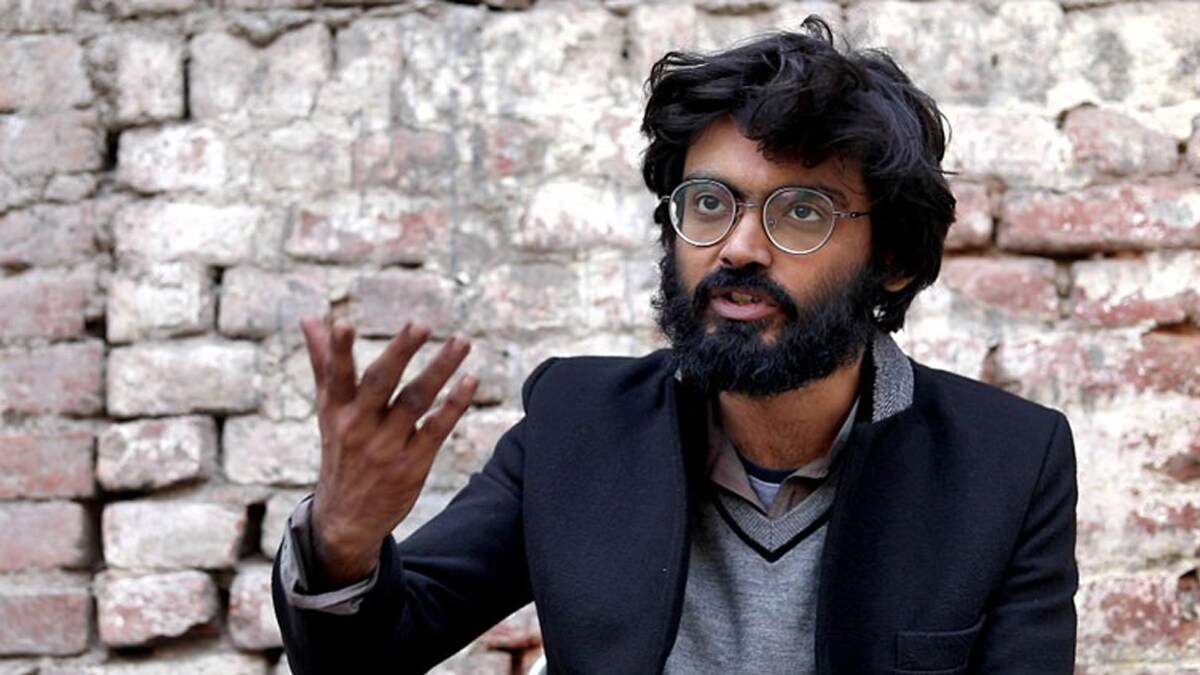
The Supreme Court on Thursday heard arguments on the bail pleas of former JNU student leaders Umar Khalid and Sharjeel Imam, along with several others accused in the 2020 Northeast Delhi riots conspiracy case.
A bench of Justices Aravind Kumar and N.V. Anjaria took up the matter, with senior advocate Siddharth Luthra presenting arguments on behalf of accused Shadab Ahmed, who has been in custody for over five years under the Unlawful Activities (Prevention) Act (UAPA).
Luthra told the bench that organising or participating in a protest cannot be treated as a criminal act, and that the charges against Ahmed were based on weak and circumstantial evidence.
“The witnesses claim they saw or heard him at protests or at a biryani stall discussing the so-called conspiracy. Even if that’s accepted, none of these acts amount to a criminal offence,” he submitted.
Ahmed was arrested on April 6, 2020, and accused of supporting women protesters and blocking a road in Chand Bagh during the anti-CAA demonstrations. “He is being punished for exercising his democratic right to dissent,” Luthra argued, urging the court to recognize the difference between protest and conspiracy.
“If peaceful dissent and protest become crimes, it would shake the foundations of our constitutional democracy,” Luthra told the court.
Two witnesses and a weak case
The senior counsel pointed out that Ahmed’s name appeared only in the second supplementary chargesheet, and that the police case rested largely on statements from two protected witnesses, codenamed Radium and Sodium, and a few police officials.
“The prosecution has relied on two protected witnesses, Radium and Sodium, to prop up its case,” he said, adding humorously that “Radium and Sodium are dangerous chemicals.”
Justice Kumar responded with a smile, “Sometimes dangerous materials are used for a good end,” before allowing Luthra to continue.
Luthra stressed that the case records contained around 12,000 documents, yet none directly implicated his client in any act of violence. “There is no video, message, or statement linking him to any violent act or unlawful meeting,” he submitted.
No evidence from online chats
Refuting the Delhi Police’s claim that Ahmed was part of the Delhi Protest Solidarity Group (DPSG), Luthra said his client was not a member of any online chat group used to plan demonstrations.
“The first time the police showed his supposed involvement was through a barely recognisable photograph allegedly taken at a protest site. That is hardly admissible or conclusive evidence,” he told the bench.
According to Luthra, Ahmed’s presence at protest sites was being misconstrued as participation in a conspiracy, which, he said, reflected an overreach of the UAPA framework.
“The Gurwinder case involved proven links to terrorist activities, which is not the situation here. Here, we are dealing with protests against a law, not with any act of terrorism. The facts are entirely different,” Luthra argued, urging the court to apply a context-sensitive approach to bail in UAPA cases.
Earlier, on November 3, co-accused Umar Khalid, Sharjeel Imam, Meeran Haider, and Shifa-ur-Rehman told the court that they were informed about the completion of the investigation only on September 4, 2024, four years after their arrests. They argued that such delays had effectively deprived them of their right to seek a fair and timely trial.
The Delhi Police’s case, registered by the Special Cell, alleges that the anti-CAA protests in 2020 were part of a larger, premeditated conspiracy that led to the communal riots in Northeast Delhi in February 2020, which claimed 53 lives and injured hundreds.
The accused, however, maintain that they are victims of a politicised investigation aimed at criminalising dissent. “This is not about conspiracy, it’s about punishing citizens for speaking up,” the defence has repeatedly argued before various courts.
The bench has now slated the hearing for November 10.
