



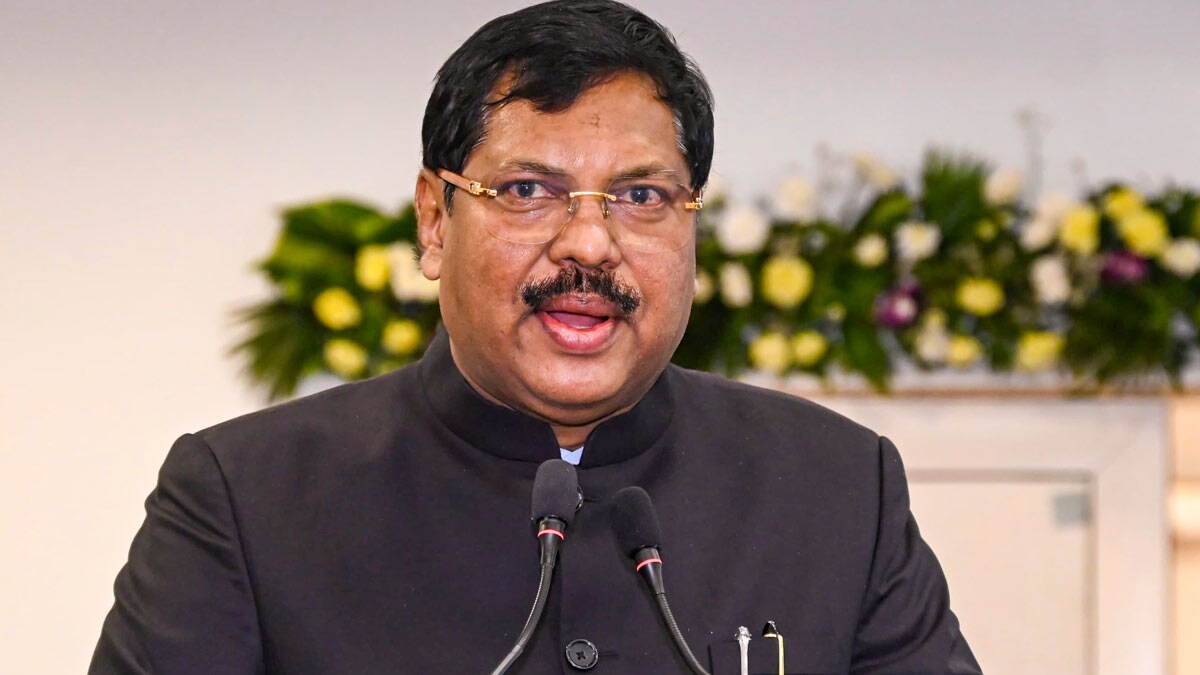
The government has written to Chief Justice of India B.R. Gavai, seeking his recommendation for the next Chief Justice as he prepares to demit office on November 23.
The move, though routine, revives an enduring question—if the line of succession is already known, why does the government still seek the outgoing Chief Justice’s recommendation? The answer lies in a delicate dance of tradition, constitutional prudence, and judicial independence.
How a Chief Justice is chosen
The appointment of the Chief Justice of India (CJI) is not laid out in exhaustive detail in the Constitution. Article 124(2) simply says the President shall appoint judges of the Supreme Court after consultation with the judiciary. Over the decades, a convention evolved —the senior-most judge of the Supreme Court is elevated as the next CJI.
But convention is not self-executing. The law ministry formally writes to the sitting CJI about a month before his retirement, seeking his recommendation for the successor. The CJI, after consulting senior colleagues, sends a letter endorsing the next senior-most judge as fit and proper for the position.
That letter then goes through the prime minister to the President, who signs the warrant of appointment.
The process may appear ceremonial, but it remains a vital constitutional handshake between the judiciary’s continuity and the executive’s formal power of appointment.
When the outgoing CJI formally writes to the government, it becomes a transparent symbolic act: the judiciary speaks for itself. This builds public confidence in the neutrality of the process. It reduces the likelihood of questions being raised about executive overreach or blatant supersessions. Indeed, departures from the seniority convention in earlier decades triggered controversy.
Why the line of succession matters
The line of succession is more than an internal pecking order. It defines how long each future CJI will serve and, by extension, the direction, reform, and stability of the Supreme Court.
As judges retire at 65, short tenures are common, sometimes lasting barely weeks. Yet every Chief Justice presides over crucial collegium appointments, case allocations, and administrative decisions that shape the judiciary’s tone and priorities.
The succession till 2030
If convention holds, India’s top court will see a rapid turnover of CJIs in the next five years:
Justice Bhushan Ramkrishna Gavai – to serve till November 23, 2025.
Justice Surya Kant – Nov 24, 2025 – Feb 2027.
Justice Vikram Nath – Feb 2027 – Sept 2027.
Justice B.V. Nagarathna – Sept 2027 – Oct 2027
Justice P.S. Narasimha – Oct 2027 – May 2028.
Justice J.B. Pardiwala – May 2028 – Aug 2030
Justice K.V. Vishwanathan- August 2030 - May 25, 2031.
Justice Joymalya Bagchi- May 25, 2031 - October 2, 2031
Why this ritual matters now
At a time when the executive and judiciary often find themselves on parallel tracks over judicial appointments, accountability, or institutional criticism, the tradition of consultation and recommendation stands as a symbol of balance.
The government’s letter to the outgoing CJI is not just a bureaucratic formality; it’s an affirmation of the unbroken chain of judicial independence. The act of recommendation keeps the process insulated from politics and sustains public faith in an institution that speaks, by design, only through its judgments.
