



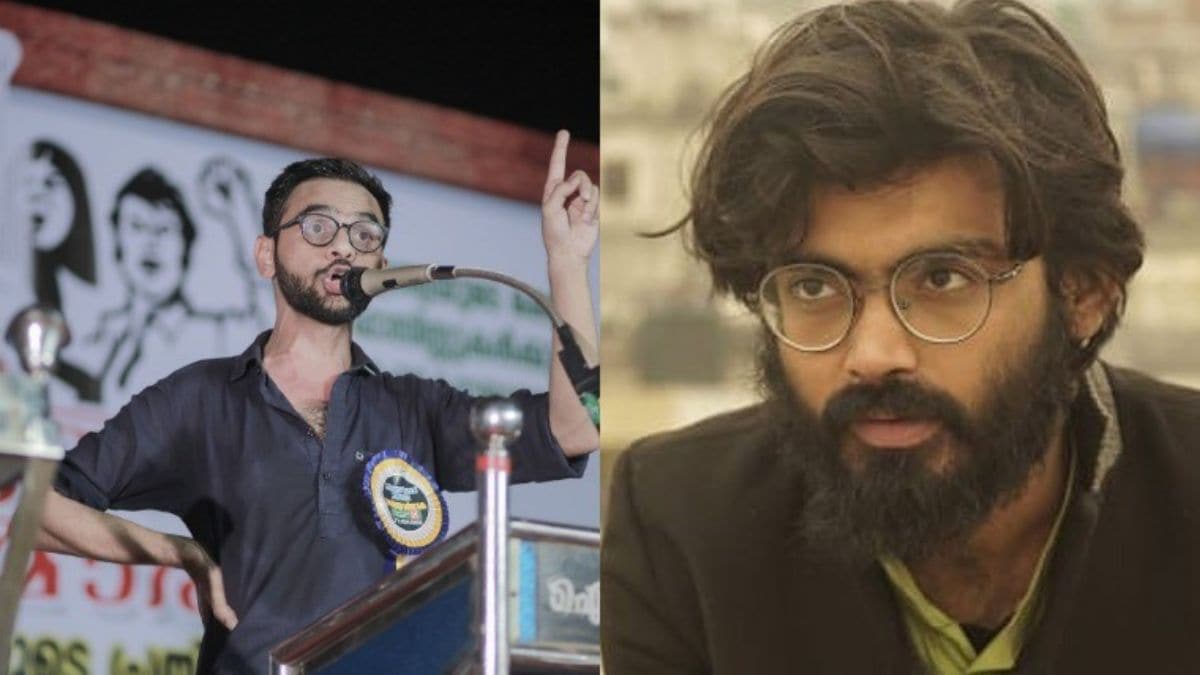
The Delhi High Court on Tuesday dismissed the bail pleas of student leaders and activists, including Umar Khalid, Sharjeel Imam, Khalid Saifi, Gulfisha Fatima, Meeran Haider and four others, all accused in the 2020 Delhi riots larger conspiracy case. The order comes as yet another blow to the accused, who have been behind bars for more than four years under the Unlawful Activities (Prevention) Act (UAPA), with the trial yet to begin in earnest.
The case so far
The Delhi Police filed multiple FIRs in the aftermath of the February 2020 communal riots that killed 53 people and injured over 700. FIR 59/2020, dubbed the larger conspiracy case, alleges that the violence was not spontaneous but pre-planned as part of a conspiracy hatched during the anti-CAA protests.
The prosecution’s case links the accused, activists, student leaders, and community organisers to a conspiracy involving protest sites, WhatsApp groups, and alleged inflammatory speeches. They have been charged under stringent provisions of the UAPA, besides sedition, conspiracy, and other sections of the IPC.
Today’s verdict
A bench of the Delhi High Court, while denying bail, reiterated that the accusations are grave, and prima facie, there is material suggesting the accused were part of a larger conspiracy. The ruling shows that despite widespread criticism, courts remain reluctant to intervene at the bail stage in UAPA prosecutions.
During the prolonged bail hearings in the Delhi riots larger conspiracy case, the defence and prosecution presented sharply contrasting arguments before the Delhi High Court.
Defence arguments
Senior Advocate Trideep Pais, appearing for Umar Khalid, argued that the case against his client rested on tenuous grounds. He highlighted that Khalid’s alleged role was limited to being part of WhatsApp groups, without even sending any incriminating messages. “Mere membership of a group cannot amount to criminality,” Pais told the court. He further pointed out that there was no recovery, financial or otherwise, from Khalid, and dismissed the prosecution’s claim of a secret meeting on February 23-24, 2020, noting that it was neither secretive nor clandestine in nature.
Senior Advocate Rebecca John, representing activist Khalid Saifi, pressed the court to examine whether UAPA could be invoked on the basis of what she described as innocuous WhatsApp messages and speculative narratives built by the prosecution. She asked, “Can this be a reason to deny bail, or even a ground for prosecution under UAPA?” John also invoked the principle of parity, reminding the court that three co-accused had been granted bail as far back as June 2021, and Saifi’s case, she argued, was no different.
For Sharjeel Imam, his counsel Advocate Talib Mustafa stressed that Imam was not connected to the co-accused and had no role in any alleged conspiracy meetings. He submitted that the prosecution’s case against Imam was limited to speeches delivered during the anti-CAA protests, with the last such instance being a speech in Bihar on January 23, 2020, well before the riots broke out in late February.
Prosecution’s stand
The Delhi Police, represented by Solicitor General Tushar Mehta and Special Public Prosecutor Amit Prasad, mounted a strong opposition to the bail pleas. Mehta took a hard line, arguing that the accused had acted against national interest. “If you are doing something against the nation, then you better be in jail till you are acquitted or convicted,” he said.
According to the prosecution, the accused were not mere protesters but part of a coordinated conspiracy aimed at creating unrest and tarnishing India’s global image. They alleged that deliberate planning went into choosing specific dates to incite violence, leading to widespread rioting and arson.
Four years without trial
What stands out is not just the denial of bail, but the sheer length of incarceration. Umar Khalid has been in jail since September 2020, and Sharjeel Imam since January 2020. Others, including Saifi, Fatima and Haider, have also completed over four years behind bars.
During this time, the trial has barely moved forward. The charges are voluminous, with the prosecution citing thousands of pages of evidence and dozens of witnesses. Even the framing of charges took months. For the accused, this means years of imprisonment without the opportunity to defend themselves in a court of law.
UAPA deadlock
At the heart of the debate is the UAPA. Under Section 43(D)(5) of the Act, courts cannot grant bail if a prima facie case exists against the accused. This provision effectively reverses the presumption of innocence, tilting the balance in favour of the State.
Legal experts have long argued that this leads to pre-trial punishment, where accused individuals spend years in jail even if their eventual conviction remains uncertain. In fact, conviction rates under UAPA are low. Data from the National Crime Records Bureau (NCRB) shows that in many years, fewer than three per cent of UAPA cases end in conviction.
What lies ahead
The High Court’s denial of bail means the accused will have to either approach the Supreme Court or wait for the trial to progress, both options likely to extend their detention further. For now, their ordeal continues, as do the debates around UAPA, bail jurisprudence, and the thin line between dissent and conspiracy.
Today’s verdict underscores the extraordinary weight of UAPA cases where the presumption of guilt at the bail stage trumps the presumption of innocence. While the High Court’s order reflects a consistent judicial stance, it also highlights a troubling reality: justice delayed may well be justice denied.
