



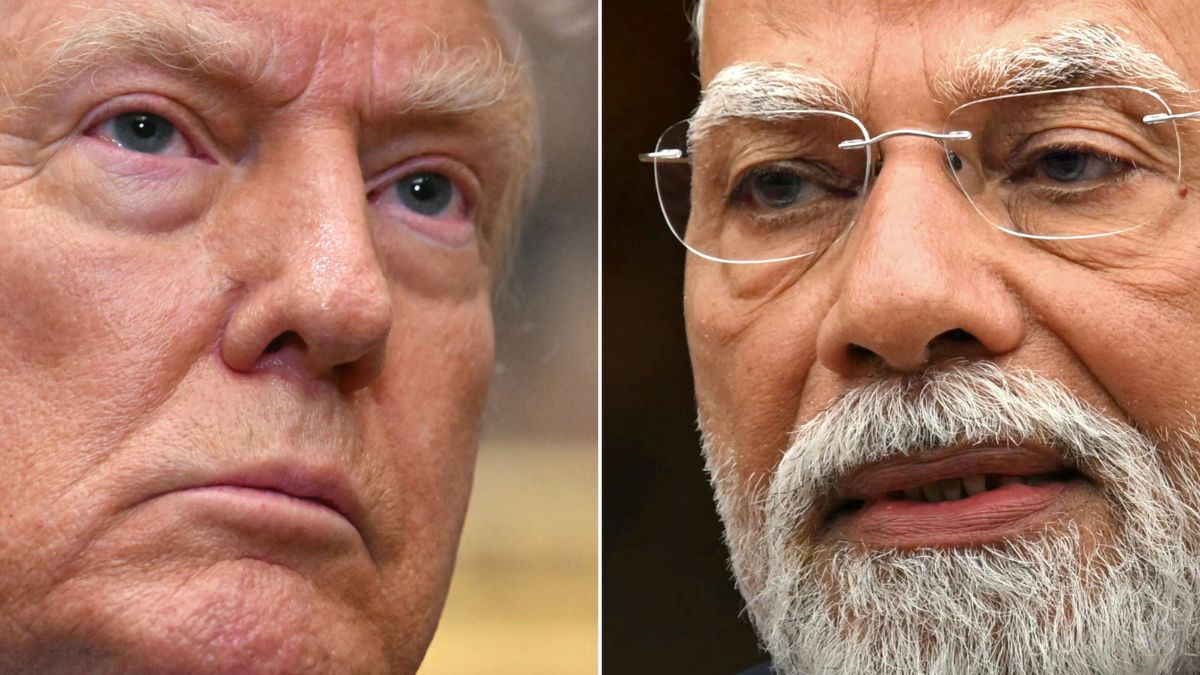
On February 13, US President Donald Trump signed a presidential memorandum proposing 25 percent reciprocal tariffs on goods from nearly 70 countries, including India. The move was part of Trump’s revived “America First” trade strategy, aimed at reducing the United States’ growing trade deficit, which hit USD 918.4 billion in 2024. With India, the trade deficit stood at around USD 45.7 billion.
The tariffs target countries that, according to the Trump administration, impose high import duties on US products. Among those named were China, the EU, Canada, Mexico, and India, which Trump has previously labelled the “tariff king”. Trump has now imposed a 50 percent tariff on India.
A recent Indian Council for Research on International Economic Relations (ICRIER) policy paper, citing the WTO, said India imposes significantly higher tariffs than the US, with a simple average rate of 17 percent, compared to about 3.3 percent imposed by the US.
“...the most striking difference is in the agriculture sector, where India’s tariffs are notably higher. The simple average tariff for agricultural goods in India is 39 percent, while the trade-weighted average is 65 percent, indicating strong protectionist policies by India. In comparison, the US maintains relatively low agricultural tariffs, with a simple average of 5 percent and a trade-weighted rate of 4 percent,” ICRIER said.
India’s agricultural wall
India has signalled openness to allowing greater access to American dry fruits and apples, but has been firm on allowing entry of US agricultural products in markets like wheat, poultry, dairy, and corn. Already five rounds of trade talks have been held, but India has not budged from this position on agricultural products.
The biggest statement has come from Prime Minister Narendra Modi, who on Thursday again reiterated his commitment to protect Indian agriculture and the dairy sector.
“The welfare of our farmers is of the highest priority. India will never compromise on the interests of its farmers, livestock rearers, and fishermen. I may have to pay a very heavy price personally, but I am prepared for it. For the farmers of my country, for the fishermen of my country, for the livestock rearers of my country, India stands ready,” Modi said during a function in the national capital.
Though he did not name the US or the 25 percent tariffs that President Trump has imposed on India, it was clear Modi was conveying his government’s intent.
India’s position
The agricultural sector in India employs over 40 percent of its population, despite contributing just 16 percent to the GDP. Any disruption could have serious economic, political, and social repercussions. Farmers, as a pressure group, have time and again asserted their importance in the country, forcing successive governments to reverse policy decisions. The Modi government too learnt it the hard way. It went back on the land acquisition bill and even withdrew the three farm laws, bowing to the farmers’ year-long agitation.
The opposition to US agricultural products is on multiple fronts. One, most US crops like corn and soybeans are Genetically Modified (GM) crops. Small Indian farmers will not be able to match the cost-effective crops of US farmers, who use highly mechanised equipment and techniques, whereas Indian farmers rely on manual labour — hence, higher production costs. The influx of cheaper US products could harm Indian farmers with small land holdings.
The same with the dairy sector. Moreover, there is a cultural aspect to milk production. US cattle are often fed animal by-products, which is a cause of concern in India.
Internal pressure
The pressure against allowing foreign agri-produce is also strongly resisted by Sangh Parivar organisations. They have long advocated for protecting Indian cattle, dairy, and farmers. This pressure had forced the Indian government to pull out during the China-promoted RCEP (Regional Comprehensive Economic Partnership) negotiations in 2019.
Trump’s move has also triggered a political storm back in India. Opposition leader Mallikarjun Kharge slammed the Modi government for failing to negotiate a deal despite years of engagement. He warned that the tariffs could burden Indian exporters by Rs 3.75 lakh crore, especially in sectors like textiles, engineering, and pharmaceuticals.
Modi, earlier during a rally in Varanasi, vowed to take “all necessary steps to protect our national interest.” The Prime Minister asked Indians to support Swadeshi (indigenous) products and resist economic coercion.
Trade deadlock
The future of an India-US trade deal is uncertain. US Treasury Secretary Scott Bessent recently said it was “now up to India” to make a move. But New Delhi remains cautious. Officials have said there will be no compromise on agriculture and dairy, and that the interests of farmers and small industries remain paramount.
India fears that opening its farm sector to the US could set a precedent for other countries to demand the same access — potentially unravelling the food price protections that keep inflation in check. The next round of trade talks is likely to take place on August 25.
