



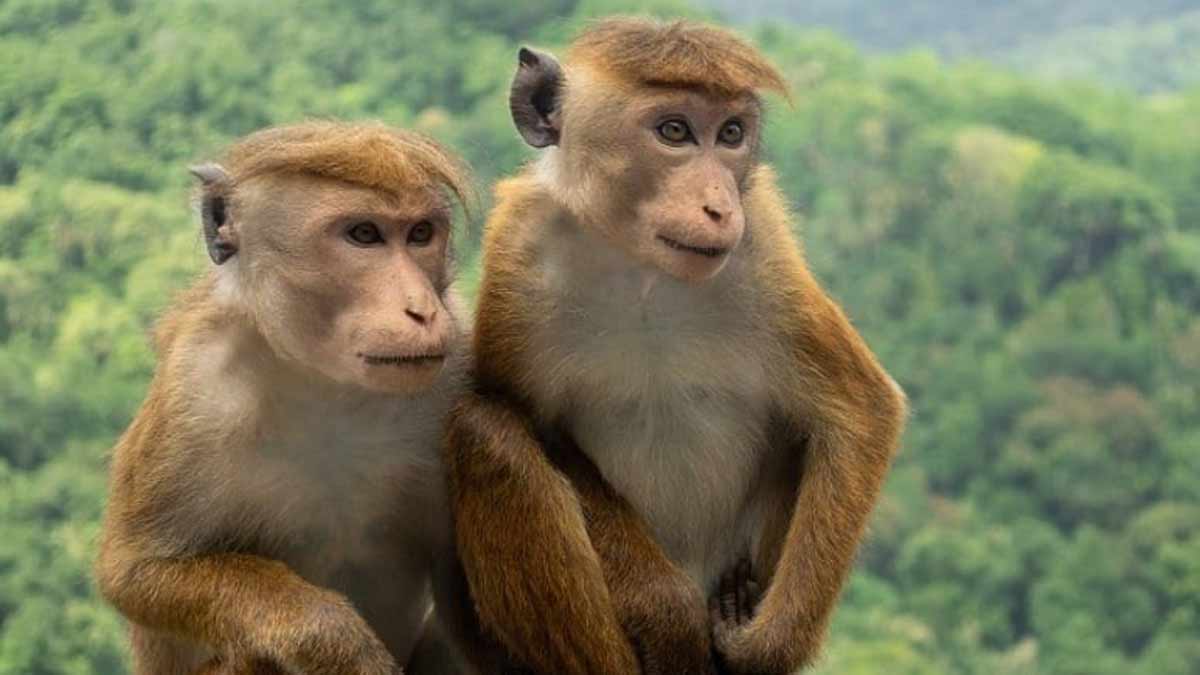
Monkey attacks are no longer isolated incidents confined to forest fringes or temple towns. Across India’s cities, encounters with the aggressive animals have become a daily public safety concern, causing injuries and even deaths. A couple of months back, in Gujarat's Gomtipur at least 12 people were bitten by monkeys in five days. Early last year, Lucknow's health department data showed that around 600 new monkey bite cases were treated every month at government hospitals in the city, an average of one bite every hour. When cases handled by private hospitals are included, the monthly figures rose to 700–720 cases.
In fact, the World Health Organisation (WHO) has noted that monkey bites are the second most common animal bite in India after dog bites, accounting for anywhere between 2 per cent and 21 per cent of animal bite injuries, depending on the region. According to figures reported by States and Union Territories on the Integrated Health Information Platform (IHIP) under the Ministry of Health and Family Welfare, India recorded 5,04,728 animal bite cases from “other animals including monkeys” in 2024. These incidents resulted in 11 deaths.
However, despite the extent of the longstanding problem, there appears to be no national framework to manage urban monkey populations. In a written reply to the Lok Sabha last year, the government clarified that stray animal management, including dogs and monkeys, falls primarily under the purview of State Governments and local bodies. Then Union Minister Rajiv Ranjan Singh said multiple ministries are involved in addressing the broader stray animal problem, including Health, Housing and Urban Affairs, and Animal Husbandry.
While recent policy focus has largely been on dogs, through Animal Birth Control Rules, 2023 and the National Action Plan for Dog-Mediated Rabies Elimination (NAPRE), there is currently no dedicated national framework for managing urban monkey populations, despite rising bite cases.
Why the problem is getting worse
From Parliament buildings in Delhi, where authorities once hired “monkey impersonators” to scare macaques, to neighbourhood terraces in Lucknow, the monkey menace reflects a deeper governance gap. Experts link the surge in monkey attacks to shrinking green spaces, easy access to food waste, religious feeding practices, and lack of coordinated urban wildlife management.
India’s monkey population is estimated to exceed 50 million, and in cities, monkeys have adapted quickly, scaling buildings, entering homes, and aggressively competing with humans for food. The problem is compounded by cultural reverence for monkeys, particularly due to their association with Lord Hanuman, which often discourages firm control measures.
Without clear accountability, coordinated policy, and city-specific action plans, experts warn that monkey bite cases, and preventable deaths will continue to rise. As urban India grows denser, the challenge is no longer just about wildlife management. It is about public health, urban safety, and the cost of inaction.
Best solution: Avoid getting bit by monkeys
Explaining the risks associated with monkey bites, Dr Narendra Pardeshi, Veterinary Surgeon, said that such incidents pose serious public health concerns, particularly in urban areas like Delhi.
“Monkey bites are definitely a source of transmission for rabies because they are not vaccinated. That is one of the major things,” Dr Pardeshi said. “The second major risk is secondary infection because of the gums, saliva or other bacteria entering the human body through the bite.”
He stressed that rabies remains a fatal disease once symptoms appear. “For rabies, there is no treatment either in human beings or in animals. If a rabid monkey bites you, you never know which monkey is rabid or which monkey is normal. It can act as a carrier of the disease,” he explained.
According to Dr Pardeshi, the risk is heightened because of the nature of human–monkey conflict. “This makes it very risky for human and animal conflict, especially related to monkeys. They are very fast as compared to human beings. Disease transmission is one of the major risks, especially with rabies.”
On how people can protect themselves in monkey-prone areas, he said, feeding monkeys must be avoided. “If monkeys are there in your area, we suggest not feeding them. Most of the time, monkeys come to human-occupied areas to have food. If they are getting good food here, they will stay. If you stop feeding them, they will start going out of your area. Feeding them is risky for you and your family members.”
What to do if a monkey bites
Doctors stress that monkey bites are medical emergencies, not minor injuries. Monkey bites can transmit rabies, tetanus, serious bacterial infections, and in rare cases, herpes B virus.
Immediate steps include: Washing the wound thoroughly with soap and running water for 15–20 minutes, applying an antiseptic such as povidone-iodine, avoiding home remedies like turmeric, lime or chilli, seeking medical care immediately for rabies vaccination and tetanus protection.
Detailing the first aid steps after a monkey bite, Dr Pardeshi said immediate action can be life-saving.
“If you get bitten by a monkey, the first and foremost important thing is to wash the wound thoroughly with a detergent soap, a hard detergent soap having caustic soda, like Rin or Wheel, so that the virus gets eliminated. Wash the wound for a minimum of 10 minutes.”
“After cleaning the wound, apply an antiseptic and do not bandage the wound. Keep it open because the virus travels through the nerves. If the bite is deep, the nerve endings are the main source for disease transmission—from a rabid monkey bite or even from a rabid dog or cat bite," he said.
He underlined the importance of post-exposure vaccination. “Then go ahead with post-bite rabies vaccination. Take the complete course—on days 0, 3, 7, 14, 30 and 90.”
Reassuring victims, Dr Pardeshi said a bite does not automatically mean death if treated correctly and in time. “There are ways to keep yourself safe even after being bitten. It is not that once bitten there is no hope.”
He added that newer medical interventions are also available. “There are now products called hyper-immune serum, prepared from immune human serum, which can be injected immediately into the wound area so that virus transmission is completely avoided.”
This story is done in collaboration with First Check, which is the health journalism vertical of DataLEADS.
