



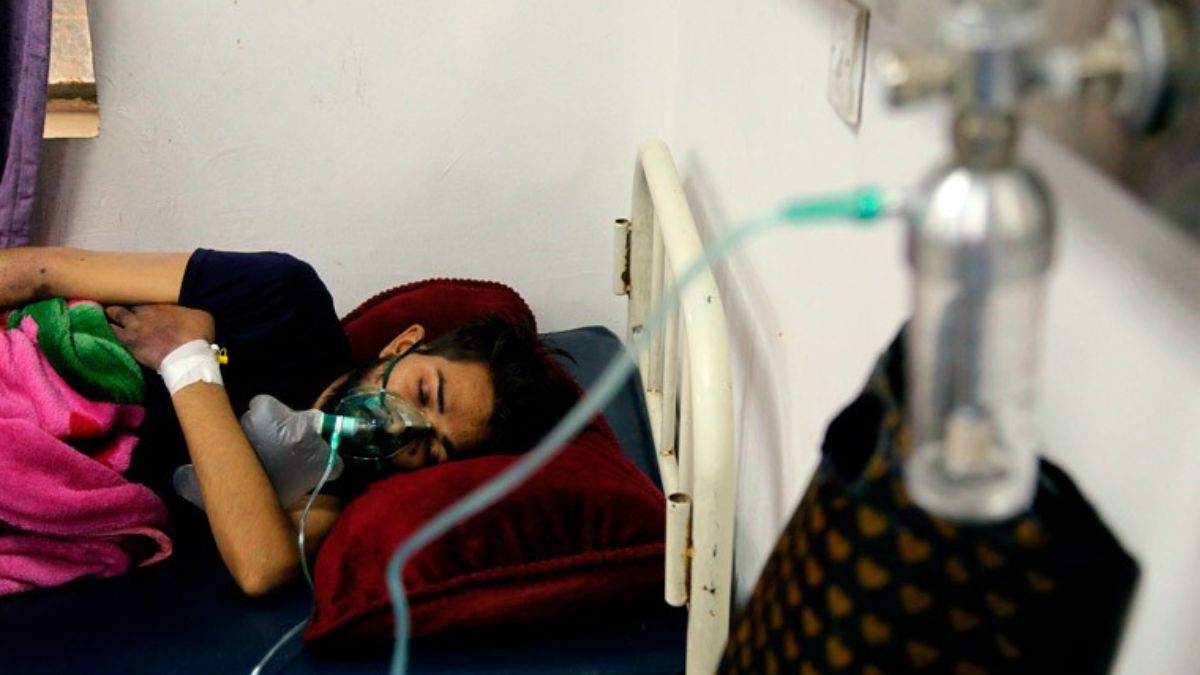
When a child walks into our clinic, we don’t just see lab values—we see a life whose course can change in minutes, months, or years.
I remember one boy, tragically misdiagnosed. At just two years old, he was diagnosed with MPS IV and placed on supportive care. By six, he developed pancytopenia and required transfusions. During a bone marrow examination, he was diagnosed with moderate aplastic anemia, but unfortunately, no further evaluation for a possible cause of aplastic anemia was done. He was still managed only with intermittent transfusions, without a deeper search for the underlying cause.
When he came to us at twelve, his transfusion needs had escalated sharply. A thorough history and systematic evaluation led us to the true diagnosis: inherited bone marrow failure due to Fanconi anemia.
He received an utmost challenging but life-saving bone marrow transplant at thirteen. His health recovered, but the skeletal damage, long ignored, could not be reversed and the inappropriate care that he received for management of aplastic anemia increased the risk of failure during subsequent transplant. Possibly, if this child would have been transplanted at 6 years, we might have been able to add more value to his life.
That loss, that preventable suffering, is far too common in India. Children battle rare hematologic and metabolic disorders that are manageable or even curable when detected early—but devastating when missed.
This is a fight we must not lose.
The invisible burden of rare disorders
Rare does not mean negligible. Mucopolysaccharidoses, though individually uncommon, together place a measurable burden on health systems worldwide. Global pooled estimates suggest an overall birth prevalence of around 0.5–1 per 100,000 live births, and reports from South Asia indicate similar rates. In India, while systematic data are limited, the clinical burden is real and visible in tertiary centres.
Aplastic anemia and its inherited subtype, Fanconi anemia, pose an even greater challenge. Studies from India and across Asia suggest incidence rates of 6–8 cases per million population per year, two to three times higher than in Western countries. Fanconi anemia, classically described as affecting about 1 in 350,000 births, is more frequent in certain Indian communities due to founder mutations and consanguinity. These disorders may initially appear as anemia or infections, but subtle skeletal or developmental clues are often missed. Early genetic testing and referral could save years of suffering.
The child, unfortunately, is the first in the world to have dual pathology MPS IV and FA.
Why timing matters
For most inherited marrow-failure syndromes and lysosomal storage disorders, the window for curative therapy — whether hematopoietic stem cell transplantation, enzyme replacement, or emerging gene therapy — is narrow. Delays lead to irreversible organ damage affecting the skeleton, liver, lungs, and brain. The boy with MPS survived, but no medical technology can reverse the skeletal deformities caused by lost time.
India’s BMT capacity has grown remarkably in the past decade, with more than 100 active centres and thousands of transplants performed annually. Yet access remains uneven. Advanced transplants and supportive care are concentrated in large cities, costs remain prohibitive for most families, and there are not enough trained teams or matched donors to meet national needs.
Moreover, public funding for rare-disease treatment remains limited. The National Policy for Rare Diseases (2021) provides a framework for one-time curative therapies and Centres of Excellence, but implementation has been slow, and financial support caps are modest. While private hospitals perform the majority of transplants, families without insurance or philanthropic backing struggle to afford curative treatment that can exceed ₹15–25 lakh per patient.
From policies to partnerships
India urgently needs a multi-pronged, collaborative response. Early diagnosis must become routine, beginning with paediatricians and primary physicians who are trained to identify red flags such as growth failure, persistent cytopenia, coarse facial features, or unexplained organomegaly. Affordable, advanced DNA testing can cut the time it takes to get a rare disease diagnosis from years down to just weeks.
Decentralising curative care is equally vital. Regional transplant hubs, within both government and private hospitals, can expand capacity and reduce waiting times. Public-private partnerships (PPPs) offer the fastest path forward: the government can provide regulatory oversight, accreditation, and funding, while private and philanthropic players can contribute infrastructure, donor registries, and training. Successful models of PPP already exist in dialysis and oncology; similar frameworks can transform transplant medicine.
The existing schemes and CSR initiatives, such as Thalassemia Bal Seva Yojna, must evolve to match the scale of the challenge. Ayushman Bharat–PMJAY and state insurance programs should explicitly cover curative transplants and enzyme/gene therapies where outcomes are proven, preventing catastrophic out-of-pocket spending. CSIR and DBT research programmes can extend their focus to indigenous production of enzymes, gene vectors, and supportive drugs — reducing dependency on expensive imports and creating sustainable affordability.
Simultaneously, building national donor registries and genetic databases will shorten donor searches and refine population-specific disease understanding. DATRI, DKMS, and other initiatives have made progress, but wider community participation are needed. Patient support must also go beyond medical treatment: long-term rehabilitation, physiotherapy, schooling, and psychosocial support are essential for holistic recovery.
A call for urgency and compassion
The boy I mentioned at the beginning of this article now leads a near-normal life, thanks to a successful bone marrow transplant, yet his irreversible skeletal deformities are a daily reminder of the cost of delayed care. India has the scientific expertise, hospital infrastructure, and policy frameworks to change this story — what is lacking is coordination and urgency.
Every rare disease is a test of our collective empathy and system efficiency. When detected early and treated in time, these conditions are not life sentences; they are curable chapters. It is time for India to make that possibility a reality for every child — so that no one loses a childhood, or a future, to diseases we already know how to treat.
The writer is a paediatric haematologist and a bone marrow transplant specialist in New Delhi. He is also a researcher innovating cell therapy solutions.
The opinions expressed in this article are those of the author and do not purport to reflect the opinions or views of THE WEEK.
