



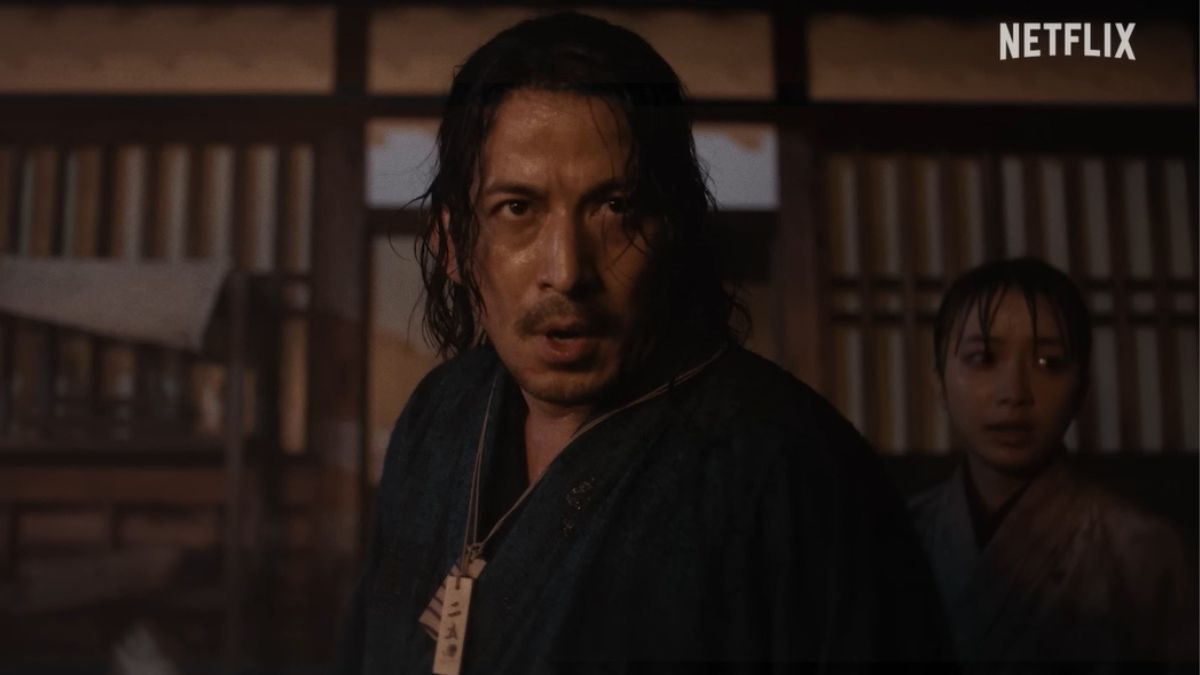
The backdrop of Netflix's new Japanese series, Last Samurai Standing — premiering on November 13 — has rarely been explored on film before. Based on Shogo Imamura's novel, the six-episode show is packed with intense action, heavy emotions, and political intrigue. It's set in 1878, the Meiji-era Japan, where the samurai class no longer wields the power they once did. In the wake of the abolition of the shogunate — the hereditary military dictatorship that reigned from 1192 until 1867 — the samurai, now stripped of their privileges, not only battled poverty but also a raging cholera outbreak.
Among the affected is an infamous samurai assassin, Shujiro Saga, and his family. When tragedy strikes, Shujiro is desperate to save the remaining family members by any means necessary. An opportunity presents itself in the form of a dangerous game called Kodoku, in which 292 warriors participate. The winner will take home a massive fortune. Or will they?
A little bit into the game, Shujiro and his unexpected allies realise that things may not be what they seem, that it could be the brainchild of nefarious, self-serving individuals amidst the Westernisation of Japan. The action is split between the warriors and their moving backstories, and political machinations in secret chambers away from the chaos.

The series is headlined by actor-producer Junichi Okada, known as "Japan's Tom Cruise," given his reputation for doing his own stunts. Proficient in various martial arts forms, Okada also served as the action supervisor on Last Samurai Standing, working with directors Michihito Fujii, Kento Yamaguchi, and Toru Yamamoto to deliver a never-before-seen experience. Hardcore fans of the jidaijeki genre will note influences from Masaki Kobayashi's Harakiri, to Hideo Gosha's Three Outlaw Samurai, to Takashi Miike's 13 Assassins.
In a conversation with THE WEEK, Okada says he wanted to explore the lives/livelihoods of the samurai rather than elements involving pride and integrity.
"There was a time in Japan when the vocation or occupation of samurai disappeared. I think most of the classics and masterpieces in this genre explored the other side of their position, the struggling side, and I wanted to ensure this story was abundant in its depiction of that," he adds.
With Last Samurai Standing, Okada aimed for a fresh take on the period drama while also keeping in mind the impact of stories from bygone eras. "We designed the story to be more powerful by infusing more emotion, working more on the characters, and paying extra attention to the portrayal of traditions. We always thought about how we could do more in certain areas to create maximum impact."
Last Samurai Standing combines real events and fictional scenarios in a manner we have not seen before. For Okada and team, it demanded extensive research and paying heed to historical accuracy. Okada was very particular from the beginning that the show didn't venture into fantasy, and to that end, incorporated enough background details, such as real festivals and rituals from the time, for authenticity’s sake. The team was also particular about incorporating spiritual elements into the action choreography.
"There is a particular scene, towards the end, that is set around a river. In Japanese tradition, the river symbolises the 'passage' from the living world to the afterlife," shares Okada.

What sets Last Samurai Standing apart is that each of the six episodes employs unique storytelling methods to engage the viewer's attention.
For example, the first episode opens with a single-take, instantly attention-grabbing action sequence.
In the second, two separate circumstances, each with a measure of anxiety-inducing danger, run parallel to each other. Simply put, the chances of getting distracted by your phones are nil (or minimal?).
Considering the fact that viewers would be watching the show on different devices, with varying audio quality, Okada and team worked on a pattern that would keep everyone watching without any breaks.
There were times when Okada thought of doing everything the easier way — by including more conversation-driven scenes, perhaps — but then opted for the approach that would sustain the momentum throughout all six episodes.
“Not at the expense of emotions, though,” he adds. "We wanted the emotions to come through in the action sequences. My directors and I were careful not to go for a ‘flashy’ approach that dilutes every emotion.”

As for the fights, the team wasn't interested in relying on CGI. One of the reasons is budget constraints, which eventually worked in their favour. Okada reveals that he and the other actors "burned" their bodies to make the stunts look convincing.
"We pushed ourselves, utilising our physicality to deliver the best output," recalls Okada, who shot the series in real locations. "If you look at the classics, the locations played an integral part: their presence and energy were felt in the action sequences. And back in those days, you had the expert swordfighters and real martial artists on sets.”
Okada hopes viewers will notice many homages to classics in appropriate places. “It was our way of showing respect not only to some of the early films or shows, but also to our tradition. At the same time, though, we just didn't want to do the exact same thing they did; it was also about creating our own distinct take. We discovered that the past had something new to offer for the future. We gave a lot of care for the true essence of it all."
