



Earlier this year, Indian Army Chief General Upendra Dwivedi revealed that the country is looking at raising a "rocket-cum-missile" force in view of the evolving regional security situation, as both China and Pakistan have similar units. He had said it would have to decide whether the "rocket-cum-missile" force would be part of the Army or would be operated directly at a higher level.
A few months later, on April 11, Chief of Defence Staff (CDS) Anil Chauhan confirmed that the long-awaited ‘Theaterisation’—the plan which aims to replace functional commands with theatre commands, where a single commander in a designated zone will command all the assets and resources of all services—is finally happening and that there is no difference among the three services on the concept. “No service chief has any doubt on the concept. It is 100 per cent. No service chief is saying it is not to be done ... But there are some differences in the manifestation or how it is to be done ... But I am sure these differences will get resolved ... so from the services side, this work has been done," he had said during the two-day ‘Ran Samwad’ event in Bengaluru.
However, not everyone appears to be very convinced of both these ideas.
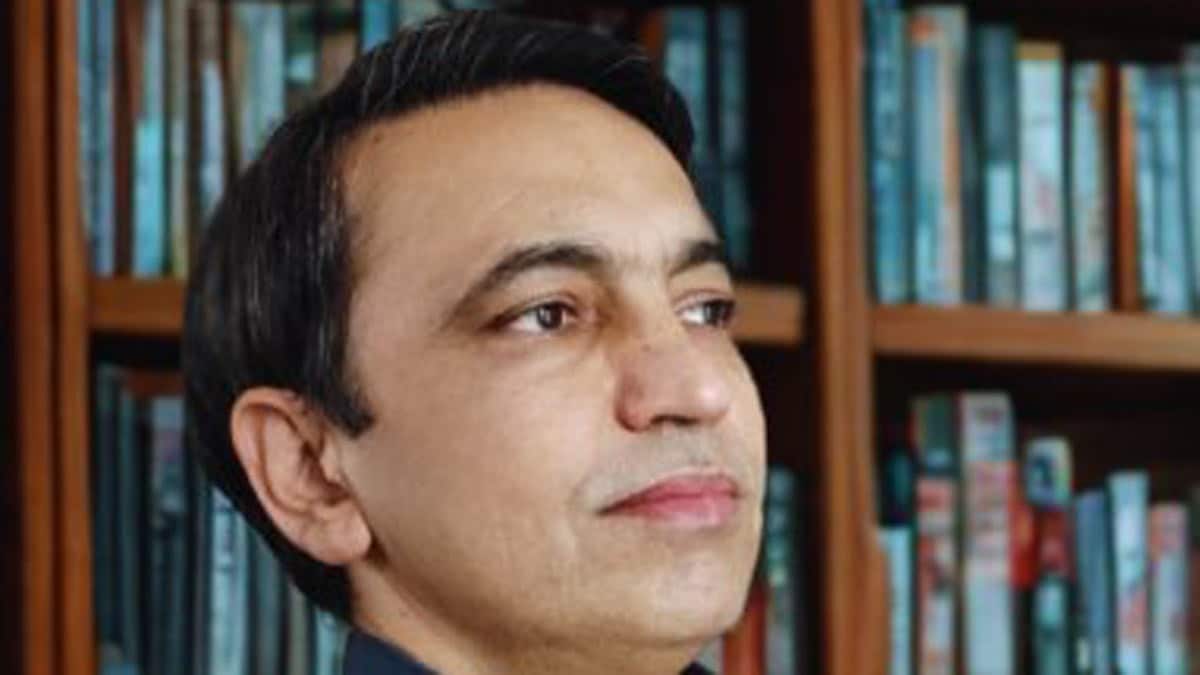
Group Captain Ajay Ahlawat (Retd), a former fighter pilot, in an interview with The New Indian Express, warned that structural reforms without doctrinal alignment could deepen, rather than resolve, existing inefficiencies.
He observed that the current Indian military system remains “fundamentally disjointed”, with coordination being attempted on a structure “never designed for integration”.
ALSO READ: IAF plans ‘extreme ops’ drone upgrade for its elite Garud Special Forces
“What we need is harmonisation at the planning stage, including procurement, and from there synergy in execution such as joint fires,” he said, stressing that command and control must remain seamless and free from “service-specific doctrinal biases”.
Ahlawat underlined that the starting point for any meaningful reform should be a National Security Strategy (NSS), not theatre commands.
“That strategy must define India’s ambitions. From there flows military doctrine, followed by domain-specific and theatre-specific doctrines. Right now, we are attempting structural reform without fully aligning doctrine,” he said.
Pointing out that war games have already revealed friction caused by service-specific doctrines, he said, "Services want to protect their turf. This shows up in competition over senior appointments and financial control.”
Ahlawat echoed a long-standing concern of the Indian Air Force, which is the risk of fragmentation of its limited air assets.
“Air power is most effective when centrally controlled,” he said, adding that proposals such as a separate Air Defence Command do not equate to the geographical control envisaged under theatre commands for the Army and Navy.
“With numbers already limited, fragmentation cannot be arbitrary. The balance between centralised control and theatre-level execution will be critical,” he said.
On the proposal to create a dedicated rocket and missile force, Ahlawat was unequivocal, as he said, "Raising a separate rocket and missile force is not the right approach. It will complicate the system rather than strengthen it.”
Instead, he batted for a robust “joint fires” concept under theatre commanders, where rockets, missiles and UAVs are integrated within a theatre’s Area of Responsibility.
“If you carve them out into a separate functional command, you are again creating silos. Firepower cannot be treated as a standalone vertical,” he was quoted as saying.
While acknowledging the growing importance of such capabilities, Ahlawat warned that a separate structure would dilute accountability and complicate command and control.
