



Those were the worst of times – the early 1960s. The military morale was low. So was the national morale. In 1962, India had failed to repel the Chinese aggression. In 1964, prime minister Jawaharlal Nehru passed away. The new prime minister, Lal Bahadur Shastri, did not yet have much popular support, and didn’t enjoy the kind of statesmanly esteem that Nehru did. When China tested its atom bomb, scientists suggested that India could do the same in a matter of weeks, but Shastri refused to let them.
The Indian PM is a coward, concluded Pakistan's military dictator Field Marshal Ayub Khan. He judged that this was the opportune moment to seize Jammu and Kashmir.
Ayub secretly began preparations for war, using the state-of-the-art Patton tanks and Sabrejet aircraft supplied by the US. What did the Indian army have then? Rusting Sherman and Centurion tanks, which the British had used in World War II and left behind. The Indian Air Force, for its part, had a few vintage aircraft like the Dassault Mystère and de Havilland Vampire, and a few newly-bought small Gnat planes, which had few takers in the world market. Compared to the Sabres, they were like Ambassadors before Mercedes-Benzes.
On the night of August 5-6, 1965, 30,000 Pakistani soldiers, disguised as guerrillas, stormed into Indian Kashmir. The Indian Army in Kashmir could not hold its ground against the unexpected attack. Pakistani guerrillas and soldiers charged towards Srinagar.
The Indian Army Chief, General J.N. Chaudhuri, realised that by the time reinforcements could negotiate the mountains and valleys to reach Kashmir, the enemy would have already captured Srinagar. He realised that there was only one way out: to launch a tank assault from Indian Punjab into Pakistani Punjab. A perfect case of employing the ‘strategy of indirect approach’.
At first light on September 6, the plains of Punjab were rudely woken up by the huge roar of three full divisions of rickety Indian Centurion and Sherman tanks driving all along the border deep into Pakistan territory, and racing towards the fabled city of Lahore, which India had always coveted. And, before the Pakistani general staff could recover from the shock, they heard that another Indian armoured formation was rolling rapidly towards Sialkot, an important road and rail junction. India was attacking the mainland of Pakistan!
Ayub was livid; the Lala, as Pakistani generals used to call Shastri, had outsmarted the Pathan. But he was not the one to back down. Using their 225 highly advanced Patton tanks, Ayub ordered a counter-attack on Khem Karan in Indian Punjab. This put the Indian Army in a tough spot, as they lacked the necessary artillery to stop the Pakistani Patton tanks.
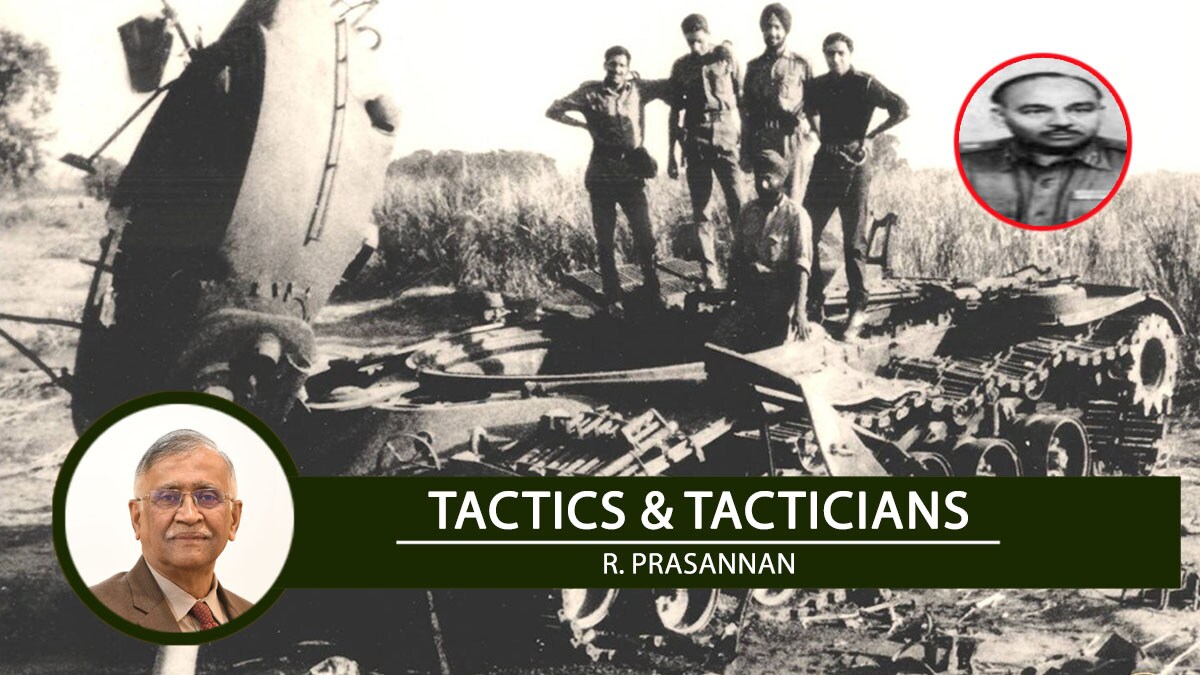
Considering the situation, Major-General Gurbaksh Singh ordered his 4th Mountain Division, which was in the area, to fall back and assume a horseshoe-shaped defensive position with the village of Asal Uttar as its focal point. The Pakistanis thought the Indian Army was retreating out of fear. They advanced further, reaching the fields adjacent to the sugarcane plantations in Asal Uttar.
There they were in for a rude shock—all of a sudden, water began to flow forcefully through the dry canals next to the fields, and soon flooded the fields. Within minutes, the vast cane field turned into a muddy quagmire, bogging down the Pakistani tanks.
A few surviving Pakistani tanks moved towards the cane fields. Just then, they came under fire from the Indian troops who were hiding in the canes. The Pakistani forces were scattered and shattered; of the 225 Patton tanks that had come to Assal Uttar, more than 60 (some accounts say, 100) were destroyed. Ten were captured intact by the Indian army. The enemy fled with the rest of their tanks and lives.
The name of the place where the battle took place is also interesting – Asal Uttar, translated as the 'perfect answer'.
Now, what had happened? How did water suddenly flow down the canals and flood the fields? Simple. The Indian Army had opened the small dams and dykes located upstream.
The tactics was the brainchild of Brigadier Thomas K. Theogaraj, who was commanding the 2nd Independent Armoured Brigade. He was awarded the Maha Vir Chakra for the action.
