



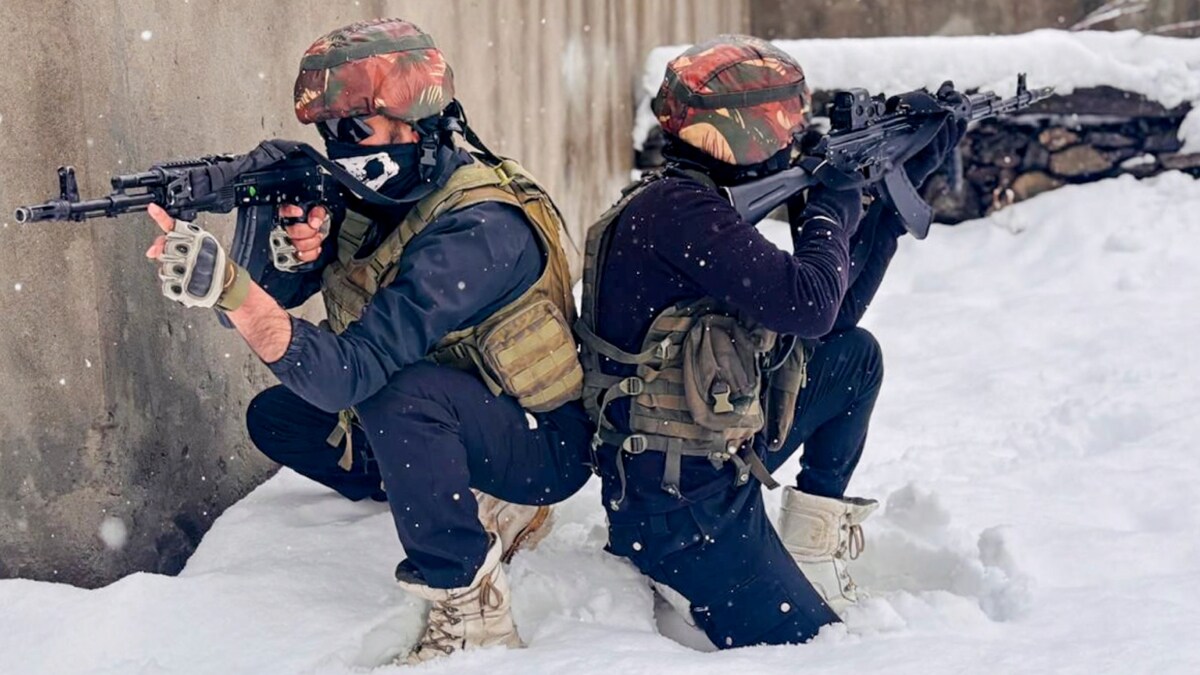
The Indian Army has declared 2026 as the ‘Year of Networking & Data Centricity’, to enhance connectivity, real-time decision-making, and combat effectiveness, thereby strengthening resilience and agility to build a future-ready force.
OPINION | Challenges in modernising India’s military
Army Chief Gen Upendra Dwivedi, in his New Year's message, said his force is undergoing a decade of transformation, and "jointness, self-reliance, and innovation are the core pillars of our military power".
"Through the effective use of indigenous technologies, new ideas, and continuous reforms, we are making the Army more capable and future-ready. Networking and data-centricity are providing new impetus to this transformation," Gen Dwivedi added in his written message.
"Last year, the enemy's nefarious designs were given a befitting reply through firm and decisive action under Operation Sindoor, and this operation continues even today," the Army Chief was quoted as saying by news agency PTI.
Meanwhile, the Army later stated on X that, "Driven by indigenisation, defence modernisation, and digital integration, this initiative will enhance connectivity, real-time decision-making, and combat effectiveness, thereby strengthening resilience & agility for a future-ready force #YearofNetworkingAndDataCentricity #DecadeofTransformation @DefenceMinIndia @HQ_IDS_India."
Understanding 'data centricity'
In the military context, data centricity refers to treating data as a core operational asset during combat. Data will be shared and accessed across platforms linked to the forces, which can impact decision-making and combat plans. For example, when an enemy is spotted on the battlefield by a scout sensor, the information is immediately sent across a unified network. It will help the nearest and most effective weapon system in the area to engage the target instantly.
In a traditional "platform-centric" army, the spotting needs to be manually communicated to the command centre and then to the artillery, infantry, air support, or another unit—depending on the scenario. This is more time-consuming, and the response is limited to a single platform.
The ability for multiple platforms to use the same data simultaneously contributes to faster and better decision-making. It can also ensure better troop movement and resource allocation, apart from making joint operations between the Army, Navy, and Air Force more seamless and effective.
On 11 November last year, Gen Dwivedi, in his address at a seminar, said that the Indian Army was working on designating 2026 as the 'Year of Networking and Data Centricity'. He flagged that this was one field in which "we are not prepared" and, therefore, "need to act faster".
The Army had previously declared 2024 as the 'Year of Technology Absorption'.How Mumbai is overhauling public health infrastructure ahead of civic polls
