



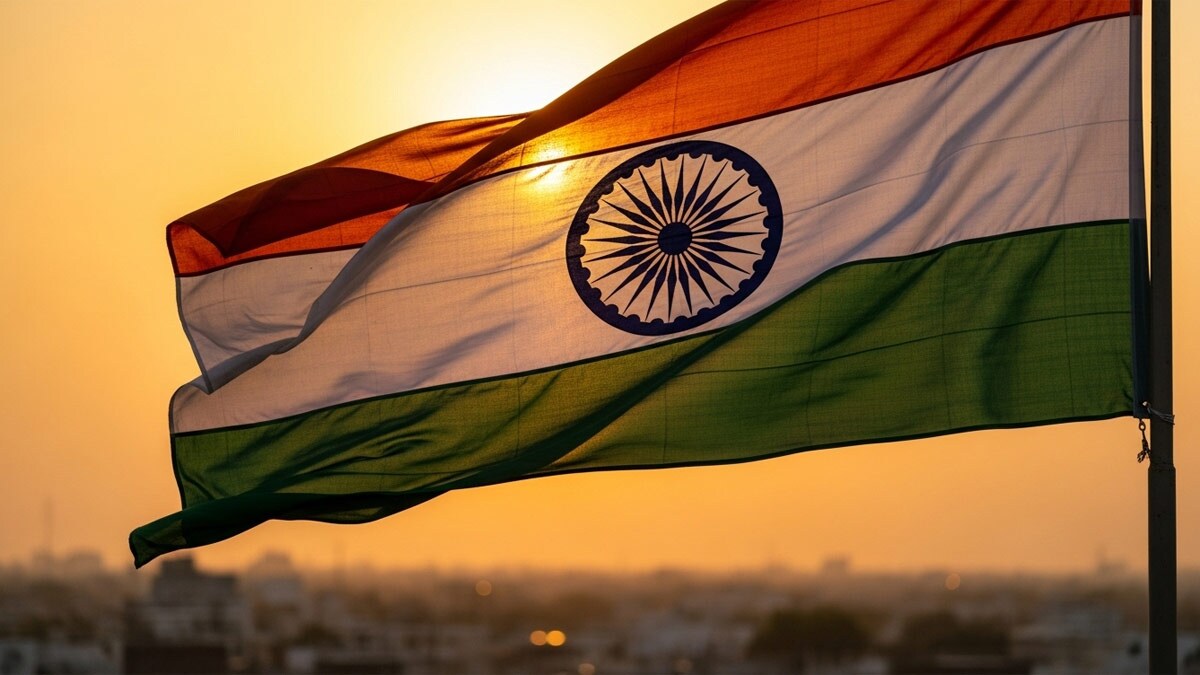
The 21st century will undoubtedly be a defining period in the history of global geopolitics. The world is witnessing a tectonic shift in the balance of power as more than one power centre is beginning to emerge. In a hugely interdependent world, strategic partnerships and dialogue, encompassing the security, political, economic and social fields, have replaced the stratagems of coercion and containment. This century has been acclaimed as that of India and China, and the Indian elephant with its gleaming tusks is taking confident strides now.
South and East Asia is a turbulent region, which has, besides two emerging world powers, a few failing or unstable countries, declining regional states and nations that have facilitated nuclear proliferation. Furthermore, a part of this region has emerged as the epicentre of global terrorism. In addition to the challenges this scenario poses, India has unresolved and tense borders with China and Pakistan. Thus, not many countries face a full spectrum of threats as India does, from low intensity conflict to an all-out conventional war with a nuclear overhang. Therefore, India requires to be militarily strong with an array of defensive and offensive capabilities to meet these challenges.
India, with its large size, population, resources and strategic location, is emerging as a major player on the world stage. It is following a policy of ‘strategic autonomy’ in a post-Cold War balance of power scenario. As military strength is one of the vital ingredients of comprehensive national power, and this power facilitates a nation to achieve the desired objectives, India has embarked on a robust programme to strengthen and modernise the armed forces.
Today, India has the fourth most powerful military and the fifth largest economy in the world, and occupies an important geo-strategic space dominating the Indian Ocean region. India, with its democratic polity, economic and military strength, could thus be categorised as a ‘swing nation’—a nation that can play a crucial role with respect to providing strategic equilibrium in today’s complex world. Henry Kissinger has written in his seminal work ‘World Order’ that "India will be a fulcrum of twenty-first-century order …."
As a flow out of the policy of strategic autonomy, India has kept away from military alliances and has taken foreign policy decisions in the pursuit of its national interests, whether it was the procurement of the S-400 missile defence system from Russia or the import of oil and gas to meet its burgeoning needs as a rapidly developing economy.
A role model for the global south, India is characteristic of a democratic nation that is multi-religious, multi-ethnic and multi-cultural. An advocate of peaceful resolution of problems by employing diplomacy and dialogue, India is at the forefront of the global war against terror.
The engagement of India with Europe goes back to the times of Alexander the Great, and even earlier. The distance and traverse through hazardous and difficult terrain precluded easy travel and trade. However, in the 15th Century, the Portuguese explorer Vasco da Gama discovered the new maritime route to India via the Cape of Good Hope, and this resulted in a flourishing business of spice trade by European sea-faring nations. In the next three centuries, they transitioned from being traders to colonisers. The principal beneficiaries of this paradigm shift, both politically and economically, were the colonising nations—England, France and Portugal as far as India was concerned. These countries took full advantage of colonisation by exploiting the natural resources for the benefit of their domestic economies. Trade was mainly one-way.
Notwithstanding this, these nations also contributed in certain spheres, albeit some of them self-serving, such as the construction of a network of roads and railways, education and medicine, social reforms, political awareness and the introduction of a modern and efficient system of administration.
A new world order
Post-World War II, the world has witnessed cataclysmic developments such as the demise of the colonial period, the tension-ridden Cold War between the West and the Warsaw Pact countries, the unification of Germany and the abrupt break-up of USSR. These resulted in a paradigm shift in the global balance of power and signalled the end of the Cold War.
At that juncture, it was being appreciated that a unipolar world had emerged with the USA as the most powerful nation.
However, in the past three decades we have witnessed the diffusion of political, military and economic power and the beginning of the era of a multi-polar world with the rise of China, India, Japan, European Union, Russia and Brazil. After the calamitous and indecisive US-led interventions in Iraq and Afghanistan, the US has come to realise that it cannot go alone or that its best interests would be served by adopting the lead role in every situation. The menace of terrorism has shaken the world, and post 9/11, no country can consider itself safe from this threat.
India views the ongoing strife and turmoil in eastern Europe and the Middle-East as a manifestation of deep-rooted ethnic, religious, political or territorial differences and disputes. Whether it was the Kosovo conflict during the end of the last century, the Nagorno-Karabakh conflict, the Palestine issue or the war in Ukraine, India has always advocated a non-violent approach and urged the combatants to solve the disputes by dialogue and diplomacy.
India and G20
In the G20 Summit in 2023 under the Presidentship of India, with the theme of ‘One Earth, One Family, One Future’, Prime Minister Narendra Modi highlighted the principle of “Vasudeva Kutumbakam” (the world is one family) and emphasised the importance of the ‘Global South’ and the voice of the developing countries. India had prioritised inclusive growth, green and sustainable development, creation and restructuring of multilateral institutions for the 21st century and women-led development as goals of the Summit. The African Union was formally inducted as a member of the G20 as a consequence of an Indian inspired initiative, showcasing India’s commitment to play a larger role in world affairs. Further, as stated by Prime Minister Modi, "India mainstreamed the Global South’s concerns in the International discourse and has ushered in an era where developing countries take their rightful place in shaping the global narrative."
Another highlight of this Summit was the declaration of the India-Middle East-Europe economic corridor by India. This project underscores the importance India attaches to Europe and the Middle East and this corridor will provide a shorter and more direct connectivity of India and other south Asian nations with the Middle East and Europe. Consequently, it would result in quicker delivery of goods and services, lower logistics costs and importantly reduce carbon emissions. This gamechanger project will significantly enhance commerce, people-to-people contact, travel and tourism among countries of South Asia, Middle East and Europe. This economic corridor will prove to be a win-win scheme for all countries concerned and is likely to be more viable than the Belt and Road Initiative (BRI) launched by China. Although ‘145 countries and 32 international organisations’ have entered into partnerships with the BRI project some of them have reservations about the benefits they shall derive from it considering the ‘socio-environmental, financial risks, and governance and corruption challenges in partner states’, as argued by Oyintarelado Moses, Anjali Kini and Keren Zhu (https:/www.bu.edu. 2022).
In fact, Italy has pulled out of this project and their Foreign Minister Antonio Tajani is reported to have stated on December 6 2023 that the partnership ‘has not produced the results we were hoping for’(https://m.economic times.com>news). Financially strong European nations like Germany and France, and for that matter South Asian countries like India too, have not sought membership of the BRI scheme. Pakistan and Sri Lanka, who joined the BRI project, have already begun to feel the adverse impact of the project and find themselves in a debt trap.
At the same time, nations are looking at the G7-launched Partnership for Global Infrastructure and Investment (PGII), which offers funding to the developing countries for ‘critical infrastructure, including roads, bridges and ports as well as communication facilities’, besides aspects such as climate change, health, digitisation and gender equality.
Efforts to become the global power
India has been assiduously focusing upon increased engagement with multilateral global and regional entities such as BRICS (Brazil, Russia, India, China and South Africa), European Union, SCO (Shanghai Cooperation Organisation), ASEAN (Association for South East Asian Nations), SAARC (South Asian Association for Regional Cooperation) and others. This demonstrates India’s growing stature and its ambition to be a global power. Based on shared values and traditional commercial and cultural ties, India has forged strong bonds with European countries, such as France, Germany and Italy in particular.
The Russo-Ukrainian conflict has both diplomatic and economic dimensions, so far as its impact on India is concerned. While India has condemned the loss of civilian lives and property in the war, it has adopted a well-considered nuanced stance and not openly criticised Russia for starting this conflict. India has, at the same time, endorsed the view that respect for the sovereignty and territorial integrity of states as a fundamental precept of world order is unexceptional. Further, it has voiced its concern and exhorted both sides to cease violence and hostilities and follow the path of diplomacy and dialogue. India’s stand based on a ‘tight-rope walking’ strategy is indeed a diplomatic challenge, considering the long-standing ties with Russia on one hand and a strengthening partnership with the USA on the other.
Russia’s military intervention in Ukraine stems from the fundamental insecurities of firstly, being landlocked and ice-locked except for its coast in the far east and Crimea, secondly, the gradual eastward expansion of the sphere of influence of European nations and thirdly, due to the incorporation of east European nations into the fold of NATO, the latest being the attempt to lure in Ukraine too. Russia believes there is an ‘existential’ threat from the Western block in a Cold War 2.0 scenario.
However, Russia does not see itself threatened so much by a disunited Europe as by the increased presence and involvement of the US in the region. At the same time, the US has exhorted the EU countries to enhance their defence capability and burden sharing for “global and trans- Atlantic security”.
On the economic front, India has been impacted too like the rest of the world, but not as much as European and central Asian nations. While initially there was a ‘slowdown’ in the economy, the resilience displayed by India’s economy resulted in the achievement of GDP growth of around 7.2 per cent in fiscal 2023 as stated by Dharmakirti Joshi, chief economist at CRISIL. India is being described as a ‘bright spot’ by both the International Monetary Fund and the World Bank.
Much to the discomfort of the US and some other countries, India has continued to import oil from Russia, more-so at discounted prices, keeping in mind its national interests. As a consequence, India has saved almost $ 2.7 billion from January to September 2023, as per analyst Nidhi Verma; this has helped to control inflation to a large extent. India is the world’s third-largest importer of crude oil, which forms a chunk (approximately 35 per cent) of the overall import bill of the country. Hence, justifying India’s oil imports from Russia.
Europe is going through a transitional crisis. It is at the crossroads and has to decide whether or not to become a European Republic. The concept of a politically, economically and socially unified European Union has not received the expected response from most European nations. As a result, the European Union does not have the desired political weight or say in world affairs. Nationalistic fervour and right-wing politics is gaining strength in most countries and the vision of a strong European Republic seems a far cry at present.
Lessons from India
Europe could take a cue from India, where people of different cultures, religions, languages and way of life living in 28 states and 8 union territories, with European-sized populations in most of them, exist with a singular aim- the betterment of India. ‘India first’ and ‘self-sufficient India’ is the mantra for a new India. This change of thinking from a regional to a national identity has taken more than half a century post-independence of our country. The problem in Europe as one perceives it is that the people have yet to accept being Europeans in the true sense as against being German, French, and Italians and so on, and their mindsets have to change accordingly. It is only then that a strong and unified European Nation can emerge as another pole on the world stage. This would need major restructuring of the European Union in the political, social, economic and military domains. Are the Europeans ready for it? The answer is not yet and is unlikely to happen in the foreseeable future, unless the European people realise the good this can do for them and their coming generations.
This would of necessity call for the emergence of a charismatic and popular leader endowed with statesmanship and vision of a unified, integrated and powerful Europe. There does not appear to be anyone with such a stature among the present leadership or political elite.
Even though Europe today is a “divided house”, India has a strategic partnership with the EU that encompasses a push for multilateralism, burden sharing in security matters, commerce and technological cooperation and international cooperation to maintain a stable and peaceful environment in the world. However, the focus has been on trade and technology.
Besides as India views it, having bilateral relations and cooperation with European nations is imperative. India thus has entered into strategic partnerships based on shared values and a common vision for global peace and stability with important countries, such as France and Germany. PM Modi’s pet theme of ‘Make in India’ has resulted in enhanced cooperation with advanced nations, and many projects involving joint research, development and production of high technology items have been initiated. Significant cooperation is underway between India and leading European nations in the field of defence, space, artificial intelligence and robotics and many other fields.
India and France enjoy a particularly special relationship as besides the aforesaid dimensions, it extends to cooperation in the Indo-Pacific region and use of facilities in French territories like Reunion Island in the Indian Ocean and French Guyana. Furthermore, France and India have endorsed a “Horizon 2047” document that underlines their visionary and enduring partnership and policy of strategic autonomy. Recently, President Macron was invited as the chief guest for India’s 75th Republic Day and he is believed to have emphasised to the accompanying defence and foreign ministers that there should be no reservations or impediments to making available the top-end technologies in military and other fields to India.
In conclusion, India's strategic autonomy, military modernisation, and economic resilience position it as a pivotal player in the evolving global order. The nation's commitment to peaceful resolutions, inclusive growth, and sustainable development underscores its role as a model for the Global South. India's engagement with Europe, through historical ties and contemporary strategic partnerships, highlights its ambition to be a global power. The India-Middle East-Europe economic corridor exemplifies India's forward-looking approach to enhancing connectivity and commerce. As the world navigates the complexities of a multipolar landscape, India's balanced stance on conflicts and its robust economic performance will continue to shape its influence on the global stage.
(The writer is former chief of army staff)
