



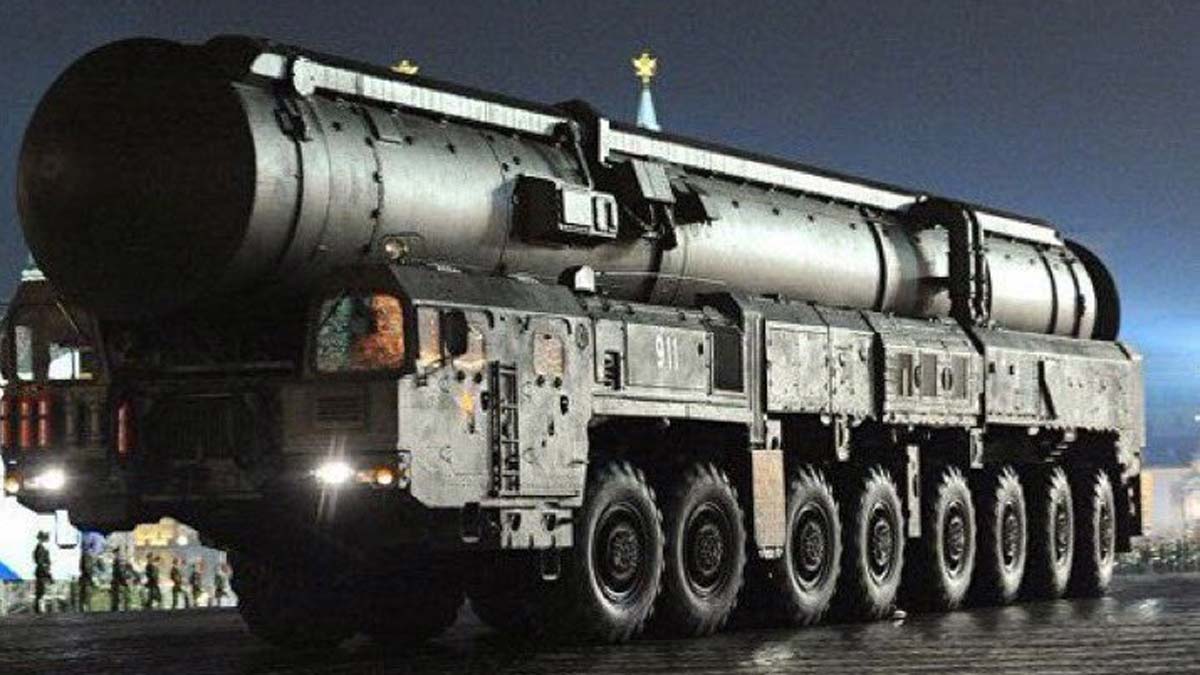
Recently, a report in Forbes claimed that Russia’s Oreshnik hypersonic intermediate-range missile system, hailed as a "warning bell" for the West, "reportedly malfunctioned and exploded—on Russian soil." According to the report, Russia launched the missile towards Kyiv on February 6.
Quoting Kirill Sazonov, a Ukrainian war correspondent, the Forbes report had said:
Three months later on Thursday morning, the Russians reportedly launched another Oreshnik—this one apparently targeting Kyiv. Air raid sirens wailed.
City residents scrambled for shelter. But then … nothing. No scream of incoming reentry vehicles. No thunderous impacts as the non-explosive vehicles slammed into the ground.
...the Oreshnik “did not fly far.” It reportedly malfunctioned and exploded—on Russian soil.
Soon, the "unverified" claim was questioned by social media users and Ukrainian authorities.
Ukraine's Center for Strategic Communication and Information (SPRAVDI) and the Center for Countering Disinformation (CCD) came out with clarifications saying the report of the launch of Oreshnik and its subsequent failure was false.
ALSO READ: Is Oreshnik the end of missile defence as we know it?
According to SPRAVDI, the news report relied entirely on the assumptions of Sazonov and not on actual data.
“The news of an Oreshnik launch over Kyiv only serves the enemy and fuels panic. Such information should be approached critically,” a statement from SPRAVDI read, adding, “Russians frequently manipulate the Oreshnik narrative to intimidate the Ukrainians.
“Yesterday, there was no launch of the Oreshnik. In the case of such launches, Russia must warn Western partners, There was no warning, and the launch itself with subsequent 'missile fail' also did not happen,” stated head of CCD Andrii Kovalenko on the Telegram channel.
Following these clarifications, Forbes clarified that the report was false.
READ MORE: 'Oreshnik missile is unstoppable, undetectable': Another military analyst echoes Putin's claims
Earlier, Russian President Vladimir Putin had challenged the West to try and intercept an Oreshnik missile saying, "Let them choose a target, say, in Kiev, and concentrate their air and missile defense systems there, while we launch an Oreshnik missile at the target. We will see what happens. We are ready for such an experiment."
