



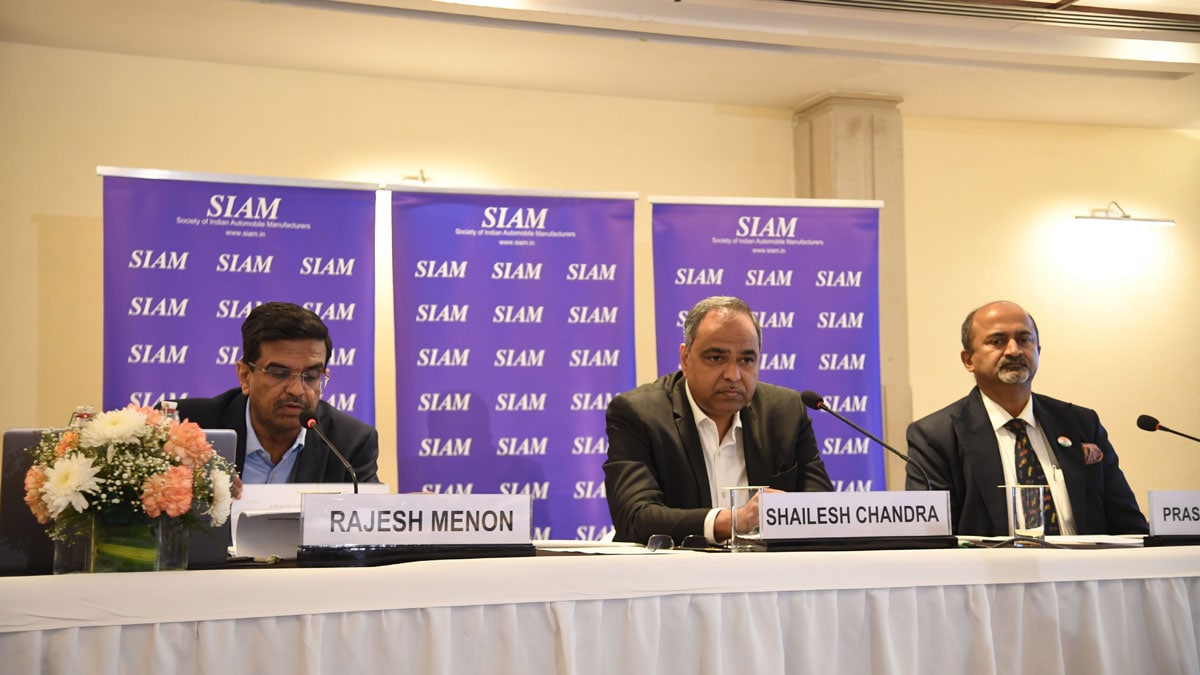
The age of electric vehicles could get a leg (and subsidy) up, but not if India’s entrenched motor vehicle biggies can help it. With Delhi announcing a radical draft EV Policy which mandates a ban on conventional engine-powered two-wheelers in less than two years' time, India’s Auto Inc is back to the drawing boards to chart out a course of action to take on the new challenge.
For the moment, though, industry body SIAM president Shailesh Chandra tried to play down the new existential challenge. “The Delhi EV Policy is clearly very mission-oriented; many states have been coming up with that (kind of) policy,” he said measuredly, adding, “Our position from SIAM has been that enablers are the best way to promote electric vehicles and not mandates.”
“We will have to see how the (Delhi) draft policy (and) ensure that it does not move towards too much of mandates.”
The auto industry’s stand echoes a similar one in the pre-pandemic era, when road transport minister Nitin Gadkari supported a NITI Aayog proposal to ban motor vehicles (two-wheelers by 2025 and four-wheelers by 2030) — the industry that time had gone all out lobbying to ensure the proposals remained at the doctrine level and never moved into implementation.
The attempt this time around, too, is likely to be the same. But there is one stark difference — a divide down the middle of automakers on the approach.
The reason? Some brands, like Tata and Mahindra, for example, have been progressing towards electrification with a plethora of models, while heavyweights like Maruti Suzuki have been laggards. In fact, the Japanese lobby, supported by the might of the market leader, has been vouching for their formula of focusing on hybrid vehicles and that “the target should not be electrification per se but clean emissions, for which electric cars are just one of the mediums possible,” as a prominent car maker marketing head told me a few years ago.
Aptly, the Delhi EV policy offers road incentives for hybrid vehicles, and a road tax waiver for electric cars costing up to ₹30 lakh.
The divide could be even stark in the two-wheeler space which would be the one directly impacted if Delhi’s EV policy reaches implementation stage (right now, it is conveniently a draft up for public consultations), where conventional internal combustion engine (ICE) leaders like Hero and TVS are yet to make major strides in the electric two-wheeler space, with startups like Ather and Ola (for better or for worse) leading here.
This was evident when the Delhi government unveiled its new policy this weekend — the markets on Monday saw electric two-wheeler makers like Ather and JBM rising up as much as 8 per cent, while those of ICE biggies like Hero fell.
Ironically, the ‘jhatka’ from Delhi’s Rekha Gupta government comes just as India’s auto industry clambered out of more than six years of falling sales, caused first by the economic slowdown of the 2018-19 period, followed by the Covid pandemic and its aftermath, and then the subsequent supply chain chaos and increase in prices. The GST 2.0 reforms in September directly helped catalyse car and bike sales to all-time highs in the just concluded financial year.
And now, clouds are looming over it — a prolonged West Asia crisis will increase the rate of shift to electric vehicles on one level, and reduce sales if the nation’s economy gets affected soon enough with fuel shortage and inflation. The Met department, on Monday, announced that the monsoon this year will be below normal — this could impact the rural economy and spending power, leading to falling sales outside of urban centres.
And on top of all that, Delhi proves to be a whammy no one saw coming. The worry here, too, is two-pronged — if the city-state manages to push through the policy into implementation despite the industry’s legendary lobbying prowess, it could lead to domino-like action of similar policies being passed by other states as well. And Delhi is India’s biggest auto market. Along with its prosperous satellite towns of Gurugram and Noida, it accounts for nearly 13 per cent of the total automobile sales in the whole country, and a percentage of growth in personal vehicle buying unmatched anywhere else in the country.
