



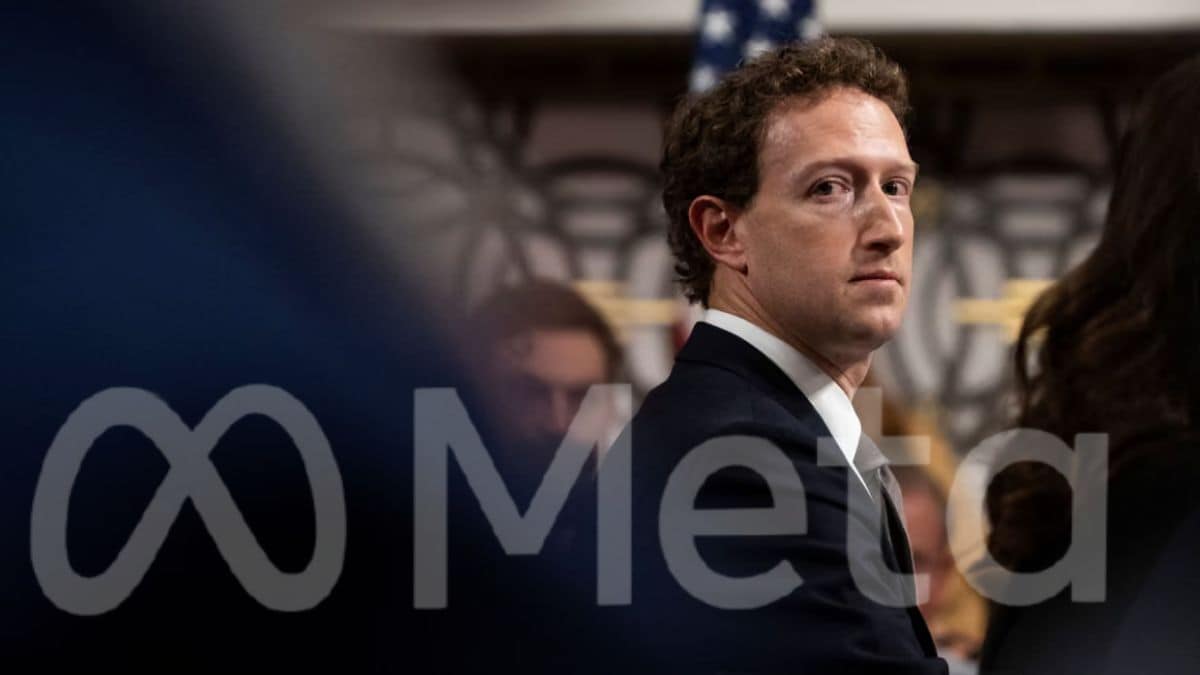
Facebook parent Meta Inc announced earlier this week that it was bringing long-time Apple design executive Alan Dye to its fold in what is touted as the tech giant’s fiercest poaching attempt yet.
Dye, who served as the head of Apple’s user interface (UI) design team since 2015, was joined by Billy Sorrentino, another prominent design executive from his team at Apple. The duo are expected to headline Meta’s new design studio within its Reality Labs to develop its next-generation AI hardware, and in turn, the software integrated into it.
“The new studio will bring together design, fashion, and technology to define the next generation of our products and experiences. Our idea is to treat intelligence as a new design material and imagine what becomes possible when it is abundant, capable, and human-centred,” Meta CEO Mark Zuckerberg wrote in a Threads post on Wednesday.
Why has Dye’s jump from Apple to Meta shaken the corridors of power more than usual?
The design veteran’s career at Apple involved redefining the visual language of its flagship devices and wearables—most recently, the somewhat controversial Liquid Glass for iOS 26, a gorgeous interface redesign that some criticised as “hard to read”, and background work on smart home devices, according to Bloomberg’s Mark Gurman.
Design identity has long been an area that Meta has lacked in, with critics typically calling it functional, but not human.
The larger takeaway here is that Meta’s increasingly aggressive hiring plans are not limited to experts in artificial intelligence and evolving tech—in response to the AI revolution and its demands on tech giants—as in the case of Dye and Sorrentino, both of whom are design veterans, and not specifically AI and machine learning experts.
In fact, OpenAI CEO Sam Altman has even publicly spoken about such “nine-figure pay packages”—some worth at least $1.5 billion over at least six years, as per a Wall Street Journal report—and the signing bonuses that came with them, calling it “crazy”.
AI and machine learning superstars sought by Meta include Scale AI founder Alexandr Wang, who joined Meta after it invested heavily in the AI startup; Andrew Tulloch, a machine learning researcher and co-founder of the AI startup Thinking Machines Lab—who once worked at Facebook, but later joined OpenAI; ChatGPT and GPT-4 co-creator Shengjia Zhao for its Superintelligence lab alongside Wang; as well as Lucas Beyer, Alexander Kolesnikov, and Xiaohua Zhai—three top researchers from OpenAI, who were already poached from Google DeepMind.
Mark Zuckerberg's 'secret list'
This has also renewed discussions around Mark Zuckerberg’s “secret list”, which reportedly contains top executives around the globe—including those working at Meta rivals OpenAI, Google, Apple, Amazon, and Microsoft.
Though the purpose of this list, developed after months of research, was originally for Meta to identify the top AI and machine learning talent it needed to poach, it could also extend to executives across various industries (such as design), meaning that it is bigger and more comprehensive than previously thought.
Reports say that Zuckerberg is so serious about the list that he even allegedly spoke to some of the potential hires in person, and was also deeply involved in screening their research papers.
“I think the strategy of a tonne of upfront, guaranteed comp, and that being the reason you tell someone to join, like really the degree to which they’re focusing on that and not the work and not the mission, I don’t think that’s going to set up a great culture,” Altman had said about Meta’s poaching strategy earlier this year.
