



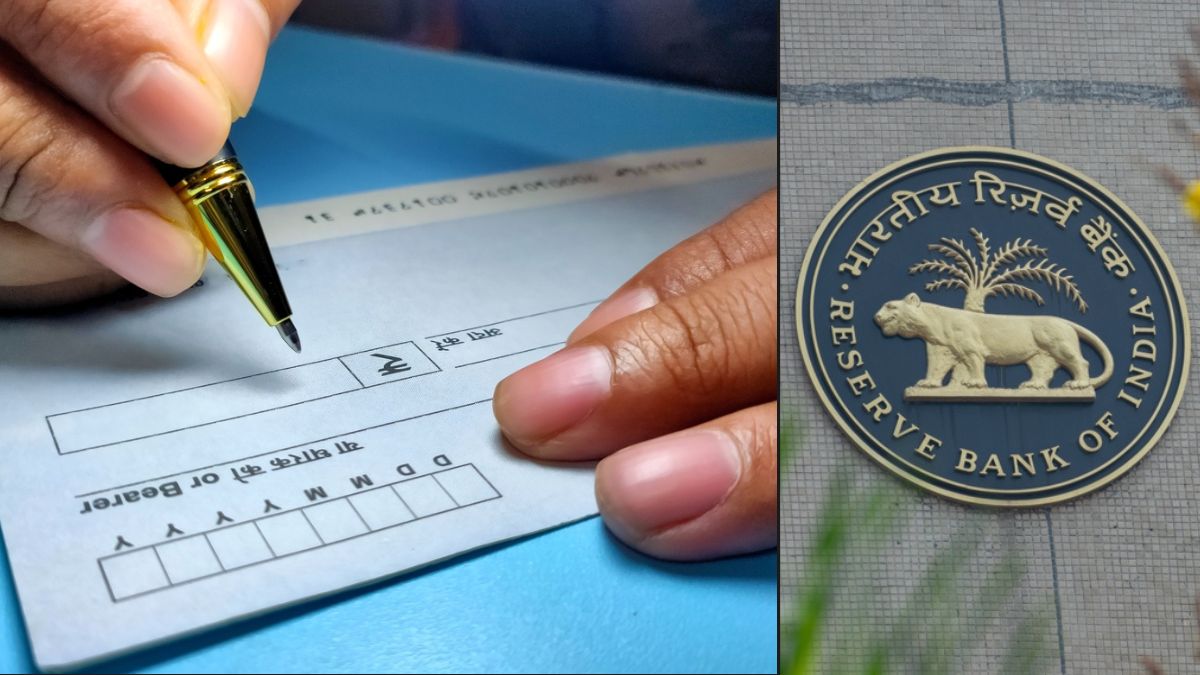
From October 4, 2025, the long wait of up to two days for a cheque to clear will become a thing of the past.
In a landmark move, the Reserve Bank of India (RBI) is shifting the Cheque Truncation System (CTS) from batch‐style processing to a continuous, near real-time model—meaning you could see the money in your bank account within just a few hours.
How new cheque clearance works
Under the new regime, all cheques deposited at bank branches during the single presentation session from 10 am to 4 pm will be scanned and sent instantly to the central clearing house, instead of waiting for an end-of-day run.
The clearing house, in turn, will “release the cheque images to drawee banks on a continuous basis”, so your cheque starts moving through the system right away.
Once a drawee bank receives a cheque image, it has until 7 pm to confirm whether it will honour or dishonour the cheque.
The RBI’s notification makes it clear: “drawee banks shall be required to confirm (positively/negatively) cheques presented on them latest by end of confirmation session (i.e., 7 pm) else those will be deemed to have been approved and included for settlement”.
In other words, a lack of response by 7 pm automatically counts as an approval, keeping the process flowing.
Hourly settlements for speed and certainty
Starting at 11 am, and on the hour every hour thereafter until 7 pm, the clearing house will calculate net funds owed between banks based on all positive and deemed approvals.
As the RBI puts it, “settlement will be arrived every hour till the end of confirmation session, based on the positive confirmations received from drawee banks and cheques considered deemed approved”.
No entries are made for cheques that have been dishonoured, ensuring only cleared funds move through the system.
After each hourly settlement, banks receive detailed settlement statements and must “release the payment to the customers immediately, but not later than 1 hour from successful settlement, subject to usual safeguards”.
If your bank participates smoothly, you could deposit a cheque at midday and see the funds in your account well before the evening is out.
Why this new cheque system matters
For individuals and small businesses alike, cash flow matters.
Today, you might have to juggle expenses because cheques take two working days to clear.
From October 4, a lunchtime deposit could fund urgent purchases or payroll by the afternoon.
The RBI’s phased rollout gives banks time to adapt. Phase 1 runs from October 4, 2025 to January 2, 2026 with a flat 7 pm expiry for all cheques.
From January 3, 2026 (Phase 2), each cheque will have its own three-hour “Item Expiry Time” to confirm status, making the system even more granular and responsive.
This means that the RBI is turning cheque clearing into a real-time service—a significant leap forward for an instrument often seen as slow and archaic. Soon, the moment a cheque leaves your hand could be the same moment the recipient’s balance goes up.
