



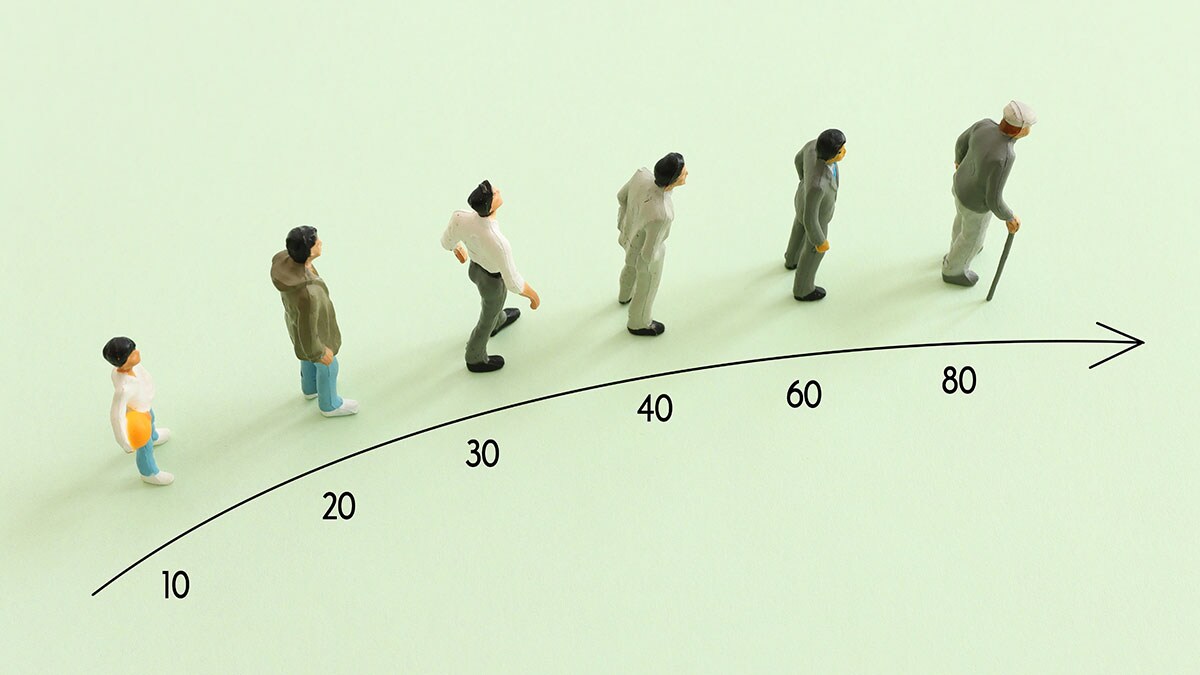
It is no revelation that our health malfunctions as the years advance. But a study from Stanford University has challenged the traditional idea that we steadily age over time. The research team extensively monitored molecular changes over a period of up to seven years in people (male and female) aged 25 to 75, and discovered two spikes in our ageing—one at around 44 and the other at 60.
Prof Michael Snyder, an expert in genetics and senior author of the study, says, “You really do want to take care of yourself as you approach these periods. Eating better will help with the drop in lipid metabolism which shows up in the 40s. And strength training is important, especially as you hit your 60s, when there is a loss of muscle mass. Always try to track yourself with specific check-ups, so that you can make sure things are going fine during these periods.”
No one wants to decline with age, so intervention is key. And when it comes to health, time seems to be of the essence.
WHAT TO WATCH OUT FOR IN YOUR 40S
While menopause often gets the blame for the sudden increase in health concerns amongst midlife women, the Stanford report revealed a similar jump in age-related issues among 40-something men. It also confirmed what we already know: our ability to process alcohol diminishes, skin and muscle texture weakens, and the way we deal with caffeine, fats and sugars is compromised. Other changes include:
The Stanford research tells us that shifts in our lipid metabolism means our body finds it harder to process these as we age, which can result in high cholesterol levels.
When the body doesn’t manage cholesterol, it sits along the artery walls and clogs them. This puts more strain on the heart to pump blood and so blood pressure rises.
Foods containing saturated fats (for example, processed meat, dairy products, baked and fried goods) are on the culprit list.
BONES GET WEAKER
The Stanford study shows that musculoskeletal issues shoot up after 40. We reach our peak bone health at the age of 30. As we get older, the tissue inside our bones naturally declines, but this is especially true for women around menopause when levels of oestrogen decrease. And while osteoporosis disproportionately affects females, anyone can suffer.

Weight-bearing exercises with impact, such as walking or jogging, and muscle-strengthening exercise, such as Pilates or weight training, will keep bones strong, and the earlier in life you start the better—but it is never too late. Build up to 20-30 minutes muscle-strengthening exercise a day, specifically working on your legs, arms and spine.
Food high in vitamin D (for example, oily fish, red meat and egg yolks) help your body to absorb and use calcium, which is necessary for strong bones.
THE SECOND WAVE OF AGEING IN YOUR 60S
As we hit our 60s, our immune function takes a dive, our ability to process carbs becomes ever more sluggish while our heart and kidneys are not as robust as they once were. Fortunately, there’s still time to reboot our health.
Type 2 diabetes is more prevalent.
There are significant changes in our metabolism as the years tot up. And our decreased ability to process refined and starchy carbs, like white bread, pasta and rice is linked (or can contribute) to a greater risk of Type 2 diabetes.
Says Douglas Twenefour, the head of care at Diabetes UK, “Type 2 diabetes is more prevalent as we get older as a result of a combination of increasing insulin resistance and a reducing ability to make the right amount of insulin. Insulin resistance is where the insulin that is produced does not work properly, and in older people, this could be due to being less physically active and more sedentary. It’s not unusual to lose muscle with age, but this can make it harder for the cells to absorb glucose from the blood, leading to higher blood glucose levels over time which increases the risk for Type 2 diabetes. A positive solution would be to do strength-building exercises at least two days a week.”
KIDNEY DISEASE RISK RISES AFTER 64
An unhealthy lifestyle can be tough on the kidneys, mainly because their primary job is to clean out the bad stuff—they filter about 180 litres of blood every day. Fiona Loud, the policy director of Kidney Care UK, says: “Natural ageing means we lose about one per cent of our kidney function year on year. But if things go really wrong, the average age for people to get kidney failure is 64-85. Many people are unaware that diabetes is the most common cause of kidney damage, plus high blood pressure is a significant risk factor, so anyone with these conditions can be vulnerable.”
Always check your urine. Healthy urine is a lighter yellowish shade; a darker colour could indicate dehydration. Continual urinary infections can also take their toll on the kidneys, and are common among older people. It’s extremely important to stay well hydrated, as dehydration can lead to crystals which affect kidney function.
Outside of conditions such as diabetes that put people at risk of chronic kidney disease (CKD), the main offenders for kidney damage are too much salt in the diet, sugary drinks and smoking, combined with a sedentary lifestyle; even some medications like ibuprofen should be monitored as overuse can be damaging. Warning signs include: anaemia, tiredness, nausea, foamy urine, increased blood pressure, puffy eyes and swollen legs. There is no cure for kidney failure, so prevention is definitely better.
HEART DISEASE AND STROKE
Age is the main risk factor for heart disease. The ability for the heart to regenerate itself tails off, so any disease or trauma is significant. Our arteries can also harden and become narrow with a build-up of plaque which can lead to stroke.
Dr Maeva May, an associate director of system engagement at the Stroke Association, adds: “A stroke happens when the blood supply to part of the brain is cut off, killing brain cells. Nine out of 10 strokes are preventable—there is enormous potential for reducing strokes if the risk factors are better detected, treated and managed.”
CANCER RISK RISES AFTER 60
The study picked up a drop in the function of our immune system, which can mean a rise in the risk of cancer. The advanced years will see us less able to fight infections and illnesses as the body produces fewer immune cells, while the ones we do have are less robust. Maxine Lenza, a health information manager at Cancer Research UK, explains, “The possibility of cancer increases as we age because cancer starts when cells in our bodies get damaged. The older people get, the more time there is for cell damage to build up, which can lead to cancer.”
Maintaining a healthy immune system is your golden ticket. Sleeping and eating well, reducing stress, keeping up with your vaccines, exercising and stopping smoking all are positive steps towards being fighting fit.
