




As an obstetrician-gynaecologist, I frequently see how lack of awareness and delayed screening contribute to late diagnosis of cervical cancer. Many women seek medical help only when symptoms appear, not realising that the cancer can develop slow and silent over years. This is particularly heartbreaking because cervical cancer is one of the few cancers we actually have the tools to prevent.
In India, more than 1.2 lakh women are diagnosed each year and nearly 80,000 die—approximately one every eight minutes. Many of these deaths could be prevented by timely vaccination, regular screening and greater awareness.
HPV vaccination
Almost all cases of cervical cancer are linked to persistent infection with the human papillomavirus (HPV), transmitted through sexual contact. Most HPV infections clear naturally, but some high-risk types can cause abnormal changes in cervical cells that may eventually progress to cancer.
HPV vaccination protects against the most common cancer-causing strains. Ideally, the vaccine is recommended for girls between age 9 and 14, before exposure to the virus. However, young women may also benefit. But they need to consult their health care provider before getting vaccinated.
Wider access through government immunisation programmes and greater awareness among parents could play a crucial role in protecting future generations.
India's vaccine drive
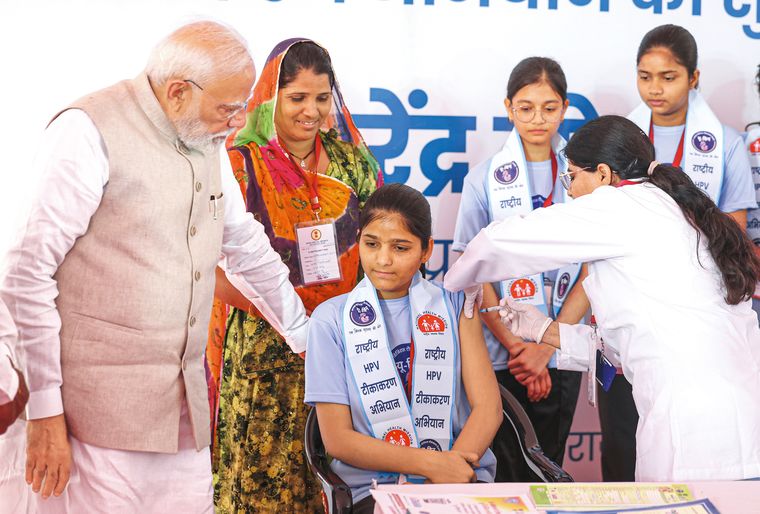 Making strides: Prime Minister Narendra Modi at a vaccination centre in Ajmer, Rajasthan, as a 14-year-old receives the HPV vaccine. In February, the government launched a nationwide vaccination drive, providing the vaccine free of cost to approximately 1.15 crore girls | PTI
In February 2026, the government of India launched a nationwide HPV vaccination programme, providing the vaccine free of cost to approximately 1.15 crore 14-year-old girls. This represents a significant shift towards preventive health care and offers hope that cervical cancer can one day become a largely preventable disease in India.
These efforts are aligned with the World Health Organization’s strategy to eliminate cervical cancer as a public health problem through widespread vaccination, screening and early treatment.
Screening is key
Even with vaccination, screening remains essential. Tests such as the pap smear and HPV testing allow doctors to detect abnormal changes in cervical cells long before they turn into cancer. When these changes are identified early, treatment is simple and highly effective.
Women should begin cervical cancer screening from around the age of 25 and continue periodically as advised by their doctor.
Unfortunately, many women in India have never undergone a cervical screening test. Social hesitation, lack of awareness and limited access to health care services stop them from seeking preventive care.
In medicine, some battles require complex treatments and advanced technologies. Cervical cancer is different. It is a battle we can win with prevention.
Recognising warning signs
Warning signs that require medical attention include:
• Abnormal vaginal bleeding
• Bleeding after intercourse
• Persistent foul-smelling discharge
• Pelvic pain However, early cervical cancer often produces no symptoms at all—which is why screening is so critical.
Breaking the silence
Another major challenge lies in the silence surrounding reproductive health. Many women feel uncomfortable discussing gynaecological issues or undergoing pelvic examinations. Families, communities and health care providers must work together to create an environment where women feel supported in seeking preventive care.
A preventable tragedy
Eliminating cervical cancer as a public health problem is an achievable goal. It requires three clear steps: widespread HPV vaccination for adolescent girls, regular cervical screening for women, and sustained public awareness about reproductive health. When health care systems, communities and families work together, thousands of preventable deaths can be avoided every year.
