



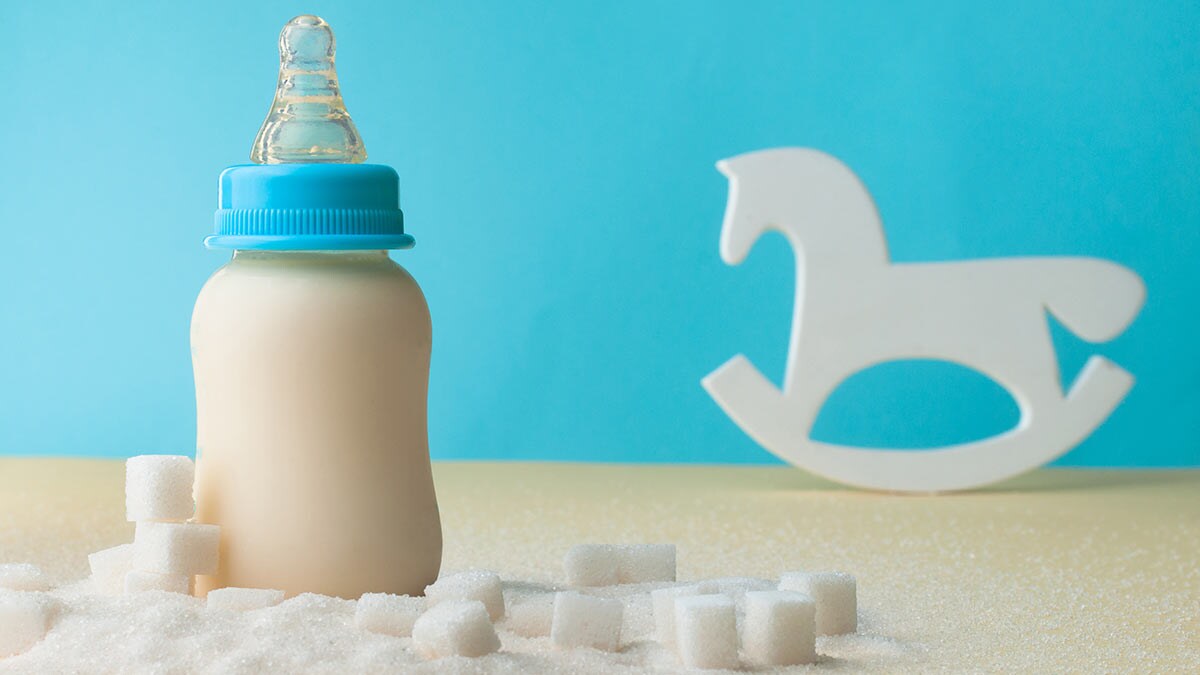
Dipped in honey and sugar, my mother-in-law’s fingertips edged closer towards my ‘Lady Ga Ga’s' lips. She was five months old when we finally made the trip to my husband’s home for the first time after her birth.
Excitement was in the air. Gates swung wide open, welcoming the little bundle of joy. Uncles, cousins and aunts all made a beeline to sweep her away. That was when mom-in-law entered with the sugary delight. My husband saw the fingertip right before it touched the baby’s lips, and almost instantly, he grabbed her hand with a resounding ‘No!’
The excitement drained from his mother’s face as he tried to politely explain. “Why not? It’s just a few grains.” The question sounded innocent.
In Indian culture, sweets are often the language of love. It is tradition to serve sweets when something auspicious such as this happens.
My mother-in-law’s question was sincere. Yes, it is only a grain, but sugar is an out-and-out villain, especially for little people like a five-month-old—a fact that is either little known or often ignored.
New mothers, or let’s say, parents, live in a state of constant conflict with ‘harmless’ traditions. We are constantly reminded at every turn of how things were done ‘back in the day’. If it is not our parents, it is the neighbour aunty popping up with a load of wisdom. “We started solids at three months,” or “We used kajal, and their eyes were fine,” or the rotating menu of jaggery, palm sugar and refined sugar for the kids to eat ‘properly’.
The list is exhausting. I have heard new parents saying that they don’t give sugar to their kids at home, but it is difficult to say no to grandparents.
In this ‘smart’ world, a new mother’s job isn’t just raising a child; it’s constantly suiting up for a battle against outdated advice and bursting myths.
Doctors strongly recommend avoiding sugar and salt until two years of age. “A baby’s first foods set the taste standard for life. If early food is very sweet, plain food later feels boring. If the early food is salty, normal food later feels tasteless,” says Dr Chhaya Shah, a paediatric physician in Jabalpur.
Experts stress that the world our kids are growing up in is far different from how we were raised. Back then, chocolate was a rare luxury—something that only appeared when ‘Dubai uncle’ or visiting aunt arrived with a suitcase full of treats. But clearly, the times have changed.
Shah says that treats, sweet or salty, are readily available now. “You name it, and it is only a click away or stacked up in the kitchen,” says Shah. “Every household will have some sweets in the fridge. Once children get the taste of them, they will prefer them to the healthy food they are having, and it gets difficult to control them.”
Why sweeten a puree when there is absolutely no benefit to be found?
Experts warn that once a child develops an early preference for sugar or salt, they begin to link flavours with emotions, and they won’t be able to self-regulate them later on. (You might have come across kids throwing tantrums at malls and shops for just a bar of chocolate or ice cream and screaming until their parents buy it to calm them.)
The truth is, babies already get all the salt and sweetness they need from breast milk or formula. An infant’s kidneys simply are not developed enough to process extra salt. Therefore, doctors recommend delaying it as much as possible, for at least 18-24 months.
Also, studies point out that an early start on salt is linked to hypertension later on. “The risks are real. Early exposure to sweets and junk food sets a path towards obesity. When extra salt is given, it causes fluid retention, and it increases the blood pressure,” says Dr Sohail V. Seyad, a paediatrician based in Kochi.
Shah recalls a case: “A 16-year-old walked into my clinic weighing 92kg with a blood pressure of 160/120—numbers you’d expect in an elderly patient, not a child. The culprit? A heavy habit of instant noodles. They are loaded with salt. It was a convenience that cost his health dearly.”
The Indian Academy of Paediatrics (IAP) highlights that many junk foods have poor nutritional quality owing to high carbohydrate and fat content. This nutritionally imbalanced diet often leads to severe illnesses in the long run, including diabetes and heart disease.
Seyad adds that dental issues, too, are quite common among young kids now due to high sugar intake. “Also, early introduction of salts and sugars may trigger allergies in some kids as well. Even giving honey before 12 months should be strictly avoided as it could lead to botulism,” he says.
Seyad remembers a two-year-old who had to undergo six root canals because of excessive sweet consumption! Another baby, an 18-month-old, weighed 19.8kg as the parents used to feed him sugary stuff right from when he was seven months old, he adds.
“The whole idea is to not let children develop a preference for sweet food,” says Seyad. “Studies have revealed that early high intake of sugar or salt can cause cholesterol, cardiovascular issues and diabetes in the long run. Kids don’t require [added sugar] during the early stages; strictly none until 12 months.”
