


John (name changed), 30, was struggling with low mood, crying spells, anxiety and sleep disturbances. Since he had previously experienced serious side effects from psychiatric medication, he was unwilling to take that route again. So when he visited Dr Avinash Desousa, senior consultant, psychiatry, at Sir H.N. Reliance Foundation Hospital, Mumbai, and director of the Desousa Foundation, the doctor had an alternate approach. He turned to a neuromodulation device called EASE, developed by the Indian health-tech startup Marbles Health. The brain is an electrochemical organ: psychiatric drugs act on its chemical messengers, while neuromodulation targets its electrical signals.
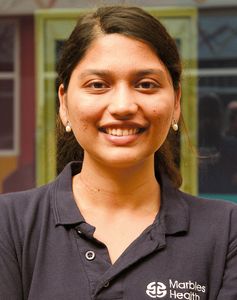 Ramya Yellapragada
EASE, which employs the proven technique of transcranial direct current stimulation (tDCS), is the first licensed neuromodulation device of its kind to be created in India. “[For John], we suggested a trial of tDCS: 10 sessions, five days a week for two weeks,” says Desousa. “If he felt better, we would extend it to 30–40 sessions, followed by maintenance sittings.” The patient eventually underwent 30 sessions, after which he continued maintenance tDCS twice a week, later reducing to once a week. “Now he is stable and doing well. Importantly, the treatment was combined with psychotherapy,” says Desousa.
Witnessing loved ones struggle with mental illness pushed tech entrepreneurs Ramya Yellapragada and Lakshay Sahni to build this device. “We know very little about the brain and what truly works for it,” says Yellapragada. “Pills aren’t always the best or safest option. A huge part of brain function runs on electrical signals, so the question was, how do we harness that to heal?”
Neuromodulation, which involves sending small currents to specific brain areas, emerged as a safe and effective solution. “Licensed technologies already exist and are highly effective, but they are priced in crores,” says Yellapragada. “Most hospitals, especially psychiatric clinics, cannot afford them. That’s what pushed us to create solutions that are effective, affordable and scalable—starting in India, but designed for the world.”
EASE has been designed as a portable, wearable headband. Sahni notes that the upper part delivers tDCS neuromodulation by sending gentle impulses to the brain, while the lower part monitors brain activity using electroencephalogram. “The upper part is therapeutic; the lower part helps with diagnosis,” he explains.
Alongside this, the device also provides an option for Cognitive Emotional Training (CET), which improves cognitive functions. “When you do these training activities while being stimulated, the [therapeutic] effects are compounded,” says Sahni, adding that their medical device has been designed to be operated by mental health professionals or doctors.
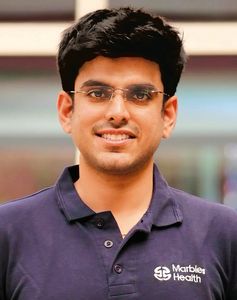 Lakshay Sahni
Desousa says he is using EASE to develop treatment modalities for managing depression as well as resistant hallucinations in schizophrenia. “Psychotherapy or medication can be combined with tDCS. But in some patients with mild to moderate depression, it can even be used as a stand-alone treatment,” he explains.
Sahni adds that in their trial in India, patients showed a 63.8 per cent decrease in illness scores within two weeks of use, without any adverse side effects.
Yellapragada notes that EASE has also shown strong promise across a range of other psychiatric conditions, including anxiety, obsessive compulsive disorder, phobias and addiction disorders, as well as neurological conditions such as aphasia and mild cognitive impairment. The team is also exploring neuromodulation’s potential in areas from stroke rehabilitation to dementia care. “We have seen doctors themselves identify new areas—where the same brain networks are involved—in which the device could be used,” says Sahni.
The validation study for EASE was conducted at AIIMS Delhi with 25 patients, each undergoing around 20 sessions. Marbles Health founders say it took more than four years to develop EASE, and since its pilot launch earlier this year, they have partnered 40 leading hospitals and clinics in India, delivering thousands of sessions. They have also signed MoUs with the NHS in the UK and are conducting joint studies with two major Indian hospitals.
The founders emphasise that the current version of EASE is about 35 per cent cheaper than foreign alternatives. “We are also developing a further affordable version of the device,” says Sahni. “Our long-term vision is similar to how BP machines moved from clinics into households. One in seven homes worldwide faces a mental or neurological condition, and we hope our device will eventually be used—under medical supervision—in these homes.”