



In early August, while travelling on the Bengaluru metro rail, Dr Karthik Venkatesh, a medical intern at the Vydehi Institute of Medical Sciences and Research Centre, Bengaluru, was confronted with an emergency. As the train left Benniganahalli station, he saw a man, in his late 50s, collapse in the compartment. Passengers assumed it was a seizure, but Venkatesh quickly stepped in to administer CPR. In less than five minutes, he achieved Return of Spontaneous Circulation (ROSC)—the moment when the patient’s heart begins beating effectively on its own, restoring blood flow without the need for chest compressions. ROSC within five minutes is an exceptional achievement, as it often takes longer in most real-world, out-of-hospital cases, and each additional minute without circulation can reduce survival odds by 7–10 per cent. The patient was moved out at KR Puram station, where metro authorities rushed him to Sri Lakshmi Hospital in eight minutes. The timely intervention stabilised the patient and saved his life.
Soon after the episode, Venkatesh texted Dr Javed Syed, his mentor and head of Vydehi Advanced Simulation Academy (VASA) in Bengaluru—south Asia’s largest and most frequently used multidisciplinary medical simulation centre. “Sirrrrr… your training just saved a life,” he wrote.
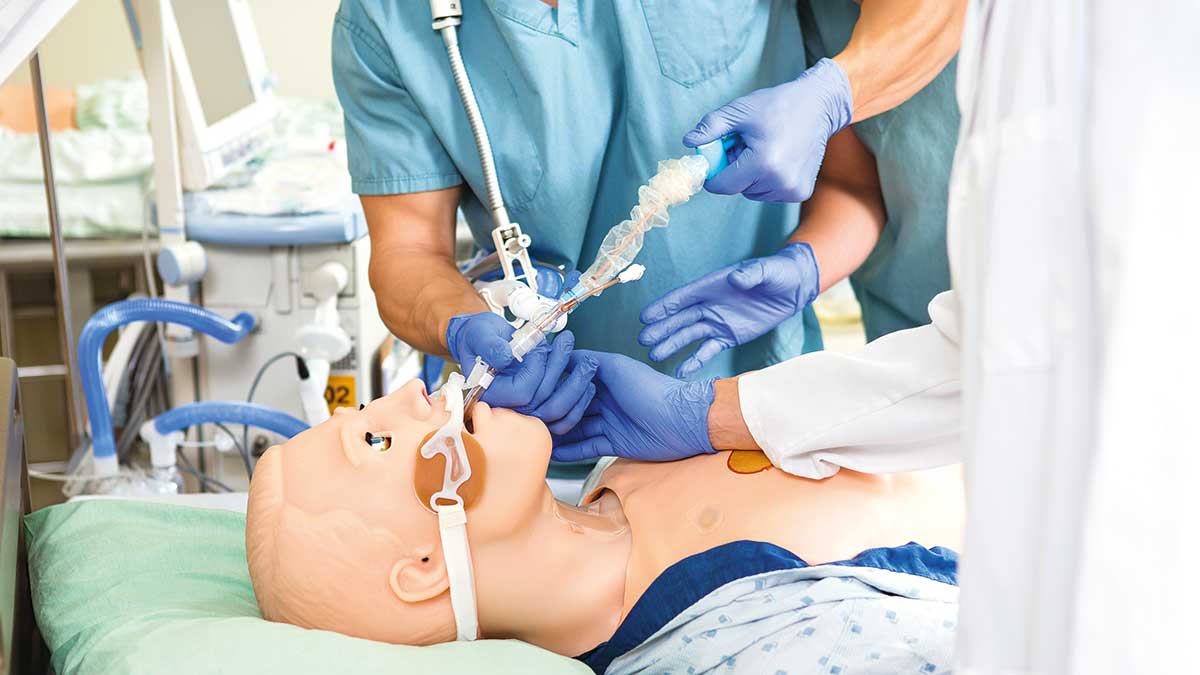
Administering CPR in an emergency is just one of many life-saving skills Venkatesh had learnt as a budding medical student. But theory is only one part of medical education. Much of it requires hands-on practice. Even so, as a new intern, he feels confident performing procedures ranging from emergency first aid to bedside tasks like inserting IV cannulas, drawing blood, dressing wounds and even assisting in surgeries. It is all thanks to the rigorous training he received in VASA’s simulated, controlled environment that employs high-fidelity life-sized manikins and virtual or augmented reality equipment.
“Medical simulation is a life-saving rehearsal for reality—it is more than training; it is a safeguard against medical errors,” says Syed. “By recreating high-risk clinical scenarios in a controlled, risk-free setting, it allows health care professionals to practise, make mistakes and learn without putting a patient at risk.”
Since its inception, says Syed, VASA has trained more than 31,000 students from various institutions in multiple skills to make them hospital-ready. When he was a medical student, such facilities didn’t exist, he adds, making the acquisition of practical knowledge far slower, with training done directly on real patients. “I still remember pricking myself with a needle, then the patient, only to find out later that the patient was hepatitis B positive,” he recalls. “That gave me sleepless nights for days. Many doctors have similar stories.”
Saving plastic man
Monitors screamed. The patient’s eyes fluttered shut. Vitals plummeted.
“Code Blue!” a medical student shouted.
At VASA, it was just another day. Except, this batch of final-year students had 72 seconds to save a 55-year-old cardiac arrest patient before simulated brain damage began.
Defibrillator pads slapped into place.
“Charging to 200 joules.”
“Clear!”
Shock delivered.
Still no pulse.
Beads of sweat popped up on the team leader’s brow. Her voice trembled, yet carried authority: “Resume compressions. Push one milligram epinephrine. Intubate.”
The team moved like clockwork. Airway. Breathing. Circulation. Two relentless rounds of CPR. Another shock.
The heart’s rhythm shifted.
A pulse.
Silence. Then the sweetest sound of the day—beep… beep… beep…
No one moved. Some smiled; others blinked away tears. They had saved a plastic man.

“They felt it all—the urgency, the relief—because it was real to them,” says Syed.
After each near-realistic simulation, students gather for an immediate debrief, turning every scenario into a learning moment, reinforcing what worked and correcting what didn’t.
While half the students perform in the lab, the rest watch live feeds from multiple cameras outside. In the debriefing, everyone comes together to dissect the action in a judgment-free space, where mistakes become lessons, feedback is embraced and skills are sharpened. “Through repeated practice on manikins and virtual platforms, critical procedures become second nature,” says Syed. “It reduces hesitation, sharpens decision-making, strengthens team dynamics and ultimately lowers the risk of human error in real clinical settings.”
Dr Pawan Krishna, another medical intern from Vydehi, says that in a simulated environment there is scope for funny incidents, too. “A classic one is when someone intubates into the stomach instead of the trachea, and the stomach inflates instead of the lungs,” he says. “When a shock is about to be delivered, there have been instances of some team members panicking and running away from the manikin, thinking they will get electrocuted.”
Syed says that sometimes a dash of humour is deliberately woven into the simulation. Venkatesh recalls one such case: a manikin complaining of chest pain—triggered, it claimed, by spotting a beautiful girl on the road. “We kept up the medical questioning,” he says, laughing, “but also kept asking about the girl. The manikin replied she was ‘more beautiful than anyone here,’ and the whole room burst out laughing. It was such a light-hearted twist on a serious case that it is etched in my memory.”
The voice behind the lovestruck manikin? Syed.
It is not just medical students, but experienced doctors, too, come to VASA to work on their precision and practise procedures including complex surgeries in a simulated environment. The centre offers operating room simulation suites, ICU simulations, paediatric and neonatal resuscitation units and disaster and trauma management zones.
“The manikins here range from basic models to near-realistic versions with accurate skin texture and colour changes. Ventilator modules allow students to practise life support on newborns. Consumable items, such as umbilical cord segments, are replaced after each session, just like in a hospital,” says Syed.
The most advanced of all manikins, arguably, is the High-Fidelity Human Patient Simulator (HPS)—a life-sized patient that breathes real gases, exhales CO2 and responds to drugs. Every medication is barcoded; when scanned and “administered”, the simulator reacts physiologically, just like a real human. “If anaesthesia students tried these experiments on a real patient, they could kill them,” says Syed. “Here, they can safely study the effects of dosage and drug interactions.”
The HPS can replicate male, female and paediatric patients. The team simply selects the case type, age and gender on the system, and the manikin responds accordingly.
VASA’s maternal and paediatric suite features a pregnant manikin with a lifelike foetus, enabling simulation of the entire birthing process. This includes checking for contractions, observing crowning, draping, delivering the baby, clamping and cutting the umbilical cord and providing postnatal care. If the newborn isn’t breathing, it can be placed in an incubator for neonatal resuscitation training.
Beyond the HPS and birthing manikins, the centre also uses IVF simulators and neonatal lung simulators, such as LuSi. Developed by New Delhi-based Maverick Simulation Solutions, LuSi is the world’s first and only autonomous neonatal lung simulator with real-time response. Says Kanika Chahal, director and cofounder of Maverick: “It is AI-based and autonomous, designed to train clinicians to assess lung function and treatment response in newborns without the need for an external operator.” LuSi can simulate a range of disease conditions like neonatal respiratory distress syndrome, lung collapse, weak muscular activity, pneumothorax and airway obstruction.
Chahal says that along with creating realism, autonomous feedback is key while designing high-end simulators. “The simulator behaves like a real patient using mathematical formulas and algorithms. This allows accurate physiological responses while keeping the trainee in a safe environment,” she says.
Maverick now sends its simulators to multiple countries. Dr Sunil Tomar, head of research and new product development at Maverick, explains that the algorithms are based on pathology stages, so the logic holds universally. “A medical procedure—whether done in north India, south India, or abroad—is the same as described in textbooks. Our simulators follow published medical data and are validated in India and internationally,” he says. “That said, we can customise high-fidelity simulators for regional differences—for example, adjusting scenarios if a 60kg patient in India is expected to react differently than a 60kg patient in Europe.”
It is not just the patients’ reactions to medicines, but also the bystanders’—sometimes violent—reactions to the treatment timeline that are simulated during training sessions. “Even human emotions are enacted. We include actors playing patient relatives who shout, cry and create disturbances to replicate real-life stress,” says Syed. “Our disclaimer remains: simulation can never fully replace real human touch or the emotional weight of a true medical situation. You can practise on dummy hands, but you won’t get the same tactile feel or emotional impact. Still, it prepares you better.”
VASA also conducts training sessions for non-medical staff, students, security teams and community members, and has even organised large-scale mock drills. In an upcoming exercise, it plans to collaborate with the Indian Army to strengthen preparedness for potential terror attacks.
Play pal
Dr C.P. Ravi Kumar, consultant, paediatric neurology, Aster CMI Hospital, Bengaluru, says that simulators are now increasingly being integrated into real-life clinical settings as therapeutic tools, especially for rehabilitation. “For example, in stroke recovery, simulators like Xbox Connect are used to encourage repetitive physical exercises at home such as virtual basketball or badminton that help patients regain muscle strength and coordination,” he says. “These simulators provide visual feedback and adjustable difficulty levels, which motivate patients to stay consistent with therapy, even outside clinical environments. Similarly, for children with coordination difficulties or conditions like autism and ADHD, simulator-based games help improve attention, executive function and sensory processing in a more engaging and accessible way.”
Sheena Vijaya (name changed), 57, from Thiruvananthapuram vouches for the video-based simulator that made her rehab journey better. In November 2024, Vijaya fell from a bamboo swing at home, sustaining a spinal injury and nerve compression. She initially sought treatment from an orthopaedic specialist, but soon became almost paralysed. Only then was the severity of the nerve compression recognised, prompting an immediate neurosurgery at KIMSHEALTH hospital.
After surgery, Vijaya’s rehabilitation began immediately, involving various equipment and physiotherapy. Initially, the fear of falling and pain made her hesitant to try stepping exercises. That changed when she was introduced to a video-based simulator that analysed her steps and provided live feedback on her progress. “I have never played video games in my life,” she says, “but this felt like one. It set enjoyable challenges and gave me an impression of walking outdoors after months indoors. It eased my knee pain and made stepping easier, almost without me realising it.”
Stroke rehab is one of the most crucial areas where a shift in attitude, coupled with the introduction of advanced simulators and robotic trainers, has sparked a silent revolution in India over the past decade. “Earlier, stroke rehab often began late—patients would be stabilised, sent home and [asked to] return later for physiotherapy, believing it was enough. The approach was: save life, stabilise, operate if needed, discharge from ICU, then consider rehab,” says Dr Nitha J., consultant, physical medicine and rehabilitation at KIMSHEALTH. “Now, we start within 48 hours of ICU discharge, tapping into the brain’s neuroplasticity to revive stroke-affected regions more effectively.”
Neuroplasticity refers to the lifelong capacity of the brain to change and rewire itself in response to the stimulation of learning and experience. Advanced rehab centres now employ technology to deliver maximum brain stimulation during the earliest stage after a stroke (the first three to six months, known as the “critical window”) to promote faster neural reorganisation in stroke-hit areas of the brain.
G-Gaiter, the country’s first indigenously developed gait trainer launched in 2023, is one such equipment. Combining robotics, AI-driven actuators, simulation and feedback loops, G-Gaiter offers repetitive, high-intensity movement training to stimulate motor cortex plasticity and improve gait. Developed by Genrobotics, it is significantly cheaper than imported alternatives like Lokomat, making it accessible to hospitals across India, including those in non-urban areas and even government-run hospitals. The equipment uses artificial intelligence to mimic natural human gait patterns, ensuring precise and consistent movements that promote neuroplasticity for effective rehabilitation. This has been found to improve mobility, stability and the quality of walking.
In the early stages, robotic systems provide greater assistance for motor movements. Though these movements are assisted, they play a crucial role in retraining the brain with essential motor patterns. Progress is monitored at each stage through a feedback loop, and over time the patient’s autonomous movements become more prominent, with the system taking a secondary role.
Nitha notes that training stroke patients to walk in the early stages often requires three people for support. “With a robotic harness, only one person is enough. This reduces therapist workload and improves efficiency,” she says.
Also, manual therapy cannot fully replicate normal gait, says Vimal Govind M.K., cofounder and CEO of Genrobotics. “With the G-Gaiter, we control all limbs efficiently, providing a natural walking pattern. This repetition allows the brain to relearn the correct pattern,” he adds.
Doctors note that gait training with a robot-assisted system can be a profound experience for many patients. “Remember, these are people who have been bedridden; simply standing up and doing something gives them a unique mental boost,"says Nitha. "Even before they can stand unaided, we let them experience the ‘standing phase’ through the system. It is not just physical; it is a psychological shift, and that matters.” Patients who feel mentally low often report a positive change within three days of starting robotic therapy. “Without us even asking, they say, ‘I feel better.’ That positivity becomes part of the recovery journey,” she adds.
Simulators like G-Gaiter are used not only in stroke rehabilitation but also for conditions such as Parkinson’s disease, cerebral palsy, various muscular dystrophies, spinal cord injuries from accidents and other motor neuron disorders that require gait training. G-Gaiter also integrates a VR component, which has proven effective in enhancing patient engagement across many of these conditions. “VR makes therapy more engaging and less monotonous,” says Vimal. “By linking gait patterns to interactive games, we stimulate the patient’s mind and sustain their participation. Gait rehabilitation involves a high degree of repetition, which can be mentally exhausting. VR helps keep patients motivated and attentive.”
Dr Muhlisa V., consultant in physical medicine & rehabilitation at Baby Memorial Hospital, Kozhikode, explains that once the initial motor-skilling stage is complete, stroke rehabilitation moves into Activities of Daily Living (ADL) training, where simulators, especially VR technology, now play a pivotal role. Basic ADLs include eating, dressing and bathing, while instrumental ADLs involve tasks like cooking and cleaning.
“In ADL training, VR allows us to replicate specific environments for each activity,” says Muhlisa. “When reintegrating patients into the community, we even simulate activities like driving. In every domain, simulation holds its own unique value.”
Doctors note that simulated environments and gamification of therapies have brought major changes in treating paediatric conditions. Kumar of Aster notes that in paediatric conditions like ADHD and autism, simulators are increasingly used in the form of motion-sensing games aimed at improving executive function, attention and sensory integration. “These tools complement traditional therapy by boosting engagement and motivation in children,” he says.
In January, Genrobotics unveiled a paediatric version of G-Gaiter for children with conditions such as cerebral palsy. Designing for this age group, Vimal explains, comes with unique challenges. “Kids are often scared or intimidated by medical equipment, and unlike adults, they may not fully understand the purpose of therapy,” he says, “so ensuring consistent participation is difficult.” To address this, the paediatric G-Gaiter was built as a game-based platform, transforming gait training into a playful experience.
Tomorrow is now
Doctors note that the medical field is becoming smarter, with fewer medical errors and improved patient outcomes, thanks to advances in technology. Simulators, along with technologies like AR and VR, play a crucial role in this shift. They point out that advanced systems such as Brain–Computer Interface (BCI) technologies are already in the market, accelerating recovery in conditions like stroke by exploiting the brain’s plasticity. Companies like Neuralink, Blackrock Neurotech and Synchron are making significant strides in both invasive and non-invasive BCIs, with Neuralink’s 2024 human trials showing promise for paralysis patients. Research also shows that BCIs work synergistically with robotics-based simulators, VR and AR systems and functional electrical stimulation, enhancing rehabilitation outcomes.
Experts believe that in the coming years simulator solutions that provide real-time visual feedback, enhance patient motivation through gamified exercises, and support at-home rehabilitation, particularly for conditions like stroke, coordination issues in children and neurodevelopmental disorders such as autism and ADHD will become the norm. “A lot of doctors hope to see simulators that go beyond traditional therapy by acting as an additional teacher or motivator,” says Kumar, “helping patients consistently perform repetitive and engaging activities that aid in recovery and skill development.”
