



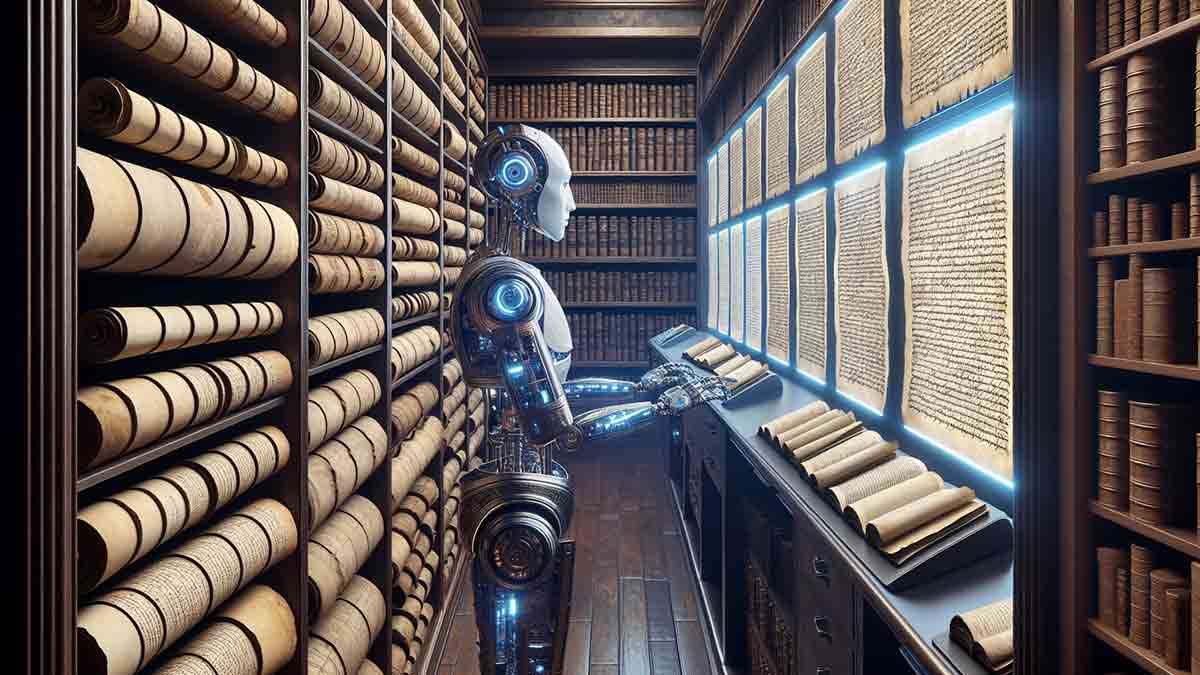
The intellectual landscape in India today is marked by a dynamic debate over the place of Indian Knowledge Systems (IKS) in our contemporary curriculum. This is not merely an academic skirmish; it is a profound discussion about how a civilisation that gave the world the concept of zero should engage with the universal march of modern science. How can we justly celebrate our intellectual heritage while defending the universalism and sanctity of scientific temper?
Our deep-seated pride in our historical contributions is justified. Why shouldn’t we credit the land and the thinkers who developed path-breaking concepts, whether it is the calculations of the Kerala School of Mathematics or the meticulously documented surgical procedures of the world’s first rhinoplasty, performed by Sushruta? India’s intellectual traditions constitute one of the world’s oldest continuous streams of inquiry. From the metaphysical reflections of the Upanishads to the logical precision of the Nyaya school; from the holistic medical science of ayurveda to the astronomical and mathematical brilliance of Aryabhata and Bhaskara; from Bharata’s Natya Shastra to Panini’s extraordinarily sophisticated grammatical system—our civilisation has regarded knowledge as sacred and systematic. Acknowledging this intellectual provenance is an act of historical honesty and cultural preservation. It enriches the global narrative of human progress, ensuring that Indian contributions are not footnotes, but foundation stones.
However, the moment this pride transforms into an assertion of present-day exclusivity or superiority, we veer into hazardous territory. Knowledge, at its most rigorous and useful, is ultimately a universal human endeavour. To speak of “Indian molecular biology” or “Indian artificial intelligence” is to fundamentally misunderstand the nature of modern knowledge. A scientific law discovered by an Indian scientist becomes simply a universal law of physics; an algorithm developed in Bengaluru is a global computational tool. Attempting to confine these truths within national borders only diminishes their greatness. Replacing the boundless ambition of scientific inquiry with the limiting lens of nationalistic pride is a substitution that is philosophically weak and intellectually dangerous.
The gravest risk in the contemporary debate is the deliberate confusion of historical legacy with present-day validated knowledge. Our curriculum must always prioritise scientific temper—the freedom to question, the insistence on empirical evidence, and the willingness to revise one’s conclusions in the face of new data. Any system, irrespective of its antiquity, that seeks to impose a framework on what to think rather than nurturing the freedom of how to think, is inimical to education and progress. The core tenet of modern science is that it is self-correcting and evidence-based. If an insight derived from traditional texts, such as an ayurvedic formulation or an ancient engineering principle, is to be deployed today, it must be subject to the same universal standards of rigour, verification and empirical testing as any finding from a modern laboratory. In other words, the past must be celebrated, not canonised. We must teach the achievements of ancient India as a glorious history of science and philosophy, providing context for modern advancements. But we cannot permit the past to dictate the present value of our knowledge systems.
The path forward is one of critical integration. We must pursue a strategy that both honours our heritage and upholds the highest standards of universal science. Yes, we should recognise that certain practices, particularly in the realm of applied systems like ayurveda, are deeply rooted in our cultural and geographical contexts. Studying them systematically can offer valuable hypotheses for modern research. But, once a traditional insight generates a hypothesis (say, a specific compound’s medicinal property) it must immediately enter the universal laboratory. Its validation must rely on modern clinical trials, pharmacological analysis and established scientific methodologies. We should welcome this process: success validates the traditional insight, failure saves us from practising ineffective methods.
The history of IKS can be seamlessly woven into our curriculum: teaching the decimal system is more engaging when the role of ancient Indian mathematicians is highlighted. But the ultimate goal of knowledge, whether derived from ancient palm leaf manuscripts or supercomputer simulations, is to understand and improve the human condition. We must ensure that our intellectual heritage serves as a launchpad for the future, and not a handcuff to the past.
